


Venica
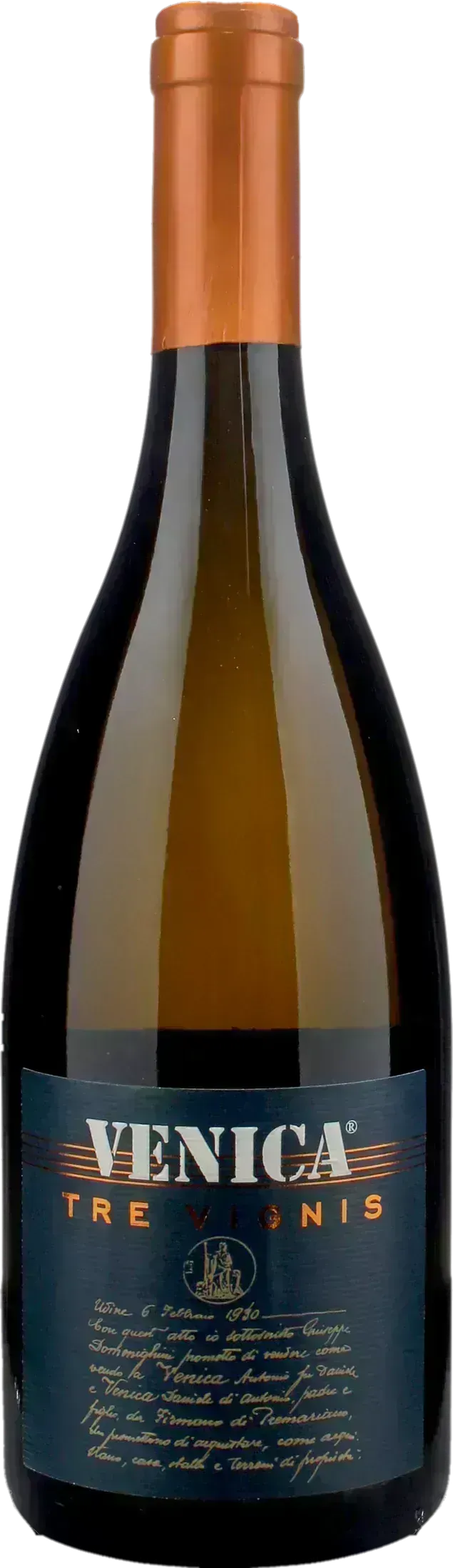
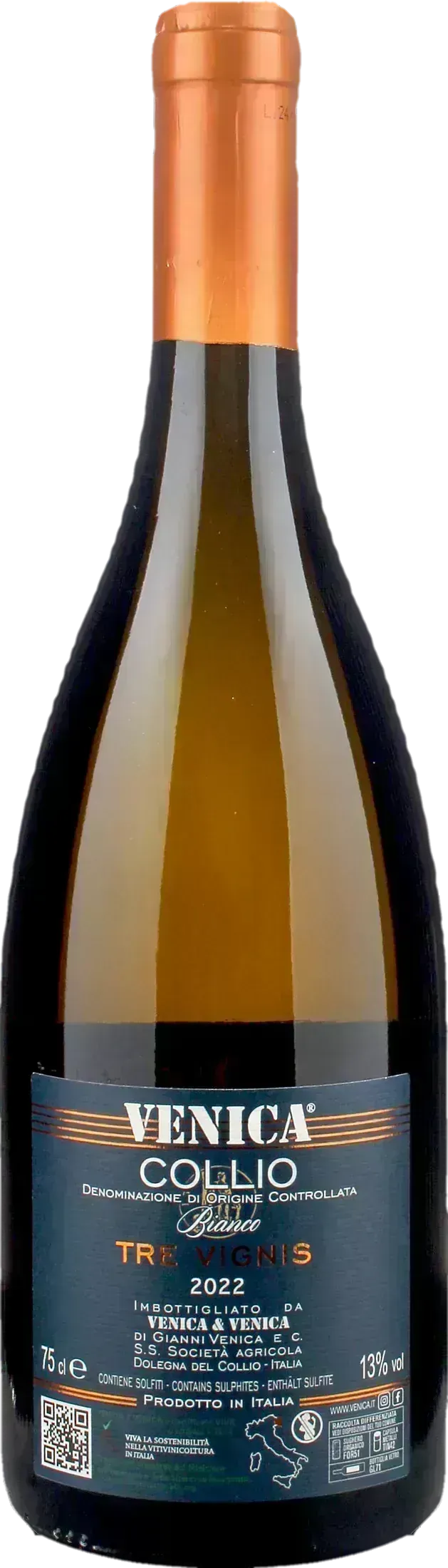
Collio Bianco Tre Vignis 2022
| Denomination | DOC Collio Goriziano Bianco |
|---|---|
| Size | 0,75 l |
| Alcohol content | 13.0% by volume |
| Area | Friuli-Venezia Giulia (Italy) |
| Grape varieties | 50% Friulano/Sauvignon Vert, 30% Chardonnay, 20% Sauvignon |
| Aging | Ageing on the lees, split between tonneaux/wooden casks (approximately 50%) and stainless steel tanks; blending and bottling in July. |
- Collio DOC blend: 50% Friulano, 30% Chardonnay, 20% Sauvignon
- Skin-contact vinification: co-fermentation and ageing on the lees in wood and stainless steel
- Aromatic profile: bitter almond, banana, green pepper, vanilla and smoky hints
- Flavour and finish: full and creamy, persistent with toasted notes, tomato leaf and almond
- Pairings: ideal with shellfish, white meats, porcini mushrooms and matured cheeses
Description
Style of wine
Tre Vignis by Venica is a structured and enveloping still white wine. This intriguing blend expertly combines Friulano, Chardonnay and Sauvignon grapes, giving life to an authentic wine with the Collio del Friuli-Venezia Giulia designation. It presents a rich aromatic profile and a full, soft and slightly creamy mouthful. The technique of joint skin maceration and subsequent ageing in wooden barrels and steel vats enhances its complexity without weighing down its elegant drinkability.
Origin
This white wine is born in the heart of the Collio Goriziano, in Friuli-Venezia Giulia, a historic wine-growing area celebrated for the production of great local white wines. The characteristics of this particular geographical area offer an ideal terroir that gives the bunches an unmistakable aromatic balance. The interaction between the microclimate and the unique features of the Friulian soil allows for a remarkable structure on the palate, fostering a perfect synergy between the different varieties used.
Production method
The production process begins in mid-September with manual harvesting and careful selection of the bunches. In the cellar, a unique co-fermentation and joint skin maceration of the three varieties is carried out, rather than resorting to a classic post-fermentation blend. Subsequently, the must undergoes fermentation and careful ageing on the lees split between stainless steel containers and wooden barrels. This meticulous method gives the wine a soft texture and prepares it for bottling, which according to estate tradition takes place during the full moon in July.
History and interesting facts
Introduced in the 1980s by the Venica winery, founded in 1930, this wine reflects ancient local tradition. Its meticulous creation, overseen by oenologists Gianni Venica and Francesco La Coppola, involves a production limited to two thousand bottles. A fascinating detail lies in the final ritual, as bottling always takes place under the full moon of July. Celebrated by the FIS guide, this organic Collio Bianco represents an eco-sustainable work, derived from a complex simultaneous co-fermentation that forms a prestigious Friulian blend.
Tasting notes
Perfume
Color
Taste
Serve at:
12 - 14 °C
Longevity:
05 - 10 years
- Start up year: 1930
- Oenologist: Gianni Venica, Francesco La Coppola
- Bottles produced: 350.000
- Hectares: 40


| Name | Venica Collio Bianco Tre Vignis 2022 |
|---|---|
| Type | White green still |
| Denomination | Collio DOC |
| Vintage | 2022 |
| Size | 0,75 l |
| Alcohol content | 13.0% by volume |
| Grape varieties | 50% Friulano/Sauvignon Vert, 30% Chardonnay, 20% Sauvignon |
| Country | Italy |
| Region | Friuli-Venezia Giulia |
| Vendor | Venica |
| Story | History and interesting facts Introduced in the 1980s by the Venica winery, founded in 1930, this wine reflects ancient local tradition. Its meticulous creation, overseen by oenologists Gianni Venica and Francesco La Coppola, involves a production limited to two thousand bottles. A fascinating detail lies in the final ritual, as bottling always takes place under the full moon of July. Celebrated by the FIS guide, this organic Collio Bianco represents an eco-sustainable work, derived from a complex simultaneous co-fermentation that forms a prestigious Friulian blend. |
| Origin | Collio, Friuli-Venezia Giulia, Italy |
| Harvest | Mid-September (14 September) |
| Production technique | Joint maceration on the skins (co-fermentation of the grapes) with fermentation and ageing on the lees, partly in tonneaux/wooden barrels and partly in stainless steel. |
| Wine making | The winemaking process begins with joint maceration on the skins of the Friulano, Chardonnay and Sauvignon grapes; this is followed by fermentation and ageing on the lees, split between tonneaux/wooden barrels (approximately 50%) and stainless steel tanks, then blending and bottling in July. |
| Aging | Ageing on the lees, split between tonneaux/wooden casks (approximately 50%) and stainless steel tanks; blending and bottling in July. |
| Total acidity | 5.0 gr/L |
| Year production | 2000 bottles |
| Allergens | Contains sulphites |