


Tiefenbrunner
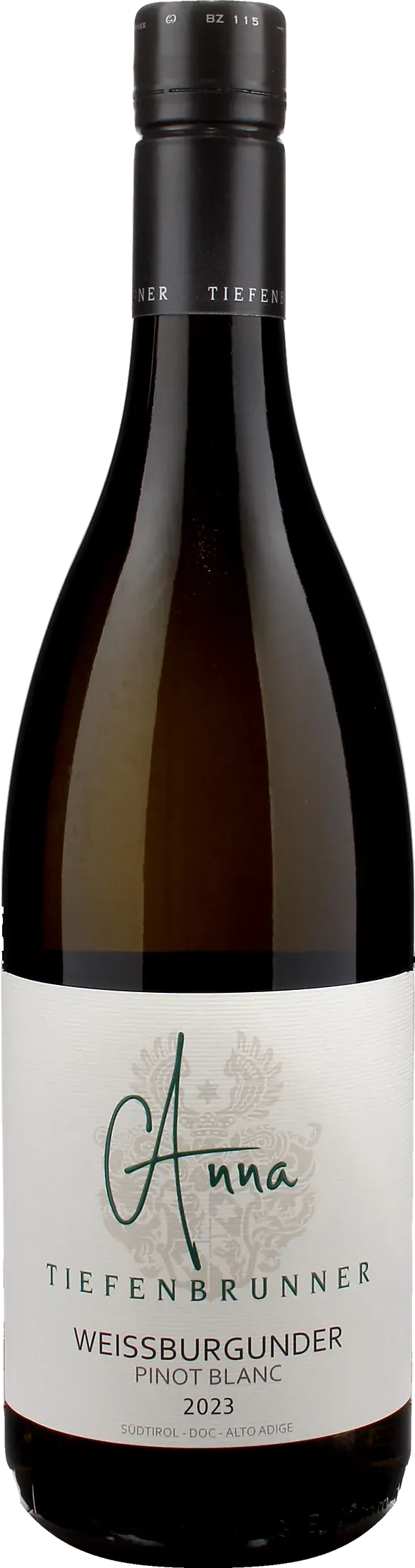
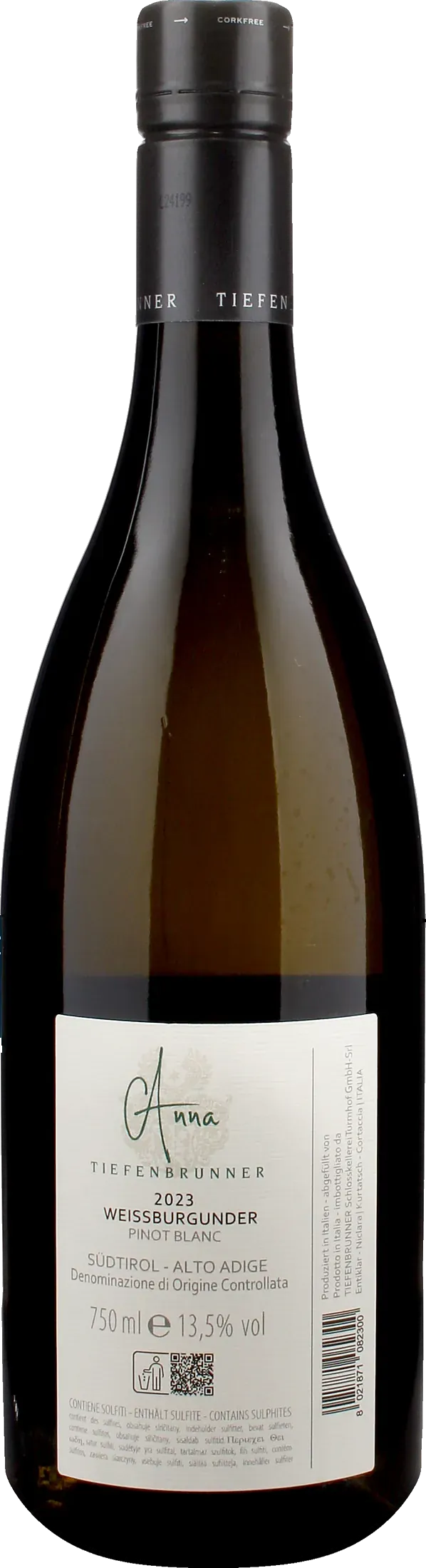
Pinot Bianco Anna 2023
| Denomination | DOC Alto Adige Pinot Bianco |
|---|---|
| Size | 0,75 l |
| Alcohol content | 13.5% by volume |
| Area | Trentino Alto Adige (Italy) |
| Grape varieties | 100% Pinot Bianco |
| Aging | Maturation for 10 months in various containers (50% in large oak casks with bâtonnage, 25% in concrete, 25% in tonneaux with malolactic fermentation), followed by 2 months in concrete after blending and 5 months of bottle ageing. |
- Denomination and grape: Alto Adige DOC, 100% Pinot Bianco; 13.5% ABV, still white wine
- Olfactory profile: hints of flowers, apple, pear and peach, with notes of lemongrass and lemon balm
- Taste characteristics: dry, fresh and velvety; balanced palate with a long finish
- Maturation: 10 months in oak and concrete, then 2 months in concrete and 5 in the bottle
- Ratings: 90 points James Suckling; ageing potential until 2030 and beyond
Description
What type of wine it is
Pinot Bianco Anna by Tiefenbrunner is an Alto Adige DOC white wine made from Pinot Bianco grapes. In the glass, it displays a bright yellow colour with delicate green reflections, with an olfactory profile that offers an intense floral bouquet enriched by ripe apple, pear, peach and fresh nuances of lemongrass and lemon balm. On the palate, it is pleasantly dry and lively, supported by a velvety texture and enhanced by careful ageing in oak barrels and concrete. The sip, with its harmonious structure, leads into a long and persistent finish, ideal for pairing with shellfish, risottos and white meats.
Where it comes from
The vines grow between the municipalities of Magrè and Cortaccia in Alto Adige, trained using espalier and pergola systems. Situated between 210 and 600 metres above sea level, the plots enjoy optimal south and south-east exposure. Significant temperature fluctuations preserve the natural freshness of the bunches, while the roots delve into complementary soils composed of morainic limestone gravel and sandy alluvial soils. This precious pedoclimatic combination imparts a clear mineral character to the wine, maintaining a perfect balance between its distinct aromatic intensity and pleasant smoothness on the palate.
How it is produced
Production involves ten months of fermentation and maturation in different vessels to add complexity. Part of the must rests in large oak barrels with regular bâtonnage, a second portion ages in concrete and the remaining part undergoes malolactic fermentation in further barrels to provide roundness. The individual components are then combined into a final blend that rests for another two months in concrete to fully integrate the aromas. The process concludes with a careful final refinement of five months, ensuring a sip that is always balanced and deep.
History and trivia
The Pinot Bianco Anna 2023 by Tiefenbrunner embodies the heritage of five generations dedicated to sustainable viticulture between Cortaccia and Magrè. Created by winemaker Stephan Rohregger and awarded 90 points by James Suckling, this wine expertly blends tradition and research. Its elegance stems from a meticulous tailored ageing process of ten months, divided between large oak barrels with bâtonnage, tonneaux and concrete, followed by a period of rest in the bottle. An authentic artisanal expression that promises a magnificent evolution in the cellar until 2030 and beyond.
Awards
-
2023
 90
90/100
James Suckling is an influential American wine critic and journalist who worked at Wine Spectator for 30 years. He left the magazine in 2010 to start his own website and guidebook (JamesSuckling.com). He specialises in Italian and Bordeaux wines.
Tasting notes
Perfume

Color
Taste
Serve at:
12 - 14 °C
Longevity:
05 - 10 years

- Start up year: 1848
- Oenologist: Stephan Rohregger
- Bottles produced: 650.000
- Hectares: 88
It is both an honor and a responsibility to carry on the legacy and to continue writing the story of the Tiefenbrunner family, chapter by chapter, year after year, vintage after vintage. Read more


| Name | Tiefenbrunner Pinot Bianco Anna 2023 |
|---|---|
| Type | White still |
| Denomination | Alto Adige DOC |
| Vintage | 2023 |
| Size | 0,75 l |
| Alcohol content | 13.5% by volume |
| Grape varieties | 100% Pinot Bianco |
| Country | Italy |
| Region | Trentino Alto Adige |
| Vendor | Tiefenbrunner |
| Story | History and trivia The Pinot Bianco Anna 2023 by Tiefenbrunner embodies the heritage of five generations dedicated to sustainable viticulture between Cortaccia and Magrè. Created by winemaker Stephan Rohregger and awarded 90 points by James Suckling, this wine expertly blends tradition and research. Its elegance stems from a meticulous tailored ageing process of ten months, divided between large oak barrels with bâtonnage, tonneaux and concrete, followed by a period of rest in the bottle. An authentic artisanal expression that promises a magnificent evolution in the cellar until 2030 and beyond. |
| Origin | Magrè and Cortaccia (South Tyrol) |
| Soil composition | Limestone gravel from morainic sediments in Cortaccia and sandy alluvial soils in Magrè. |
| Cultivation system | Trellis and pergola |
| Plants per hectare | 3,500 to 7,000 |
| Yield per hectare | 50–60 hectolitres per hectare |
| Fermentation | Ten months |
| Production technique | Fermentation and ageing for ten months: 50% in large oak casks with regular bâtonnage, 25% in concrete tanks and 25% in tonneaux with malolactic fermentation; after blending, it matures for a further two months in concrete and then ages for five months in the bottle. |
| Wine making | Fermentation and ageing for ten months: 50% in large oak casks with regular bâtonnage, 25% in concrete vats and 25% with malolactic fermentation in tonneaux; after blending, it matures for a further two months in concrete vats, then it is bottled and aged for five months in the bottle. |
| Aging | Maturation for 10 months in various containers (50% in large oak casks with bâtonnage, 25% in concrete, 25% in tonneaux with malolactic fermentation), followed by 2 months in concrete after blending and 5 months of bottle ageing. |
| Total acidity | 5.95 gr/L |
| PH | 3.41 |
| Residual sugar | 1.14 gr/L |
| Dry extract | 23.41 gr/L |
| Allergens | Contains sulphites |