


Tiefenbrunner
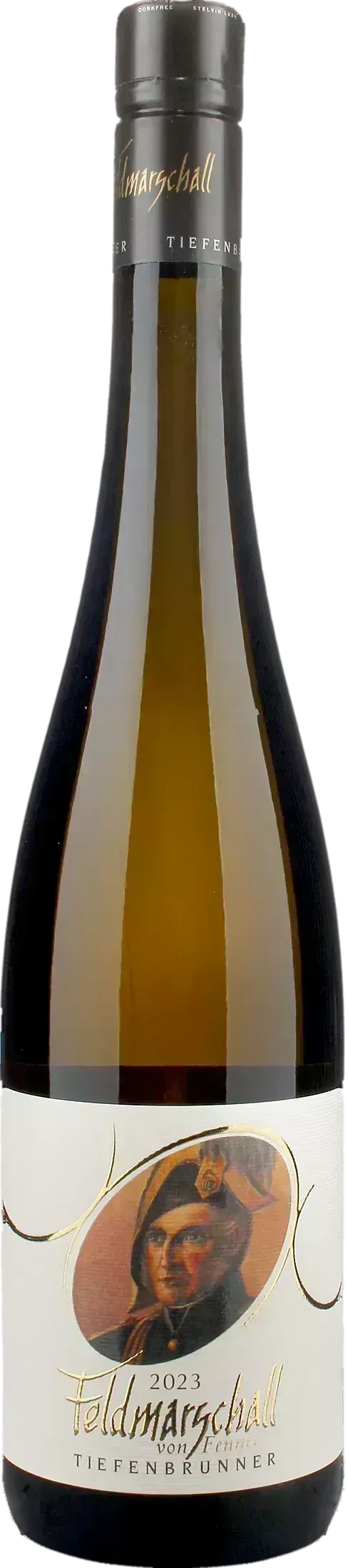
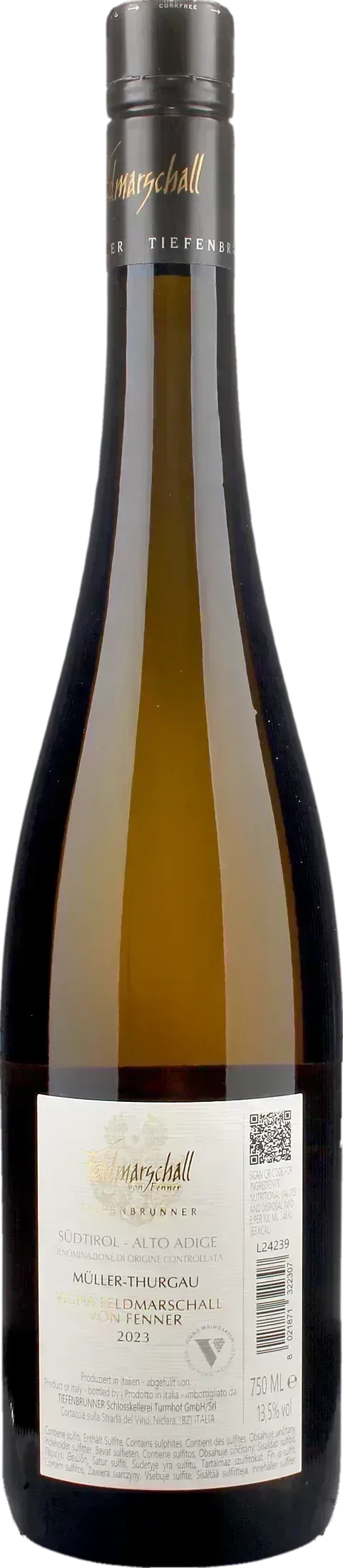
Feldmarschall Von Fenner Muller Thurgau 2023
| Denomination | DOC Alto Adige Muller Thurgau |
|---|---|
| Size | 0,75 l |
| Alcohol content | 13.5% by volume |
| Area | Trentino Alto Adige (Italy) |
| Grape varieties | 100% Müller Thurgau |
| Aging | Ageing on the fine lees for 7 months with frequent bâtonnage in oak barrels; 70% of the wine ferments and matures for 7 months on the fine lees in stainless steel; then 2 months in concrete tanks and further ageing for a year in the bottle. |
- Denomination and variety: Alto Adige DOC, 100% Müller-Thurgau, 2023 vintage
- Olfactory profile: hints of white peach and apricot, sage, jasmine and floral nuances
- Palate characteristics: refined structure, pronounced freshness and a persistent mineral finish
- Vinification: spontaneous fermentation; 10 months on the lees with bâtonnage
- High-altitude vineyards: 1,000 metres in Magrè; saline morainic soils, yield 33 hl/ha
Description
What kind of wine it is
The Feldmarschall Von Fenner by Tiefenbrunner is an elegant still white wine, a refined expression of Alto Adige. Produced exclusively from Müller-Thurgau grapes, this wine stands out for its intense aromatic profile and distinct minerality. It presents a well-structured and juicy body, supported by a pleasant freshness and a long finish. The use of indigenous yeasts and careful ageing contribute to the creation of a wine with undisputed charm, which gracefully introduces the details of its land of origin and the production techniques that enhance it.
Where it comes from
The grapes come from the picturesque Hofstatt area in Unterfennberg, in the district of Magré. The south-facing vineyards are situated at an altitude of 1,000 metres, providing ideal conditions for the cultivation of Müller-Thurgau. The soil is characterised by glacial moraine rock, with layers of sand, silt, clay, white marble, porphyry, and granite. This complex composition, combined with high soil salinity, gives the wine unique characteristics, influencing its aromatic profile and mineral structure. Sustainable viticulture, practised for generations by the Tiefenbrunner family, fully enhances this exceptional terroir.
How it is produced
The production of Feldmarschall Von Fenner begins with rigorous selection in the vineyard, through multiple passes to harvest the clusters at optimal ripeness. After soft pressing and a short skin maceration, fermentation takes place using indigenous yeasts. A portion of the must ferments and matures in oak barrels, while the remainder ferments in temperature-controlled stainless steel. Ageing on the fine lees for approximately seven months, accompanied by frequent bâtonnage, enriches the wine's complexity. Finally, resting in concrete vats and subsequent bottle ageing complete its evolution, preparing it to best express its potential over time.
History and fun facts
The family-run Tiefenbrunner winery has been practicing viticulture in the province of Bolzano since 1848. The name of the wine and the portrait on the label pay tribute to a historical military figure. This label celebrates a tradition spanning over five generations. Sourced from the Favogna di Sotto vineyards, planted in 1987 at an altitude of 1,000 metres, the vines tell a unique story. A commitment to sustainable viticulture has always characterised the estate.
Tasting notes
Perfume

Color

Taste
Serve at:
12 - 14 °C
Longevity:
05 - 10 years
- Start up year: 1848
- Oenologist: Stephan Rohregger
- Bottles produced: 650.000
- Hectares: 88
It is both an honor and a responsibility to carry on the legacy and to continue writing the story of the Tiefenbrunner family, chapter by chapter, year after year, vintage after vintage. Read more


| Name | Tiefenbrunner Feldmarschall Von Fenner Muller Thurgau 2023 |
|---|---|
| Type | White still |
| Denomination | Alto Adige DOC |
| Vintage | 2023 |
| Size | 0,75 l |
| Alcohol content | 13.5% by volume |
| Grape varieties | 100% Müller Thurgau |
| Country | Italy |
| Region | Trentino Alto Adige |
| Vendor | Tiefenbrunner |
| Story | History and fun facts The family-run Tiefenbrunner winery has been practicing viticulture in the province of Bolzano since 1848. The name of the wine and the portrait on the label pay tribute to a historical military figure. This label celebrates a tradition spanning over five generations. Sourced from the Favogna di Sotto vineyards, planted in 1987 at an altitude of 1,000 metres, the vines tell a unique story. A commitment to sustainable viticulture has always characterised the estate. |
| Origin | Hofstatt farmstead, Lower Fennberg (Lower Favogna), hamlet of Magrè |
| Soil composition | Reddish morainic rock of glacial origin with layers of sand, silt and clay, interspersed with white marble and erratic boulders of porphyry and granite; deeper layers of dolomite and limestone; high soil salinity. |
| Cultivation system | Pergola / trellis |
| Plants per hectare | Up to 8,500 vines/ha |
| Yield per hectare | 33 hectolitres/ha |
| Fermentation temperature | 20°C |
| Production technique | Spontaneous fermentation with indigenous yeasts; ageing on the fine lees with frequent bâtonnage |
| Wine making | Maceration of the must for 4–6 hours; fermentation in stainless steel at a controlled temperature of 20°C. |
| Aging | Ageing on the fine lees for 7 months with frequent bâtonnage in oak barrels; 70% of the wine ferments and matures for 7 months on the fine lees in stainless steel; then 2 months in concrete tanks and further ageing for a year in the bottle. |
| Total acidity | 6.9 gr/L |
| Residual sugar | 3.4 gr/L |
| Year production | 12000 bottles |
| Allergens | Contains sulphites |