


Tenuta Monteloro (Antinori)
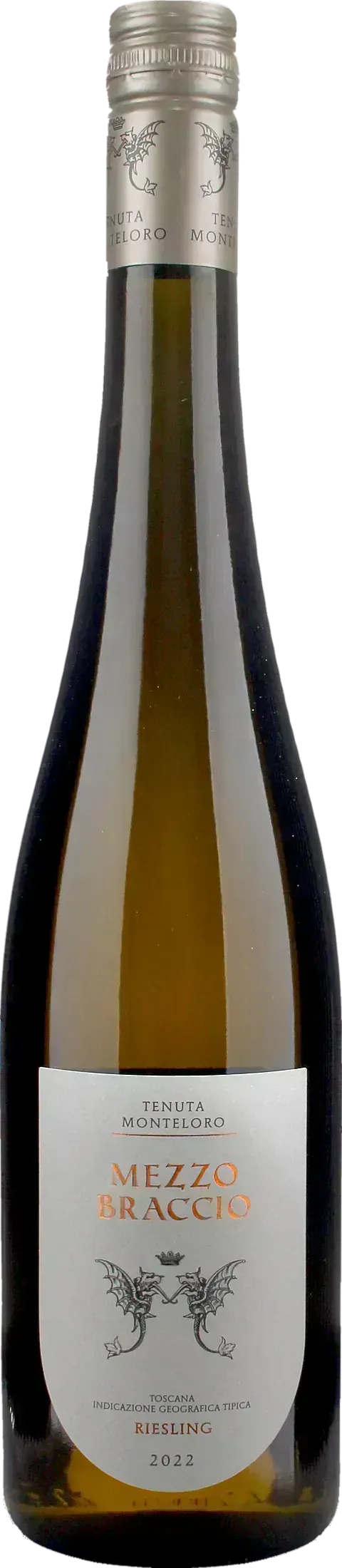
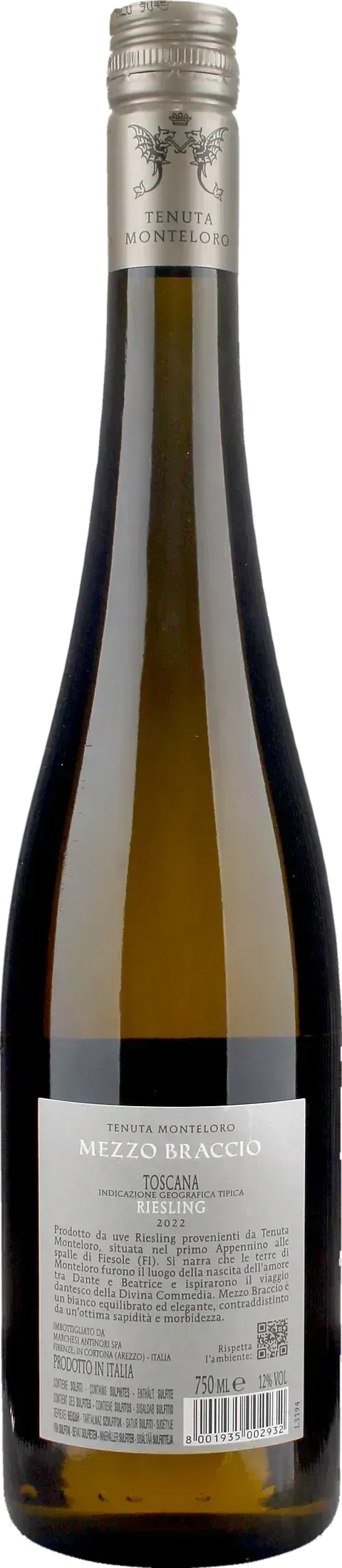
Mezzo Braccio Riesling 2022
Other years:
2021| Denomination | IGT Toscana |
|---|---|
| Size | 0,75 l |
| Alcohol content | 12.0% by volume |
| Area | Tuscany (Italy) |
| Grape varieties | 100% Riesling |
| Aging | Resting/ageing on fine lees at low temperatures, with a final maturation of at least 6 months and subsequent bottle ageing for 24 months. |
| Other years | 2021 |
- Type: Still white wine Toscana IGT, 100% Riesling, zero residual sugar
- Origin and terroir: From Fiesole (Florence), at an altitude of 500 m, with a cool climate and mineral soils
- Vinification: Manual harvesting in two stages; fermentation in stainless steel at no more than 16 °C
- Ageing: Rested on fine lees at low temperatures and 24 months in the bottle
- Profile and pairings: Hints of pear, peach and mineral notes; ideal with shellfish and white meats
Description
What type of wine it is
Tenuta Monteloro's Mezzo Braccio Riesling is a still white wine produced in Tuscany exclusively from Riesling grapes. This Indicazione Geografica Tipica expression is distinguished by a structured and complex profile, capable of combining marked freshness with a distinct savoury character. The vinification involves fermentation in stainless steel at a controlled temperature, followed by prolonged ageing on the fine lees, which enriches the structure and ensures strong ageing potential. Elegant and mineral, it proves to be an enveloping and deep glass.
Where it comes from
This Riesling originates in the hills of the first Apennines behind Fiesole, near Florence, at an altitude of approximately 500 metres above sea level. The vineyard benefits from a cool climate characterised by significant temperature fluctuations, offering optimal conditions for the aromatic development of white grape varieties. The mineral-rich soils give the wine its distinctive and vibrant salinity. The name pays homage to local agricultural history, recalling an ancient Florentine unit of measurement traditionally used to calculate the size of small land plots.
How it is produced
Production begins with a manual harvest carried out in two distinct stages: an initial phase to preserve natural acidity and a second to ensure greater aromatic concentration. After destemming and soft pressing, alcoholic fermentation takes place separately for each plot within stainless steel vats, maintaining the temperature below sixteen degrees. The wine then rests at low temperatures to gain complexity. The production cycle concludes with long bottle ageing, which stabilises the organoleptic profile.
History and curiosities
The Tenuta Monteloro brand boasts a long history on the hills of the Fiesole Apennines, an area on the outskirts of Florence that has historically become the ideal location for aromatic grape varieties. The unique name of the wine derives from the 'mezzo braccio' [half-arm], an ancient Florentine unit of measurement used to calculate the dimensions of small plots of land. Produced with the utmost care since the 2007 vintage, the exclusive Tuscan Riesling represents an authentic and precious tribute to the local agricultural past. The product has been awarded the AIS Four Vines.
Awards
-
2022
 3
Italian Sommelier Foundation (FIS) guide This has been one of the most prestigious wine guides in Italy for over 10 years.
Tasting notes

Perfume

Color
Serve at:
12 - 14 °C
Longevity:
05 - 10 years
- Oenologist: Andrea Bencini
- Hectares: 65
Thanks to the particular climatic and environmental characteristics, in the vineyards white varieties have been planted that are unusual for the area, such as riesling, pinot grigio, pinot bianco and gewurztraminer. Read more


| Name | Tenuta Monteloro Mezzo Braccio Riesling 2022 |
|---|---|
| Type | White still |
| Denomination | Toscana IGT |
| Vintage | 2022 |
| Size | 0,75 l |
| Alcohol content | 12.0% by volume |
| Grape varieties | 100% Riesling |
| Country | Italy |
| Region | Tuscany |
| Vendor | Tenuta Monteloro (Antinori) |
| Story | History and curiosities The Tenuta Monteloro brand boasts a long history on the hills of the Fiesole Apennines, an area on the outskirts of Florence that has historically become the ideal location for aromatic grape varieties. The unique name of the wine derives from the 'mezzo braccio' [half-arm], an ancient Florentine unit of measurement used to calculate the dimensions of small plots of land. Produced with the utmost care since the 2007 vintage, the exclusive Tuscan Riesling represents an authentic and precious tribute to the local agricultural past. The product has been awarded the AIS Four Vines. |
| Origin | Fiesole (Florence) |
| Climate | Cool climate |
| Soil composition | Mineral-rich soils |
| Cultivation system | Screw cap |
| Harvest | Between mid-September and October (manual harvest in two passes) |
| Fermentation temperature | Not exceeding 16 °C |
| Production technique | Manual harvesting in two passes; destemming and gentle pressing; fermentation in stainless steel tanks at controlled temperatures; ageing on the fine lees at low temperatures, followed by ageing in the bottle. |
| Wine making | The grapes are destemmed and subjected to soft pressing; alcoholic fermentation takes place separately by parcel in stainless steel tanks at a controlled temperature (no higher than 16 °C). This is followed by resting/ageing on the fine lees at low temperatures and a final ageing of at least 6 months; bottled in mid-July of the year following the harvest. |
| Aging | Resting/ageing on fine lees at low temperatures, with a final maturation of at least 6 months and subsequent bottle ageing for 24 months. |
| Allergens | Contains sulphites |