


Stephane Regnault Champagne
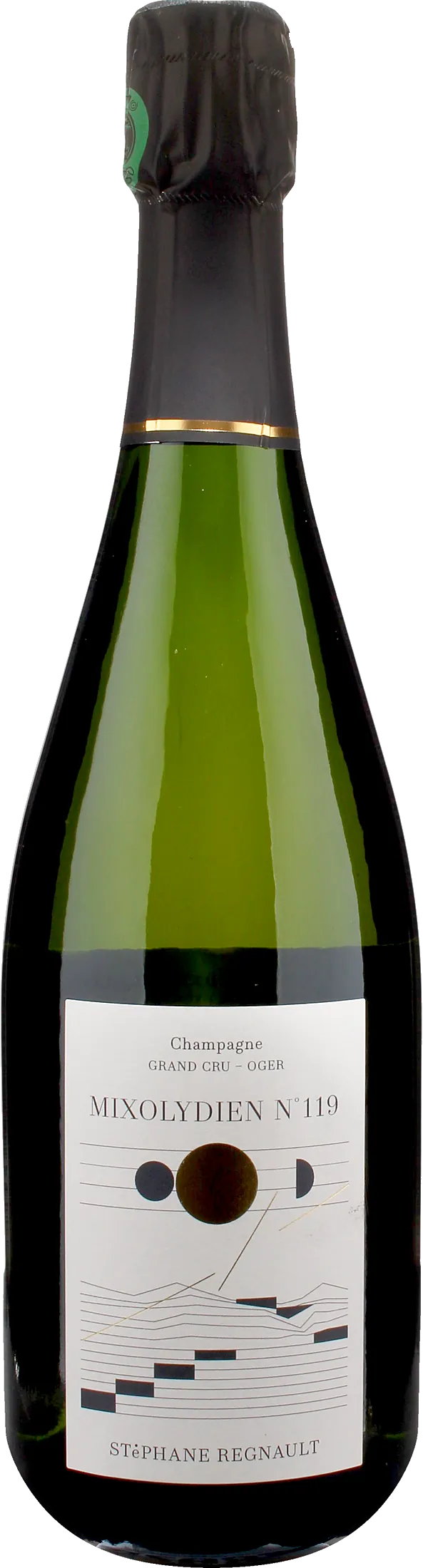
Grand Cru Oger Mixolydien N 119 Extra Brut
| Denomination | AOC Champagne Blanc de Blancs |
|---|---|
| Size | 0,75 l |
| Alcohol content | 12.5% by volume |
| Area | Champagne region (France) |
| Grape varieties | 100% Chardonnay |
| Aging | Tirage in July 2021; ageing on the lees in the bottle for approximately 56 months until disgorgement in March 2026. |
- Type and origin: Blanc de Blancs Grand Cru sparkling wine from Oger, Champagne AOC
- Extra Brut dosage: absence of residual sugars, dry and bold flavour
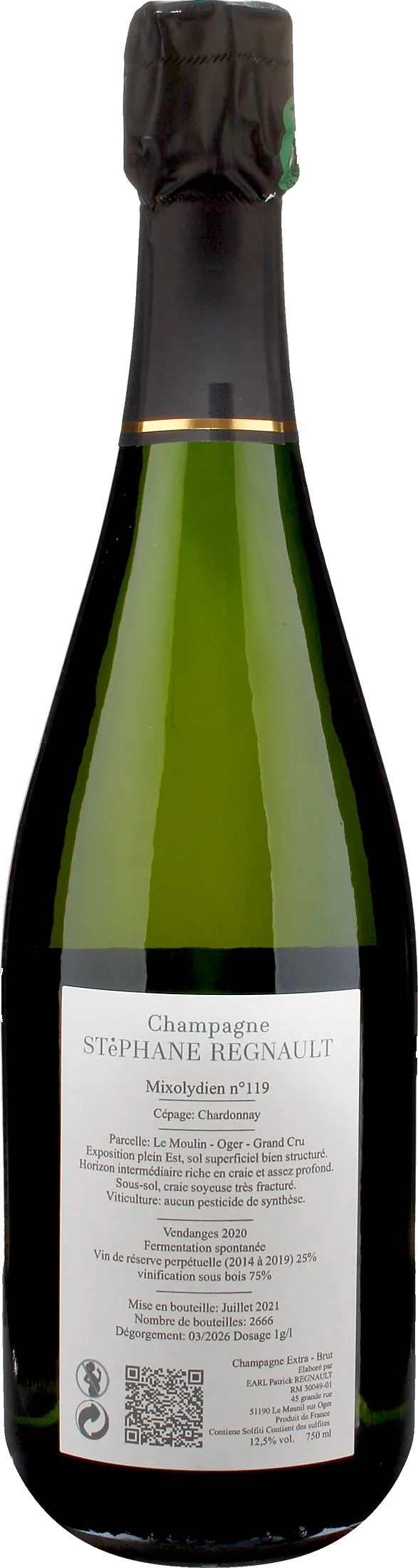
- Winemaking process: spontaneous fermentation, 75% in wood and 25% from perpetual reserve
- Ageing on the lees: approximately 56 months in the bottle, fine and creamy bubbles
- Aromatic profile: notes of citrus, quince and brioche; long, chalky and mineral finish
Description
Style of wine
The Champagne Grand Cru Oger Mixolydien N 119 Extra Brut by Stephane Regnault Champagne is a fascinating and complex Blanc de Blancs. Produced entirely from Chardonnay grapes, this wine from the Champagne appellation expresses great elegance. Made using the Traditional Method, it is characterised by a firm structure, with a creamy texture and a persistent perlage. On the palate, it offers a vibrant acidity and a long, taut, and markedly mineral finish. The vinification involves spontaneous fermentation in wood and blending with reserve wines.
Origin
This Champagne comes from Oger, a prestigious Grand Cru in the Champagne region. The vineyard benefits from a cool continental climate and an easterly exposure. The terroir is characterised by a well-structured surface soil resting on a deep intermediate layer with a high chalk content. The subsoil is composed of fine and intensely fractured chalk, a fundamental element that gives the wine its unmistakable and distinct minerality.
Production process
Production begins with a manual harvest of the grapes. Alcoholic fermentation occurs spontaneously with indigenous yeasts. Vinification takes place with 75% in oak barrels, while the remaining 25% consists of wines from a perpetual reserve. This is followed by the 'tirage' for the second fermentation according to the Traditional Method. The wine completes its journey with a long period of ageing on the lees in the bottle, which significantly enriches its structural and aromatic complexity.
History and interesting facts
The oenological history of this magnificent sparkling wine by Stephane Regnault Champagne is deeply linked to the use of a perpetual reserve, a method that carefully preserves the precious vintages from 2014 to 2019. A fascinating chronological detail concerns its very slow maturation: the wine waits patiently for fifty-six months for its long-awaited disgorgement in March 2026. Visually, the bottle intrigues connoisseurs thanks to an exclusive abstract geometric label in elegant tones of black and pure gold, an expression of splendid art and winemaking tradition.
Tasting notes

Perlage
Perfume

Color
Taste
Serve at:
06 - 08 °C
- Hectares: 4


| Name | Stephane Regnault Champagne Grand Cru Oger Mixolydien N 119 Extra Brut |
|---|---|
| Type | White classic method sparkling wine extra brut |
| Denomination | Champagne AOC |
| Size | 0,75 l |
| Alcohol content | 12.5% by volume |
| Grape varieties | 100% Chardonnay |
| Country | France |
| Region | Champagne region |
| Vendor | Stephane Regnault Champagne |
| Story | History and interesting facts The oenological history of this magnificent sparkling wine by Stephane Regnault Champagne is deeply linked to the use of a perpetual reserve, a method that carefully preserves the precious vintages from 2014 to 2019. A fascinating chronological detail concerns its very slow maturation: the wine waits patiently for fifty-six months for its long-awaited disgorgement in March 2026. Visually, the bottle intrigues connoisseurs thanks to an exclusive abstract geometric label in elegant tones of black and pure gold, an expression of splendid art and winemaking tradition. |
| Origin | Oger, Champagne region |
| Climate | Cool continental climate with an easterly aspect |
| Soil composition | Well-structured topsoil over a deep intermediate layer with a high gypsum content; subsoil composed of fine and intensely fractured gypsum. |
| Harvest | Manual collection |
| Fermentation | Ageing on the lees in the bottle for approximately 56 months (until disgorgement in March 2026) |
| Production technique | Spontaneous alcoholic fermentation with indigenous yeasts; 75% vinification in wood (oak barrels) and 25% reserve wines from a perpetual reserve; tirage (traditional method) and ageing on the lees in the bottle. |
| Wine making | Vinification carried out 75% in wood (oak barrels) with spontaneous fermentation; blended with 25% reserve wines from a perpetual reserve (vintages from 2014 to 2019). |
| Aging | Tirage in July 2021; ageing on the lees in the bottle for approximately 56 months until disgorgement in March 2026. |
| Allergens | Contains sulphites |