


Rocche Costamagna
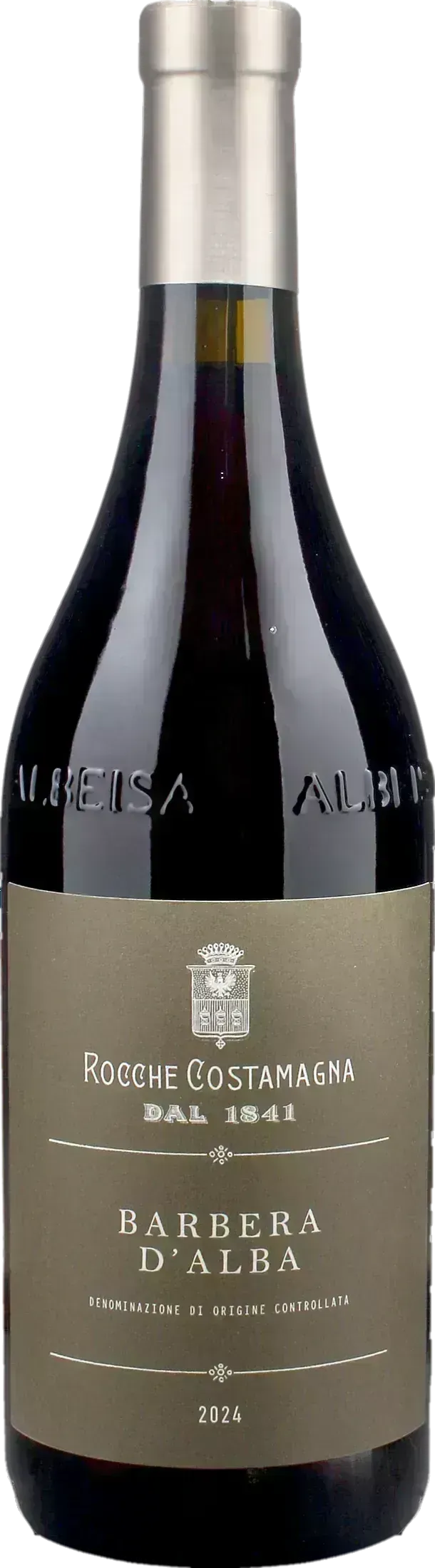
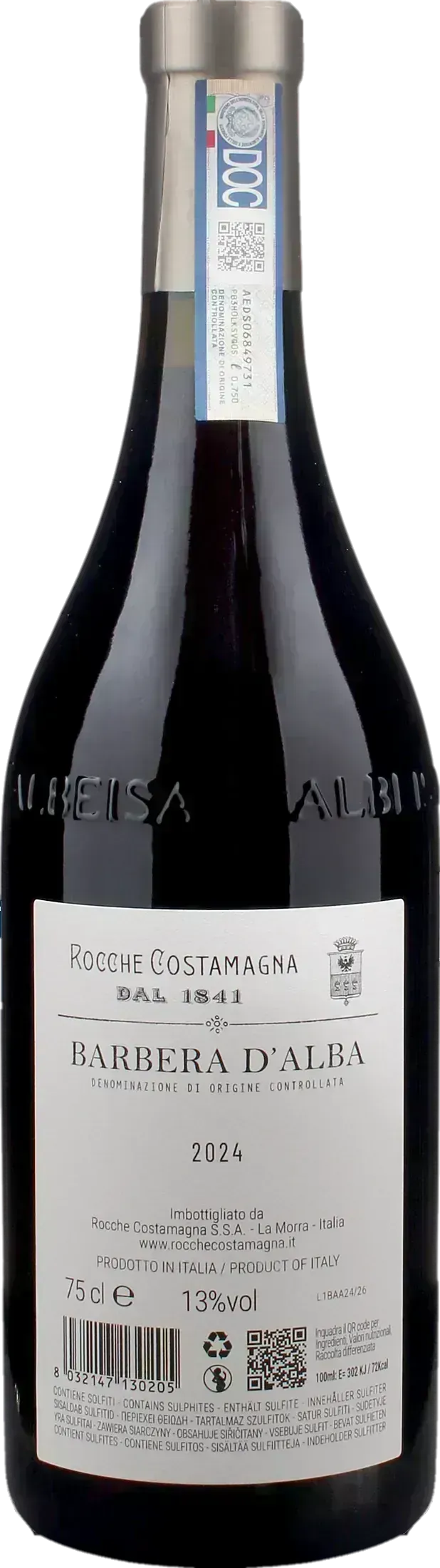
Barbera d'Alba 2024
| Denomination | DOC Barbera d'Alba |
|---|---|
| Size | 0,75 l |
| Alcohol content | 13.0% by volume |
| Area | Piedmont (Italy) |
| Grape varieties | 100% Barbera |
| Aging | Aged for 12 months in French casks/barriques, followed by 6 months of bottle ageing. |
- Wine and origin: Still red Barbera d'Alba 2024 from La Morra, Piedmont
- Fruity aromas: Wild cherry, blackcurrant and pomegranate with light spicy notes
- Palate: Refined structure, characteristic Barbera acidity and delicate tannins
- Maturation: 12 months in French barrels and 6 months in bottle for greater complexity
- Pairings: 16–18°C, oxygenate for 1 hour; ideal with red meats, risottos and cheeses
Description
What type of wine it is
Barbera d'Alba Rocche Costamagna is a still red wine that fully expresses the authenticity of the Barbera grape variety. Produced in Piedmont, within the Barbera d'Alba appellation, it offers a structured and elegant sip. On the palate, it is fresh and enveloping, balanced by the pleasant acidity typical of the variety and soft tannins. The aromatic profile opens with fragrant notes of Marasca cherry, enriched by nuances of blackcurrant, pomegranate and delicate spicy hints, closing with a persistent finish, enhanced by ageing in French barrels.
Where it comes from
This red wine originates in La Morra, in the heart of the province of Cuneo, Piedmont. The vineyards are located on calcareous-clay soils, a geological composition that gives the wine a solid taste structure and a prolonged persistence. The vines, with a density of 5,200 plants per hectare, maintain a measured yield that encourages excellent aromatic concentration in the clusters. The winery, founded in 1841, is dedicated to enhancing the unique characteristics of this renowned wine-growing area.
How it is produced
After the harvest, which typically takes place at the end of September, the must undergoes maceration on the skins for about five or six days at a controlled temperature of 27 °C, to ensure optimal extraction. The process continues with twelve months of maturation in French barrels, a step that refines its structure and adds complexity. Finally, the wine undergoes a further rest in the bottle for six months before being marketed, to stabilise its organoleptic profile.
History and curiosities
Founded in 1841, the Rocche Costamagna winery has its ancient roots in the prestigious territory of La Morra, in the province of Cuneo, where it produces this Barbera d'Alba DOC with dedication. The meticulous production process is skilfully guided by the oenologist Alessandro Locatelli, who scrupulously looks after every single detail of the label belonging to the special Ozzano Selection line, created specifically to enhance the rural territory. The grapes are traditionally harvested at the end of September, giving an admirable longevity of ten years in the bottle.
Tasting notes

Perfume

Color

Taste
Serve at:
14 -16 °C
Longevity:
10 - 15 years
Decanting time:
1 hour
- Start up year: 1841
- Oenologist: Alessandro Locatelli
- Bottles produced: 100.000
- Hectares: 15
A tradition of dedication to vines and wine, a family history with six generations of winemakers who have aimed to raise the quality of their work and their labels over time, enhancing the exceptional terroir of La Morra and making the most of the fruits of the prestigious "Rocche dell'Annunziata" Barolo cru, cultivated by the same family for over two centuries."Tradition, dynamism and sustainability simultaneously represent the values and development aims of Rocche Costamagna: our wines are the expression of a story of love for and dedication to the land of the Langa which spans six generations and more than two centuries" explains Alessandro Locatelli, who runs the winery today.
The cellars, which date back to the Napoleonic era, have been restored to their original splendor and now house elegant guest accommodation, where the Barolo experience meets traditional Langhe hospitality for tours, tastings and holidays filled with charm. Read more


| Name | Rocche Costamagna Barbera d'Alba 2024 |
|---|---|
| Type | Red green still |
| Denomination | Barbera d'Alba DOC |
| Vintage | 2024 |
| Size | 0,75 l |
| Alcohol content | 13.0% by volume |
| Grape varieties | 100% Barbera |
| Country | Italy |
| Region | Piedmont |
| Vendor | Rocche Costamagna |
| Story | History and curiosities Founded in 1841, the Rocche Costamagna winery has its ancient roots in the prestigious territory of La Morra, in the province of Cuneo, where it produces this Barbera d'Alba DOC with dedication. The meticulous production process is skilfully guided by the oenologist Alessandro Locatelli, who scrupulously looks after every single detail of the label belonging to the special Ozzano Selection line, created specifically to enhance the rural territory. The grapes are traditionally harvested at the end of September, giving an admirable longevity of ten years in the bottle. |
| Origin | La Morra (Cuneo), Piedmont, Italy |
| Soil composition | Calcareous-clay |
| Plants per hectare | 5,200 vines/ha |
| Yield per hectare | 50 hl/ha (yield of approximately 1.80 kg per plant) |
| Harvest | Autumn (28–29 September) |
| Fermentation temperature | 27 degrees Celsius |
| Fermentation | 6–7 days |
| Production technique | Maceration on the skins for 5–6 days at a controlled temperature (27 °C), followed by ageing/maturation for 12 months in French barriques/casks and a subsequent 6 months of resting in the bottle. |
| Wine making | After the late-September harvest, the must macerates on the skins for 5–6 days (approximately 6–7 days) at a controlled temperature (27 °C). This is followed by maturation for 12 months in French barrels/barriques and a further six months of bottle ageing before being released onto the market. |
| Aging | Aged for 12 months in French casks/barriques, followed by 6 months of bottle ageing. |
| Total acidity | 5.6 gr/L |
| Allergens | Contains sulphites |