


Ricasoli 1141
Chianti Classico Brolio Riserva 2023
| Denomination | DOCG Chianti Classico Riserva |
|---|---|
| Size | 0,75 l |
| Alcohol content | 14.5% by volume |
| Area | Tuscany (Italy) |
| Grape varieties | 100% Sangiovese |
| Aging | Ageing for approximately 16–18 months in 500-litre French oak tonneaux and barriques (partly new and partly second-fill), followed by 3–6 months of bottle ageing. |
- Origin: Castello di Brolio vineyards, Gaiole in Chianti (Tuscany)
- Varietal composition: Sangiovese grapes with Merlot and Cabernet Sauvignon; dry red wine
- Vinification: Fermentation in stainless steel at 24–27°C, maceration on the skins for 14–16 days
- Maturation: 16–18 months in French oak barrels, followed by 3–6 months in the bottle
- Tasting notes: Notes of black cherry and herbs; serve at 16–18°C with roasted meats and mature cheeses
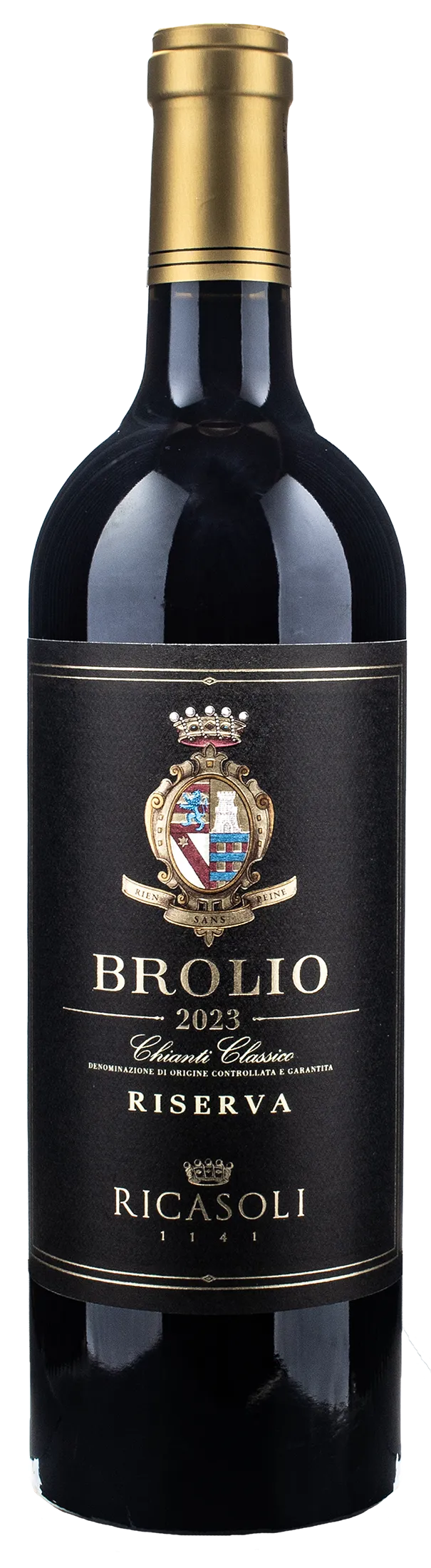
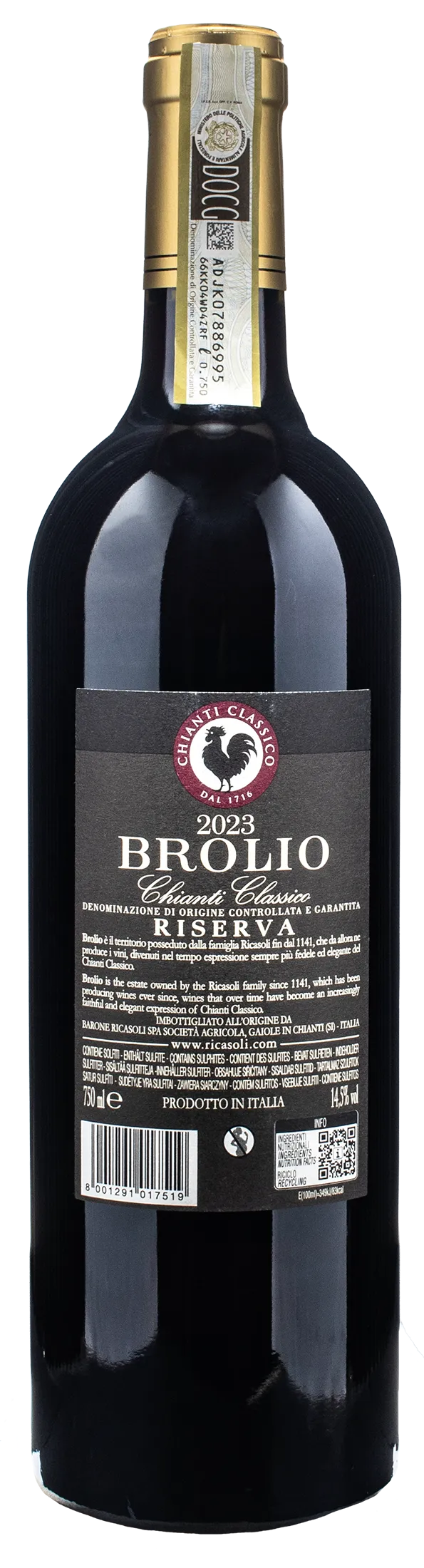
Description
What type of wine it is
Ricasoli's Brolio is a Tuscan red wine, a Chianti Classico Riserva with an intense ruby colour. This red grape blend combines Sangiovese, Merlot, and Cabernet Sauvignon varieties, aged in casks and barriques. On the nose and palate, it is distinguished by an opulent structure, clear hints of black cherries, Mediterranean herbs, and a vibrant acidity. The finish reveals enveloping notes of tobacco and chocolate, ideal for accompanying roast beef, game, and aged cheeses.
Where it comes from
It originates from the prestigious Tuscan vineyards located around Brolio Castle, in the territory of Gaiole in Chianti. The vines grow at optimal altitudes on sunny slopes, enjoying a favourable climate and significant temperature fluctuations. The strength of this terroir lies in its complex geological variety. The roots explore different soil formations, including Macigno sandstones, galestro, and alberese, alongside marine deposits and river terraces. This richness is reflected in the glass, imparting a distinct minerality to the palate.
How it is produced
After a careful manual harvest, the grapes undergo temperature-controlled fermentation in steel tanks. Prolonged maceration on the skins allows for optimal extraction of colour and structure. The wine then matures for about a year and a half in French oak casks and barriques, a fundamental step for smoothing the tannins and enriching the aromatic profile with toasted nuances. A measured final ageing completes the process, harmonising all components to deliver a balanced, powerful, and fragrant sip.
History and Fascinating Facts
The Brolio Chianti Classico Riserva by Barone Ricasoli celebrates a centuries-old tradition that began in 1141 at the historic Brolio Castle, in the heart of Gaiole in Chianti. This excellent 2023 vintage, awarded by James Suckling and Wine Spectator, is crafted from fine Sangiovese grapes. The identity of this wine is shaped by five geological formations, including sandstone, galestro and alberese, which bestow upon it an incomparable complexity.
Awards
-
2023
 93
93/100
James Suckling is an influential American wine critic and journalist who worked at Wine Spectator for 30 years. He left the magazine in 2010 to start his own website and guidebook (JamesSuckling.com). He specialises in Italian and Bordeaux wines.
-
2023
 90
90/100
Wine spectator is the most influential wine guide on the internet.
Tasting notes

Perfume

Color

Taste
Serve at:
16 - 18 °C
Longevity:
10 - 15 years
Decanting time:
1 hour
- Start up year: 1141
- Oenologist: Carlo Ferrini
- Bottles produced: 2.500.000
- Hectares: 235
Francesco Ricasoli, current owner and President of the company, has generated new ideas and concepts to render the vineyards sustainable. The ongoing study of soil types and the clonal selection of the Brolio Sangiovese are among his greatest passions, and he has totally renovated the vineyards and completely mapped them. The new wines are therefore the expression of research carried out with the same scientific rigor of his illustrious ancestor but with a contemporary spirit, like a runner receiving the baton and carrying it forward with renewed energy. Read more


| Name | Ricasoli 1141 Chianti Classico Riserva Brolio 2023 |
|---|---|
| Type | Red still |
| Denomination | Chianti Classico DOCG |
| Vintage | 2023 |
| Size | 0,75 l |
| Alcohol content | 14.5% by volume |
| Grape varieties | 100% Sangiovese |
| Country | Italy |
| Region | Tuscany |
| Vendor | Ricasoli 1141 |
| Story | History and Fascinating Facts The Brolio Chianti Classico Riserva by Barone Ricasoli celebrates a centuries-old tradition that began in 1141 at the historic Brolio Castle, in the heart of Gaiole in Chianti. This excellent 2023 vintage, awarded by James Suckling and Wine Spectator, is crafted from fine Sangiovese grapes. The identity of this wine is shaped by five geological formations, including sandstone, galestro and alberese, which bestow upon it an incomparable complexity. |
| Origin | Gaiole in Chianti, in the vineyards surrounding Brolio Castle (Siena), Tuscany, Italy |
| Climate | Regular winter with sub-zero temperatures, mild and rainy spring, hot and dry summer, favourable autumn with significant diurnal temperature variation and adequate water reserves. |
| Soil composition | The vineyards are situated on five main geological formations: Macigno del Chianti (sandstone), Scaglia Toscana (galestro), Monte Morello (alberese), marine deposits (sandy deposits with clay at depth) and ancient river terraces (silty deposits with the presence of clay). |
| Cultivation system | Spurred cordon and Guyot |
| Plants per hectare | 5,500–6,600 |
| Harvest | Between the end of September and the middle of October (early autumn) |
| Fermentation temperature | 24 to 27 °C |
| Fermentation | 14–16 days |
| Production technique | Fermentation in stainless steel tanks at a controlled temperature (24–27 °C) with maceration on the skins for 14–16 days; ageing for 16–18 months in French oak tonneaux and barriques, followed by 3–6 months of bottle ageing |
| Wine making | Fermentation in stainless steel tanks at a controlled temperature (24–27 °C), with maceration on the skins for approximately 14–16 days. |
| Aging | Ageing for approximately 16–18 months in 500-litre French oak tonneaux and barriques (partly new and partly second-fill), followed by 3–6 months of bottle ageing. |
| Total acidity | 5.62 gr/L |
| PH | 3.33 |
| Residual sugar | 27.16 gr/L |
| Allergens | Contains sulphites |