


Paltrinieri Gianfranco
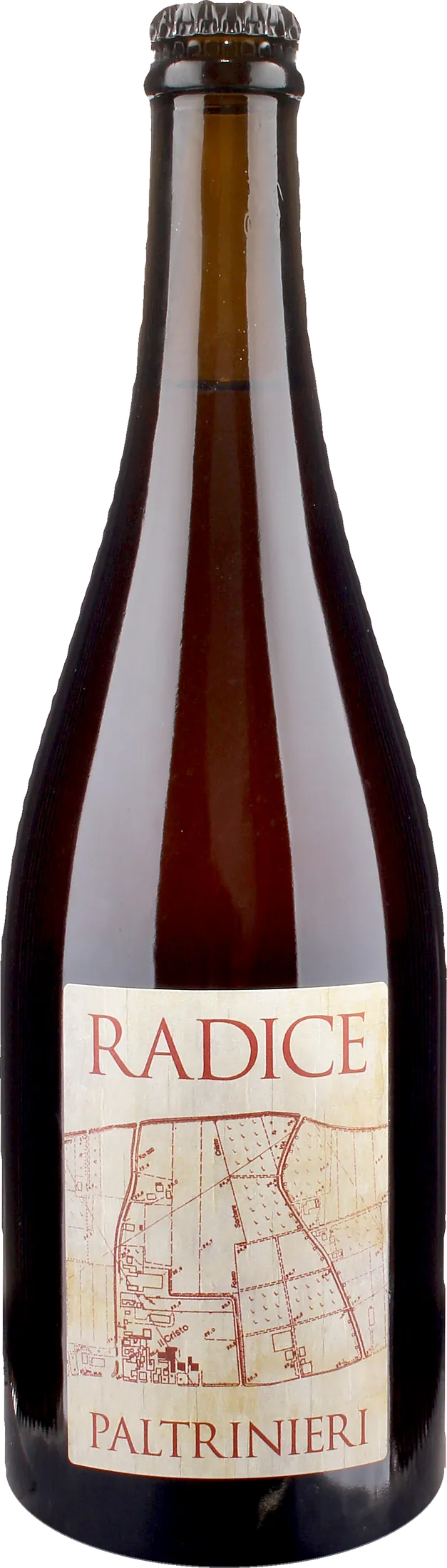
Lambrusco Radice 2025
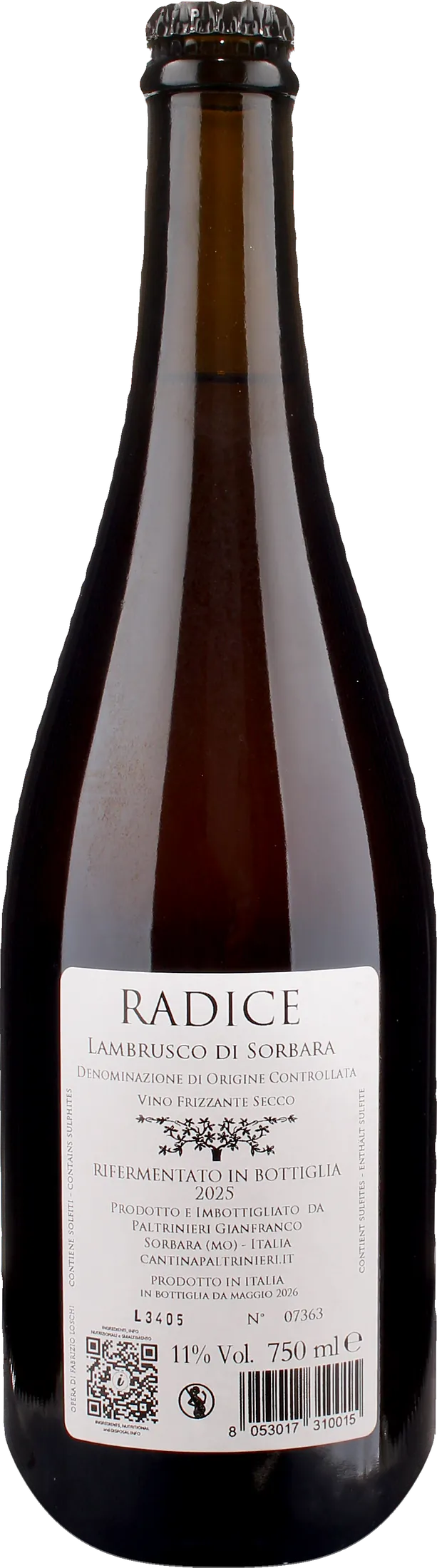
| Denomination | DOC Lambrusco di Sorbara Rosato Frizzante Secco |
|---|---|
| Size | 0,75 l |
| Alcohol content | 11.0% by volume |
| Area | Emilia-Romagna (Italy) |
| Grape varieties | 100% Lambrusco di Sorbara |
| Aging | Bottle ageing (natural secondary fermentation in the bottle for approximately 90 days, maturation on the lees) |
- Style and designation: Dry sparkling rosé wine with controlled designation of origin, 2025 vintage
- Ancestral method: Natural re-fermentation in the bottle for 90 days on the lees
- Unfiltered: Zero dosage and no disgorgement, with a cloudy appearance and natural sediment
- Aroma and taste: Notes of raspberry, grapefruit and pomegranate; lively acidity and a dry finish
- Food pairings and service: Recommended with fried foods, cured meats and tortellini; serving temperature 10–13°C
Description
Style of wine
Radice Paltrinieri is a dry sparkling rosé with a Controlled Designation of Origin from Emilia-Romagna that expresses the most authentic soul of Lambrusco di Sorbara. Produced using the ancestral method, it presents a salmon-pink hue, naturally cloudy due to the time spent on the lees, and a fragrant aromatic profile of raspberry, grapefruit, citrus and pomegranate. On the palate, it offers marked acidity and a deep savouriness, supported by a fine and creamy perlage. The light and silky structure culminates in a dry finish with a pleasantly bitter touch, ideal for accompanying savoury dishes such as fried foods and tortellini.
Origin
This wine is born in the Sorbara area, the premier region for growing Lambrusco di Sorbara in the Modena plains. The grapes come from the historic Il Cristo vineyard, characterised by loose, cool and silty soils of alluvial and sandy origin. This particular soil composition is crucial for giving the bunches a slender profile and maintaining the high acidic character typical of the variety. The Paltrinieri winery has operated in these lands since 1926, enhancing the most direct and sincere expression of the Modena area through rigorous work in the vineyard.
Production
Processing begins with a soft pressing to obtain the free-run must, vinified as a white wine. Alcoholic fermentation occurs spontaneously in steel tanks thanks to the action of indigenous yeasts, preserving maximum aromatic purity. The wine then undergoes a natural re-fermentation in the bottle for about ninety days. As no disgorgement or filtration is performed and no dosage is added, the wine maintains a rigorous and distinctive character. The natural sediment at the bottom enriches the tactile texture of this rosé, enhancing its unique gustatory volume.
History and curiosities
The signature label of the Paltrinieri winery, active in the Modena area since 1926, Radice comes from the famous historic Il Cristo vineyard in Sorbara, embodying the purest Emilian tradition. The uniqueness of this Lambrusco lies in the ancestral method, a delicate natural secondary fermentation in the bottle achieved thanks to indigenous yeasts. This artisanal technique, strictly carried out without filtration or disgorgement, gives the rosé an unmistakable cloudy appearance and a silky texture, excellent qualities regularly awarded by publications such as Gambero Rosso and Vinous.
Tasting notes

Perlage

Perfume

Color

Taste
Serve at:
06 - 08 °C
Longevity:
03 - 05 years

- Start up year: 1926
- Oenologist: Attilio Pagli
- Bottles produced: 180.000
- Hectares: 17


| Name | Paltrinieri Lambrusco Radice 2025 |
|---|---|
| Type | Rosé green bubbly dry |
| Denomination | Lambrusco di Sorbara DOC |
| Vintage | 2025 |
| Size | 0,75 l |
| Alcohol content | 11.0% by volume |
| Grape varieties | 100% Lambrusco di Sorbara |
| Country | Italy |
| Region | Emilia-Romagna |
| Vendor | Paltrinieri Gianfranco |
| Story | History and curiosities The signature label of the Paltrinieri winery, active in the Modena area since 1926, Radice comes from the famous historic Il Cristo vineyard in Sorbara, embodying the purest Emilian tradition. The uniqueness of this Lambrusco lies in the ancestral method, a delicate natural secondary fermentation in the bottle achieved thanks to indigenous yeasts. This artisanal technique, strictly carried out without filtration or disgorgement, gives the rosé an unmistakable cloudy appearance and a silky texture, excellent qualities regularly awarded by publications such as Gambero Rosso and Vinous. |
| Origin | Sorbara (Modena), Emilia-Romagna, Italy, the historic Il Cristo vineyard in the Modenese plain |
| Soil composition | Loose, moist and silty |
| Cultivation system | Geneva Double Curtain (G.D.C.), Sylvoz |
| Yield per hectare | 120 quintals per hectare |
| Harvest | Mid-September |
| Fermentation | About 90 days |
| Production technique | Ancestral method (Pétillant Naturel), natural re-fermentation in the bottle on indigenous yeasts. |
| Wine making | Free-run must vinified as white wine, obtained from soft pressing of the grapes; spontaneous alcoholic fermentation with indigenous yeasts; natural secondary fermentation in the bottle for approximately 90 days (ancestral method), without dosage, disgorgement or filtration, remaining on the lees with natural sediment. |
| Aging | Bottle ageing (natural secondary fermentation in the bottle for approximately 90 days, maturation on the lees) |
| Allergens | Contains sulphites |