


Paltrinieri Gianfranco
Lambrusco di Sorbara Piria 2025
| Denomination | DOC Lambrusco di Sorbara Rosso Spumante |
|---|---|
| Size | 0,75 l |
| Alcohol content | 11.0% by volume |
| Area | Emilia-Romagna (Italy) |
| Grape varieties | 70% Lambrusco di Sorbara, 30% Lambrusco Salamino |
- Type: Dry red sparkling wine DOC from Lambrusco di Sorbara and Salamino grapes
- Aromas: Notes of strawberry and red fruits, apple peel, violet and thyme
- Palate: Dry and lively taste, creamy and elegant mousse, savoury finish
- Vinification: Hand-harvested without maceration; secondary fermentation in autoclave (Martinotti Method)
- Territory and rating: Cristo di Sorbara area, 11% alcohol, 91 Vinous points

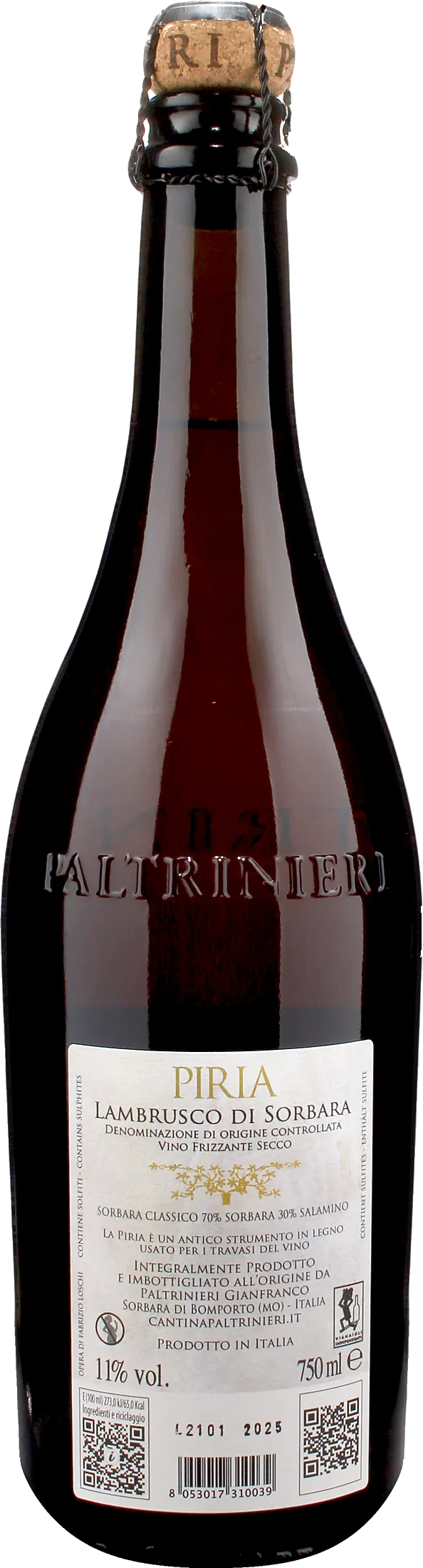
Description
What type of wine it is
Lambrusco di Sorbara Piria by Paltrinieri is a dry red sparkling wine that expresses authentic Emilian identity. This blend of Lambrusco di Sorbara and Lambrusco Salamino grapes presents a pale ruby hue, enhanced by a fine and persistent perlage. On the nose, it releases clear aromas of small red fruits and strawberry, enriched by nuances of apple skin, violet and thyme. On the palate, it is dry and lively, characterised by a creamy and elegant mousse that leads towards a finish with a marked savoury and saline streak, perfect for pairing with traditional dishes such as tortellini in broth.
Where it comes from
This Lambrusco di Sorbara originates from the Cristo di Sorbara area, a fertile strip of land in the Modena region situated between the Secchia and Panaro rivers. The vines, cultivated using the Geneva Double Curtain system, take root in loose and sandy soils, rich in silt and organic matter. The specific soil composition gives the wine a vibrant freshness and a distinct mineral character. The deep connection with the territory has been nurtured by Paltrinieri since 1926, continuing a history of agricultural dedication now supported by the expertise of oenologist Attilio Pagli.
How it is produced
Production begins in September with a rigorous manual harvesting of the bunches, to ensure the highest quality of the raw material. In the cellar, vinification takes place without skin maceration, a fundamental technical choice to achieve the light and brilliant colour that distinguishes the wine. Re-fermentation in autoclaves, according to the Martinotti Method, allows the fragrance of the primary aromas, both floral and fruity, to be preserved intact. The result is a harmonious wine, defined by the total absence of residual sugars, which ensures a dry, dynamic sip that is deeply faithful to the original grape varieties.
History and curiosities
Since 1926, the Paltrinieri winery has passed down the artisanal heritage of grandfather Achille. The prestigious Lambrusco di Sorbara DOC “Piria” originates in the fertile area of Cristo di Sorbara, nestled between the Secchia and Panaro rivers. Here, the grapes are carefully harvested by hand from silty and sandy soils that impart an unmistakable saline character to the glass. Guided by the vision of oenologist Attilio Pagli, this Emilian excellence has earned 91 Vinous points, rewarding nearly a whole century of family dedication and a great territorial vocation.
Tasting notes

Perlage

Perfume

Color

Taste
Serve at:
10 - 12 °C
Longevity:
03 - 05 years

- Start up year: 1926
- Oenologist: Attilio Pagli
- Bottles produced: 180.000
- Hectares: 17


| Name | Paltrinieri Lambrusco di Sorbara Piria 2025 |
|---|---|
| Type | Red green charmat method sparkling wine dry |
| Denomination | Lambrusco di Sorbara DOC |
| Vintage | 2025 |
| Size | 0,75 l |
| Alcohol content | 11.0% by volume |
| Grape varieties | 70% Lambrusco di Sorbara, 30% Lambrusco Salamino |
| Country | Italy |
| Region | Emilia-Romagna |
| Vendor | Paltrinieri Gianfranco |
| Story | History and curiosities Since 1926, the Paltrinieri winery has passed down the artisanal heritage of grandfather Achille. The prestigious Lambrusco di Sorbara DOC "Piria" originates in the fertile area of Cristo di Sorbara, nestled between the Secchia and Panaro rivers. Here, the grapes are carefully harvested by hand from silty and sandy soils that impart an unmistakable saline character to the glass. Guided by the vision of oenologist Attilio Pagli, this Emilian excellence has earned 91 Vinous points, rewarding nearly a whole century of family dedication and a great territorial vocation. |
| Origin | Area of Cristo di Sorbara, between the Secchia and Panaro rivers, near Modena (Emilia-Romagna) |
| Soil composition | Loose, predominantly silty and sandy, cool and with a good presence of organic matter |
| Cultivation system | G.D.C. (Geneva Double Curtain) |
| Yield per hectare | 140 quintals per hectare |
| Harvest | Second week of September. |
| Production technique | Charmat method (Martinotti) |
| Wine making | Manual harvesting of the bunches; processing in the cellar with a total absence of skin contact; alcoholic fermentation and subsequent secondary fermentation in pressure tanks (autoclave) according to the Martinotti (Charmat) method. |
| Allergens | Contains sulphites |