


Masseto
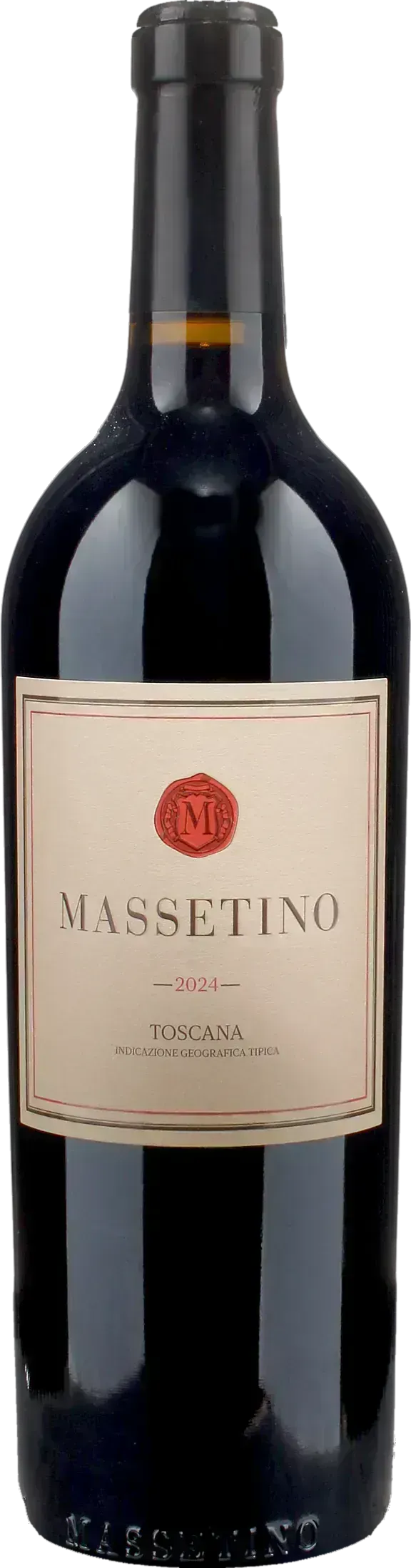
Massetino 2024
| Denomination | IGT Toscana |
|---|---|
| Size | 0,75 l |
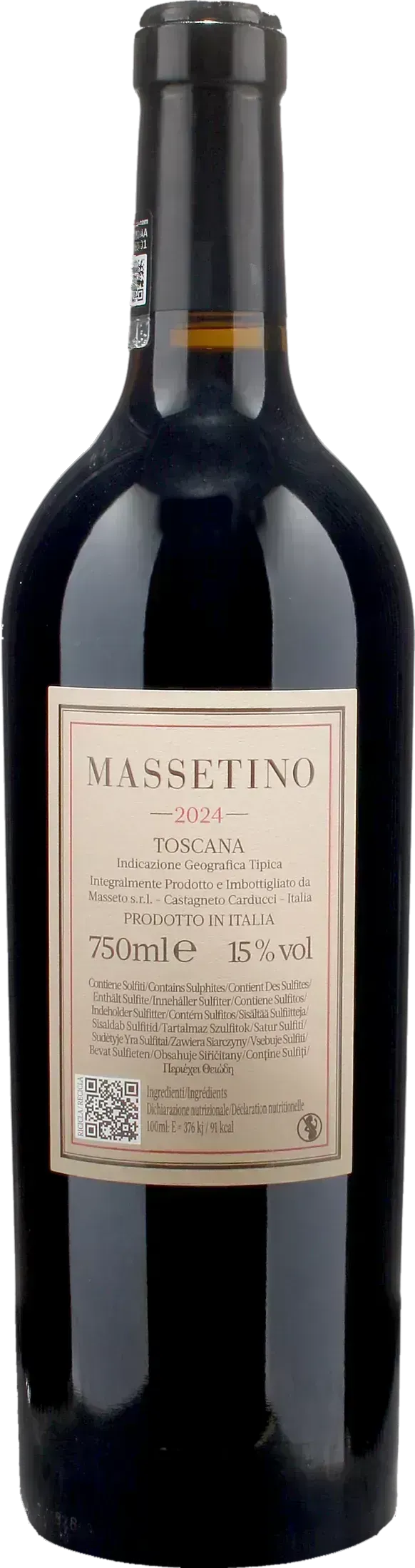
| Alcohol content | 15.0% by volume |
| Area | Tuscany (Italy) |
| Grape varieties | 90% Merlot, 10% Cabernet Franc |
| Aging | Twelve months of ageing in oak barriques (50% new) after malolactic fermentation; followed by blending and resting for approximately 4 months in concrete tanks, with a further period in wood for about 3 months before bottling. |
- Type: Still red Tuscany IGT, known as the prestigious second wine of Masseto
- Grape composition: 90% Merlot and 10% Cabernet Franc from Castagneto Carducci
- Aromas: Hints of redcurrant, small red fruits, Mediterranean herbs and a balsamic note
- Flavour: Full and persistent palate, with lively freshness, vibrant tannins and agile drinkability
- Production: In concrete tanks, with 12 months of ageing in barriques (50% new)
Description
What type of wine it is
Massetino di Masseto is a still red wine produced from a blend of Merlot and Cabernet Franc grapes. This expression represents the excellence of the Tuscan appellation, offering a structured, harmonious and dynamic profile. The palate is distinguished by a lively freshness, supported by vibrant tannins that ensure an agile and decisive mouthfeel. Vinification involves the use of indigenous yeasts and ageing in oak barrels, elements that define its great technical elegance.
Where it comes from
The grapes come from the prestigious soils of Castagneto Carducci, an area of Tuscany renowned for its optimal wine-growing conditions. The local microclimate is typically characterised by marked variability, with hot summers mitigated towards the end of the season by refreshing diurnal temperature variations. These providential variations ensure a gradual ripening of the clusters, fostering a perfect harmony between concentration, natural acidity and aromatic complexity. The specificities of this terroir translate into a defined flavour profile with remarkable tension.
How it is produced
Production begins with a manual harvest, immediately followed by destemming and light crushing. The grapes are gravity-fed into concrete tanks, without the use of any oenological pumps, strictly keeping the different plots separate. Spontaneous fermentation takes place with indigenous yeasts at controlled temperatures, accompanied by constant pump-overs and maceration for approximately three weeks. The wine subsequently undergoes malolactic fermentation in partially new oak barrels, where it ages for twelve months before final blending and a further period of resting in concrete.
History and Insights
Created in 2017 as the prestigious second wine of the estate, Massetino was first released exactly thirty years after the debut of its famous older brother, the renowned Masseto, fully sharing its captivating soul and rigorous production approach. The deep roots of this exceptional Toscana IGT are firmly planted in the historic and acclaimed territory of Castagneto Carducci, a legendary land for oenological excellence. This creation represents an authentic tribute to the great local winemaking history, celebrating an unbreakable bond with its origins.
Awards
-
2024
 95
/100
Decanter is a wine and lifestyle magazine, published monthly in around 90 countries. The magazine includes industry news, classic guides and advice on wine and spirits.
-
2024
 94
/100
Vinous is the online guide from Antonio Galloni, one of the world's leading wine connoisseurs.
Tasting notes

Perfume

Color

Taste
Serve at:
16 - 18 °C
Longevity:
10 - 15 years
Decanting time:
1 hour

- Start up year: 1981
- Oenologist: Axel Heinz
- Bottles produced: 880.000
- Hectares: 112
Masseto is controlled by the Frescobaldi Family and their long-term vision and encouragement have been paramount in building on its success. It is just one of the estates owned by the family alongside Attems (Friuli), Ornellaia, Danzante, Luce della Vite and six Frescobaldi Estates, Nipozzano, CastelGiocondo, Pomino, Ammiraglia, Castiglioni and Remole. Read more


| Name | Massetino 2024 |
|---|---|
| Type | Red still |
| Denomination | Toscana IGT |
| Vintage | 2024 |
| Size | 0,75 l |
| Alcohol content | 15.0% by volume |
| Grape varieties | 90% Merlot, 10% Cabernet Franc |
| Country | Italy |
| Region | Tuscany |
| Vendor | Masseto |
| Story | History and InsightsCreated in 2017 as the prestigious second wine of the estate, Massetino was first released exactly thirty years after the debut of its famous older brother, the renowned Masseto, fully sharing its captivating soul and rigorous production approach. The deep roots of this exceptional Toscana IGT are firmly planted in the historic and acclaimed territory of Castagneto Carducci, a legendary land for oenological excellence. This creation represents an authentic tribute to the great local winemaking history, celebrating an unbreakable bond with its origins. |
| Origin | Castagneto Carducci, Italy |
| Harvest | From late August to mid-September |
| Fermentation temperature | Approximately 25–28°C |
| Fermentation | 21–25 days |
| Production technique | Destemming and light crushing; gravity-flow transfer into concrete tanks without the use of pumps and vinification by parcel; spontaneous fermentation with indigenous yeasts at controlled temperatures with pump-overs and délestage; malolactic fermentation and ageing in oak barriques (50% new). |
| Wine making | Manual harvest in 15 kg crates; de-stemming and light crushing; gravity-fed transfer into cement tanks without the use of pumps and separate vinification for each parcel; spontaneous fermentation with indigenous yeasts at a controlled temperature (approx. 25–28°C) with pump-overs/rack-and-returns and gentle extractions; average maceration of 21–25 days; malolactic fermentation in oak barrels/barriques (50% new) followed by 12 months of ageing; blending of the parcels, resting in cement for approx. 4 months and a further period in wood for approx. 3 months before bottling. |
| Aging | Twelve months of ageing in oak barriques (50% new) after malolactic fermentation; followed by blending and resting for approximately 4 months in concrete tanks, with a further period in wood for about 3 months before bottling. |
| Allergens | Contains sulphites |