


Tenuta di Castiglioni - Frescobaldi
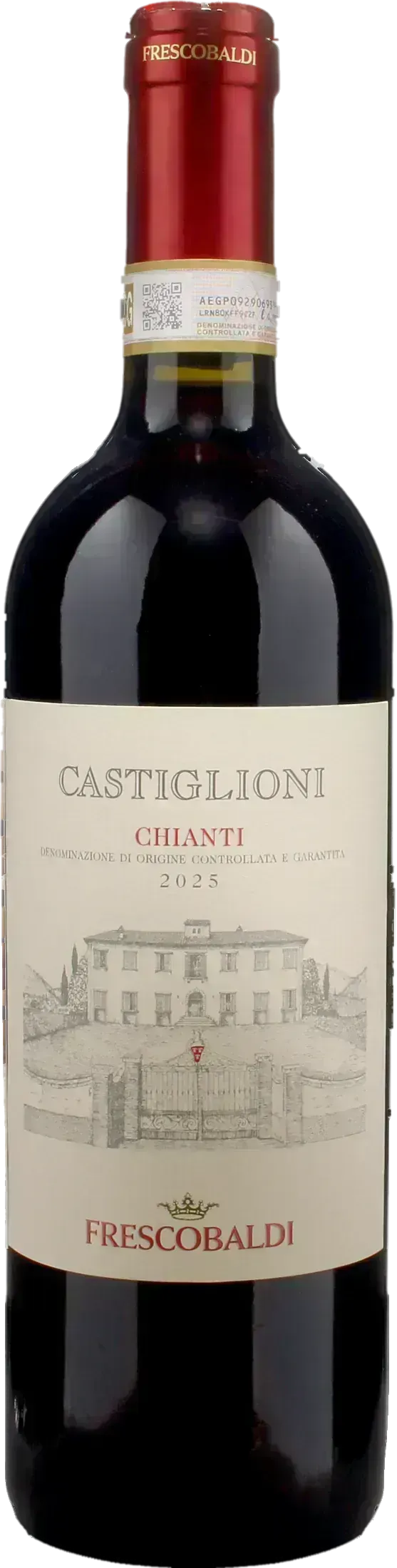
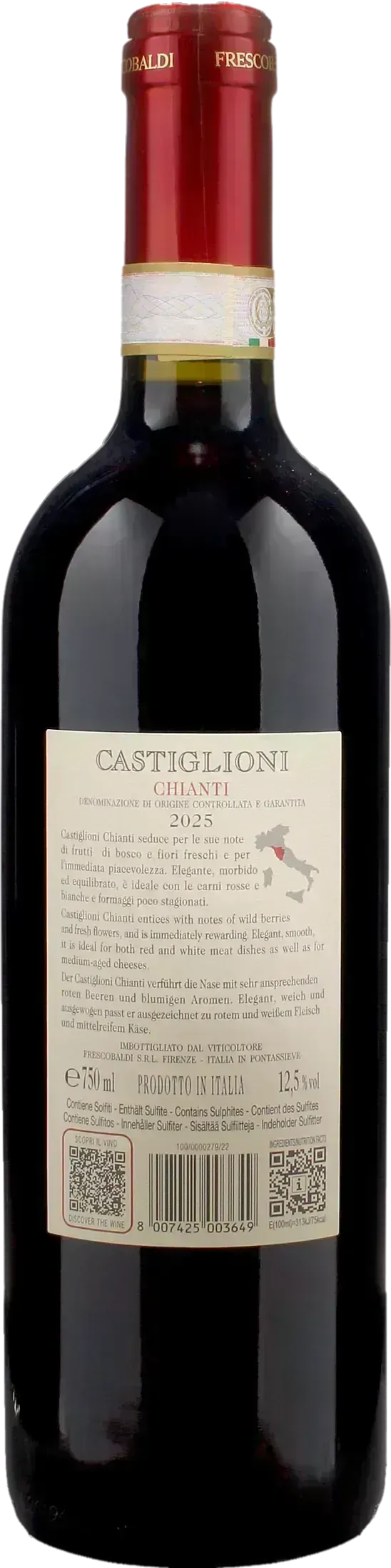
Chianti 2025
| Denomination | DOCG Chianti |
|---|---|
| Size | 0,75 l |
| Alcohol content | 12.5% by volume |
| Area | Tuscany (Italy) |
| Grape varieties | 90% Sangiovese, 10% Merlot |
| Aging | Ageing in barrels with controlled micro-oxygenation and a subsequent rest in the bottle before commercialisation. |
- Type and composition: Still red wine DOCG from Sangiovese and Merlot grapes
- Aromatic profile: Blackberry, raspberry, strawberry, violet, herbs and spices
- Tasting notes: Warm and enveloping, fresh, subtle tannins and a long finish
- Vinification and ageing: Fermentation in stainless steel, 10 days on the skins, ageing in barrels
- Serving and pairings: Decant for 1 hour; ideal with ragù, roast meats and semi-mature cheeses
Description
Style of wine
Chianti Castiglioni Frescobaldi is a still red wine from the Chianti appellation, produced in Tuscany by Frescobaldi through a blend of Sangiovese and Merlot. It presents a bright ruby red colour and reveals an aromatic profile that intertwines blackberry, raspberry and strawberry with hints of flowers and Mediterranean herbs. The winemaking involves fermentation in stainless steel and subsequent ageing in barrels. On the palate, it reveals a soft, fresh and enveloping character, supported by fine tannins and a persistent finish. At the table, it is an ideal accompaniment to dishes such as pappardelle with ragù, roasts and semi-mature cheeses.
Provenance
The wine comes from the Castiglioni Estate, located in Montespertoli, on the hills of Val di Pesa in the Chianti territory of Tuscany. This specific geographical area is characterised by a mild, warm and dry climate. The soils are clayey and medium-textured, with notable water retention. This agronomic peculiarity allows for a gradual ripening of the bunches, contributing directly to the wine's softness. The estate's deep viticultural vocation has established historical roots and has been documented since the 14th century.
Production process
The harvest takes place in September for Merlot and in October for Sangiovese. The stainless steel fermentation takes place at a controlled temperature and includes maceration on the skins for about ten days, a practice followed by malolactic fermentation. Subsequently, the wine is aged in barrels using a controlled micro-oxygenation process, which helps to soften the wine. The cycle concludes with a subsequent period in the bottle before being released for consumption.
History and interesting facts
The Tenuta Castiglioni in Val di Pesa has represented the historical heart of the Frescobaldi family since the 11th century. Documents attest to the viticultural vocation of these hills since the 14th century, outlining an inestimable heritage. Among the illustrious memories, the famous exchanges with Michelangelo Buonarroti stand out, as he received wine in exchange for his works. This exceptional wine-growing heritage boasts a glorious past, historically appreciated even by the Papal and English courts—a legacy that is expressed today in an elegant and prestigious Chianti DOCG.
Tasting notes

Perfume

Color

Taste
Serve at:
12 - 14 °C
Longevity:
05 - 10 years
Decanting time:
1 hour

- Start up year: 1300
- Oenologist: Nicolò D'Afflitto e Lamberto Frescobaldi
- Hectares: 148
The area was already famous in those times for the quality of its agricultural harvests and was for centuries at the center of heavy trade traffic and chosen as the site for luxury Roman villas. The coat of arms of the Frescobaldi family, with the crown, the shield and three fortresses, represents Castiglioni as well, in remembrance and recognition of the 700 years of wine-making history which began here at this very estate. Read more


| Name | Frescobaldi Chianti Castiglioni 2025 |
|---|---|
| Type | Red still |
| Denomination | Chianti DOCG |
| Vintage | 2025 |
| Size | 0,75 l |
| Alcohol content | 12.5% by volume |
| Grape varieties | 90% Sangiovese, 10% Merlot |
| Country | Italy |
| Region | Tuscany |
| Vendor | Tenuta di Castiglioni - Frescobaldi |
| Story | History and interesting facts The Tenuta Castiglioni in Val di Pesa has represented the historical heart of the Frescobaldi family since the 11th century. Documents attest to the viticultural vocation of these hills since the 14th century, outlining an inestimable heritage. Among the illustrious memories, the famous exchanges with Michelangelo Buonarroti stand out, as he received wine in exchange for his works. This exceptional wine-growing heritage boasts a glorious past, historically appreciated even by the Papal and English courts—a legacy that is expressed today in an elegant and prestigious Chianti DOCG. |
| Origin | Castiglioni Estate, Pesa Valley (Chianti), Tuscany, Italy |
| Climate | Warm and dry microclimate; mild climate |
| Soil composition | Clayey, medium-textured, with significant water retention |
| Cultivation system | Spurred cordon and Guyot |
| Harvest | in September (Merlot) and in October (Sangiovese) |
| Fermentation | About ten days |
| Production technique | Harvest in September (Merlot) and October (Sangiovese); fermentation in stainless steel at a controlled temperature with maceration on the skins for approximately 10 days; malolactic fermentation; ageing in barrels with controlled micro-oxygenation, followed by resting in the bottle. |
| Wine making | Harvest in September for Merlot and in October for Sangiovese; fermentation in stainless steel at a controlled temperature with maceration on the skins for approximately 10 days; malolactic fermentation takes place; maturation with ageing in barrels with controlled micro-oxygenation and a subsequent period in the bottle before commercialisation. |
| Aging | Ageing in barrels with controlled micro-oxygenation and a subsequent rest in the bottle before commercialisation. |
| Allergens | Contains sulphites |