


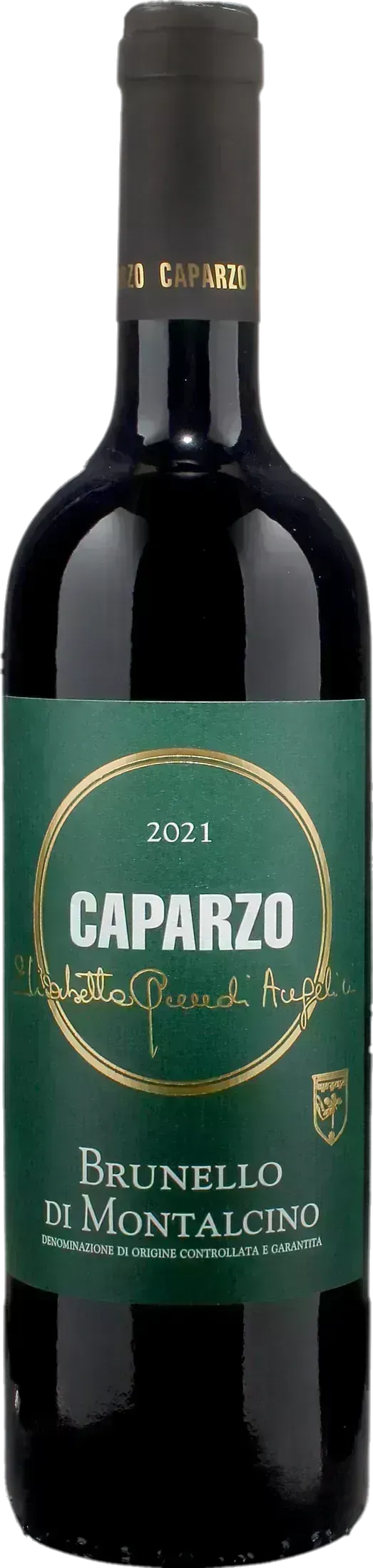
Caparzo
Brunello di Montalcino 2021
Other years:
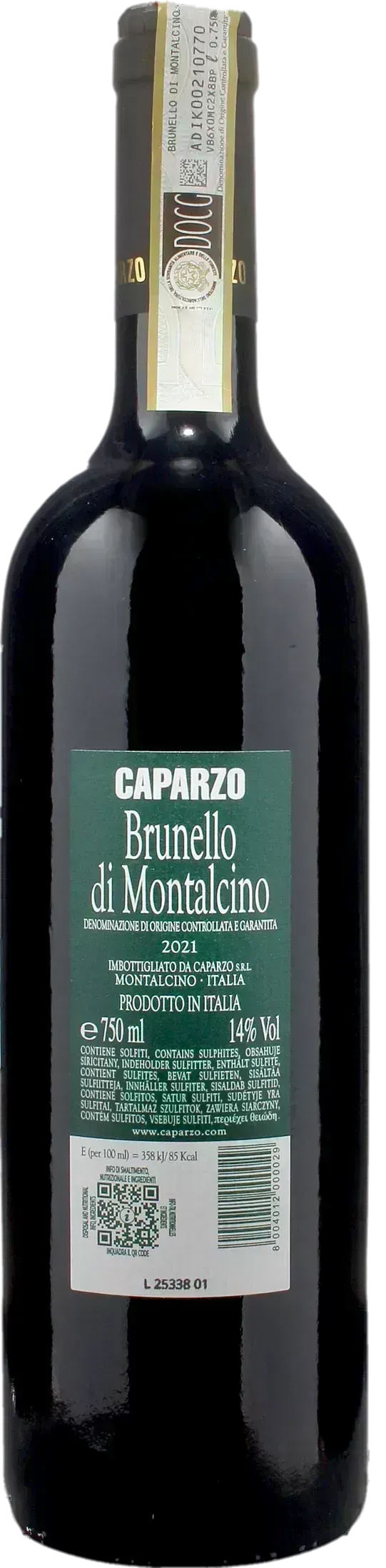
2019| Denomination | DOCG Brunello di Montalcino |
|---|---|
| Size | 0,75 l |
| Alcohol content | 14.0% by volume |
| Area | Tuscany (Italy) |
| Grape varieties | 100% Sangiovese |
| Aging | Matured for 3 years in Slavonian and French oak casks, followed by bottle ageing for at least 4 months. |
| Other years | 2019 |
- Denomination and grape: Brunello di Montalcino DOCG 2021 from Sangiovese grapes
- Aromatic profile: powerful bouquet with wild berries and notes of oak
- Palate: dry, harmonious and persistent, with a solid tannic structure
- Ageing: 3 years in Slavonian and French oak barrels
- Pairings: ideal with roasts, game and cheeses; serve at 18 °C
Description
Wine type
Caparzo Brunello di Montalcino is a still Tuscan red wine, an expression of the prestigious and historic Brunello di Montalcino DOCG appellation. Produced entirely from Sangiovese grapes, this wine is distinguished by its powerful, elegant profile and exceptional longevity. It presents as dry, warm, and enveloping, combining a solid tannic texture with a vibrant freshness that provides balance and depth. Its aromas range across broad and complex notes, with evident and penetrating hints of forest fruits, perfectly harmonised by the sweet nuances resulting from the long period resting in wood. A structured and refined wine, capable of offering a sensory experience in crescendo, masterfully accompanying large roasts, flavourful game, and mature cheeses.
Origin
This iconic Sangiovese is born in the heart of Tuscany, in the famous and well-suited territory of Montalcino. The true strength of this expression lies in the origin of the grapes, expertly selected from various estates located in key areas of the appellation: Caparzo, La Caduta, Il Cassero, and San Piero Caselle. This diversity allows for drawing from multiple microclimates and extremely varied soils, from sedimentary formations of Pliocene origin rich in sand and clay, to schistous-arenaceous formations very rich in rock fragments. The altitudes, ranging from 220 to 300 metres, and the different exposures, give the wine unique facets, combining finesse and structure for an ageing potential that can exceed thirty years.
How it is produced
The creation of this Brunello requires time and meticulous care, starting from the manual harvest. Vinification begins with a temperature-controlled fermentation between 28 and 30 °C, which lasts for about seven days, accompanied by constant pump-overs and délestage. A peculiarity of the process is the careful removal of seeds that are not perfectly ripe, to preserve elegance. This is followed by an extended maceration on the skins for a further ten to fifteen days, and a spontaneous malolactic fermentation. The wine then embarks on a long maturation journey, resting for three years in large Slavonian and French oak casks, before a final bottle refinement of at least four months.
History and interesting facts
Since the first vintage released in 1970, Caparzo has represented a historic producer deeply rooted in the Tuscan territory. The most fascinating characteristic of this estate lies in the ownership of vineyards scattered across strategic areas of Montalcino, such as La Caduta, Il Cassero and San Piero Caselle. This geographical distribution allows for the combining of multiple microclimates, with altitudes ranging from two hundred and twenty to three hundred metres above sea level. The extraordinary ageing potential of over thirty years makes this wine a work destined to stand the test of time.
Awards
-
2021
 91
/100
Decanter is a wine and lifestyle magazine, published monthly in around 90 countries. The magazine includes industry news, classic guides and advice on wine and spirits.
-
2021
 96
/100
James Suckling is an influential American wine critic and journalist who worked at Wine Spectator for 30 years. He left the magazine in 2010 to start his own website and guidebook (JamesSuckling.com). He specialises in Italian and Bordeaux wines.
-
2021
 93
/100
The prestigious international wine guide from the renowned Robert Parker, the world's most experienced and trusted wine taster.
-
2021
 94
/100
Vinous is the online guide from Antonio Galloni, one of the world's leading wine connoisseurs.
-
2021
 97
/100
Wine spectator is the most influential wine guide on the internet.
Tasting notes

Perfume

Color

Taste
Serve at:
18 - 20 °C
Longevity:
10 - 15 years
Decanting time:
1 hour
- Start up year: 1970
- Oenologist: Massimo Bracalente
- Bottles produced: 900.000
- Hectares: 200
Series of hills flee everywhere without visible interruptions, shaped in different ways by streams and gulleys that reforge together in the grey clay. The colours and perfumes of seasons in Val d’Orcia are unique: from barren clays to golden tuffs, from the dark vegetation of woods to the bright vegetation of vineyards, from the blue of watercourses to the silvery foliage of olive trees. You can find all this in a glass of wine. Montalcino is the land of Brunello, made only with Sangiovese grapes. In no other place this vine is able to transmit at best the distinctive features of its terroir. With Caparzo I had the chance to test myself with a great Tuscan wine and become acquainted with the pride of an ancient agriculture. It is a constant commitment that fills me with pride. Following the vines every day, seeing them grow, sprout and finally harvesting the fruit. You are aware of having worked hard, without neglecting any detail, but at the end the land will be the one to decide. And every year, every vintage time, you hope that the wine is the best one you have ever made. Read more


| Name | Caparzo Brunello di Montalcino 2021 |
|---|---|
| Type | Red still |
| Denomination | Brunello di Montalcino DOCG |
| Vintage | 2021 |
| Size | 0,75 l |
| Alcohol content | 14.0% by volume |
| Grape varieties | 100% Sangiovese |
| Country | Italy |
| Region | Tuscany |
| Vendor | Caparzo |
| Story | History and interesting facts Since the first vintage released in 1970, Caparzo has represented a historic producer deeply rooted in the Tuscan territory. The most fascinating characteristic of this estate lies in the ownership of vineyards scattered across strategic areas of Montalcino, such as La Caduta, Il Cassero and San Piero Caselle. This geographical distribution allows for the combining of multiple microclimates, with altitudes ranging from two hundred and twenty to three hundred metres above sea level. The extraordinary ageing potential of over thirty years makes this wine a work destined to stand the test of time. |
| Origin | Montalcino (Siena), Tuscany, Italy |
| Soil composition | Sedimentary formations of Pliocene origin (sandy-clay soils and those with a sandy-stony matrix) and schistose-arenaceous formations, loose and rich in skeletal/stony material, also with schistose-clayey components. |
| Fermentation temperature | 28 to 30°C |
| Fermentation | About 7 days |
| Production technique | Temperature-controlled fermentation with pump-overs and délestage, prolonged skin maceration, spontaneous malolactic fermentation and maturation in oak barrels |
| Wine making | Temperature-controlled fermentation for approximately 7 days (28–30 °C) with pumping over and délestage, with selection and potential removal of unripe pips; prolonged maceration on the skins for a further 10–15 days; spontaneous malolactic fermentation (20–24 °C) immediately after racking; maturation for 3 years in Slavonian oak and French oak casks, then bottle ageing for at least 4 months. |
| Aging | Matured for 3 years in Slavonian and French oak casks, followed by bottle ageing for at least 4 months. |
| Total acidity | 5.0 gr/L |
| Allergens | Contains sulphites |