


Borgo Paglianetto
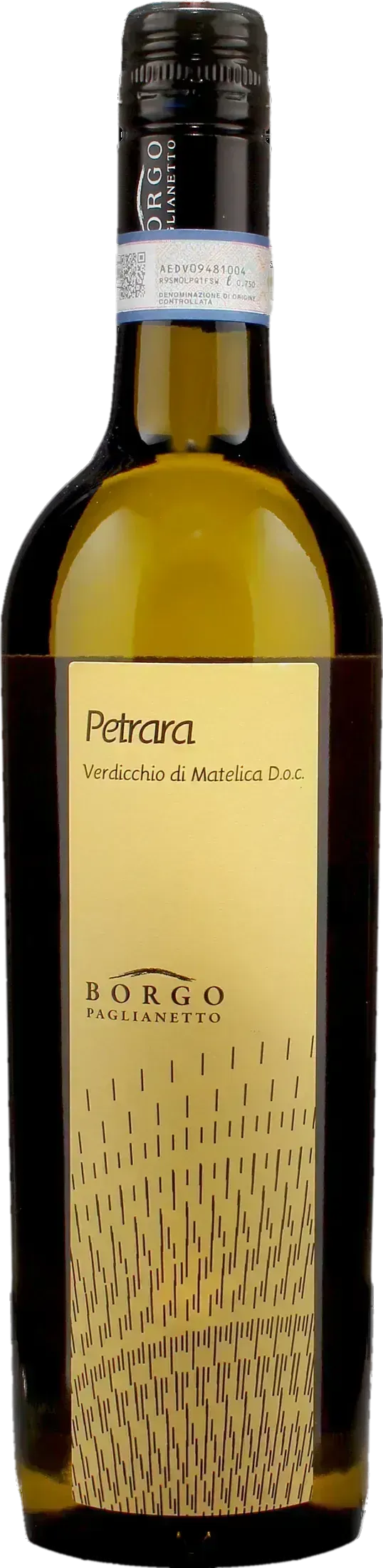
Verdicchio di Matelica Petrara 2025
| Denomination | DOC Verdicchio di Matelica |
|---|---|
| Size | 0,75 l |
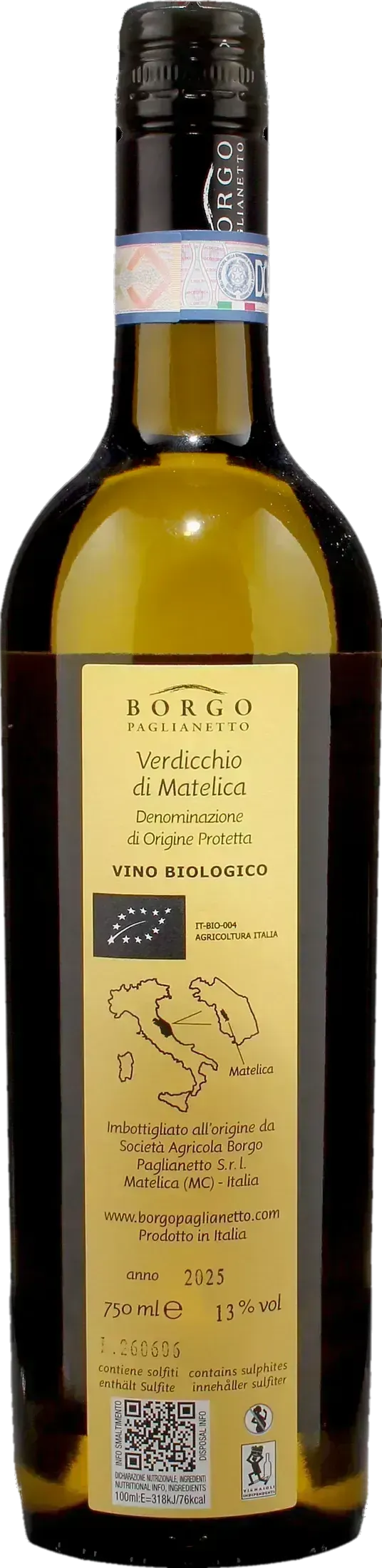
| Alcohol content | 13.0% by volume |
| Area | Marche (Italy) |
| Grape varieties | 100% Verdicchio Bianco |
| Aging | Ageing: 6 months in stainless steel tanks and a further 2 months in the bottle. |
- Origin and grape variety: White DOC from the Marche region, made from organic Verdicchio grapes
- Aroma: Notes of loquat, plum, fresh almond, mimosa, chamomile and hints of flint
- Taste: Fresh and savoury, with a long mineral and smoky finish; 13% alcohol
- Vinification: 6 months in steel followed by 2 months in the bottle
- Pairing: Ideal with charcuterie, pasta, fish and cheeses; serve at 10–12 °C
Description
What type of wine it is
Petrara by Borgo Paglianetto is a still organic white wine produced exclusively with Verdicchio grapes. An authentic expression of the Marche region, it falls under the Verdicchio di Matelica Denominazione di Origine Controllata appellation. It is distinguished by a harmonious and structured profile, which combines vibrant freshness with a marked savouriness. Careful vinification in stainless steel preserves the varietal characteristics of the grape variety, enhancing elegant notes and ensuring excellent ageing potential. A wine that represents the essence of the artisanal commitment of an independent winemaker.
Where it comes from
This Verdicchio originates in the municipality of Matelica, in the heart of the Marche. The vineyards, with an average age of between 20 and 35 years, benefit from excellent south-westerly exposure and are situated at an altitude between 350 and 400 metres above sea level. The clay-limestone soil of the area gives the grapes a distinct minerality and complexity, fundamental characteristics reflected in the distinctive style and longevity of this wine from the Matelica territory.
How it is produced
The production of Petrara begins with the harvest between the end of September and the first days of October. The Verdicchio grapes, trellis-trained, are vinified with great care. Temperature-controlled fermentation takes place in stainless steel tanks, preserving the aromatic purity of the fruit. Subsequent ageing continues in the same containers for a period of approximately 6 months, and then concludes with a further 2 months of rest in the bottle before commercialisation, thus stabilising its organoleptic profile.
History and curiosities
The first vintage produced by Borgo Paglianetto dates back to 2006, marking the beginning of an artisanal dedication at this estate in the Marche region of Matelica. This Verdicchio di Matelica DOC comes from vines that have reached an age between twenty and thirty-five years, thus preserving an important agricultural heritage. The vines benefit from a south-west exposure, rooted in clay-limestone soil that conveys a distinctive character. The winery operates as an independent winemaker, preserving traditional methods and values to offer an authentic expression of the local area.
Tasting notes
Perfume

Color

Taste
Serve at:
12 - 14 °C
Longevity:
05 - 10 years
- Start up year: 2003
- Oenologist: Aroldo Bellelli
- Bottles produced: 90.000
- Hectares: 29


| Name | Borgo Paglianetto Verdicchio di Matelica Petrara 2025 |
|---|---|
| Type | White organic still |
| Denomination | Verdicchio di Matelica DOC |
| Vintage | 2025 |
| Size | 0,75 l |
| Alcohol content | 13.0% by volume |
| Grape varieties | 100% Verdicchio Bianco |
| Country | Italy |
| Region | Marche |
| Vendor | Borgo Paglianetto |
| Story | History and curiosities The first vintage produced by Borgo Paglianetto dates back to 2006, marking the beginning of an artisanal dedication at this estate in the Marche region of Matelica. This Verdicchio di Matelica DOC comes from vines that have reached an age between twenty and thirty-five years, thus preserving an important agricultural heritage. The vines benefit from a south-west exposure, rooted in clay-limestone soil that conveys a distinctive character. The winery operates as an independent winemaker, preserving traditional methods and values to offer an authentic expression of the local area. |
| Origin | Matelica (MC) |
| Soil composition | Clay-limestone |
| Cultivation system | Screw cap |
| Yield per hectare | 90–100 quintals per hectare |
| Harvest | Late September, early October. |
| Production technique | Temperature-controlled fermentation in stainless steel tanks; ageing for 6 months in stainless steel and a further 2 months in the bottle. |
| Wine making | Temperature-controlled fermentation in stainless steel tanks; ageing for 6 months in stainless steel and a further 2 months in the bottle. |
| Aging | Ageing: 6 months in stainless steel tanks and a further 2 months in the bottle. |
| Year production | 35000 bottles |
| Allergens | Contains sulphites |