


Bastianich
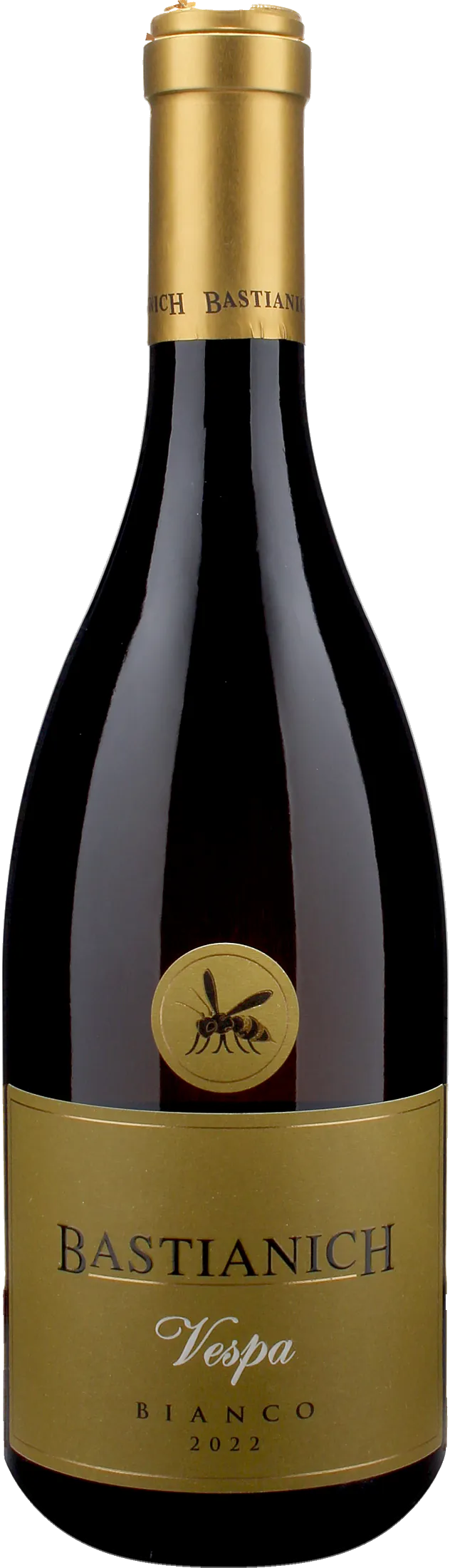
Vespa Bianco 2022
Other years:
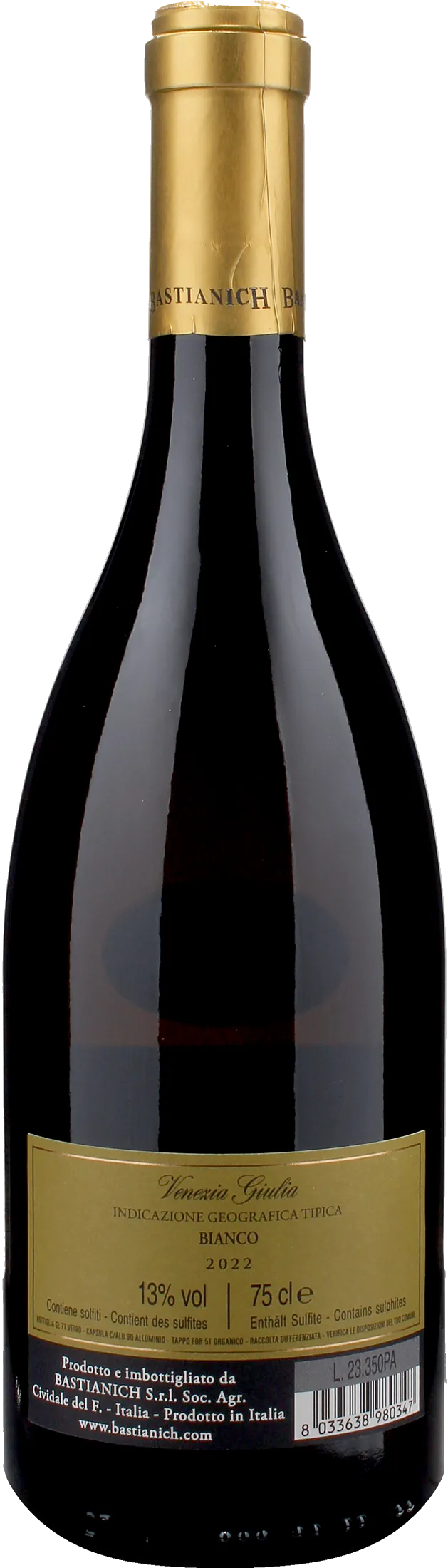
2021| Denomination | IGT Venezia Giulia |
|---|---|
| Size | 0,75 l |
| Alcohol content | 13.0% by volume |
| Area | Friuli-Venezia Giulia (Italy) |
| Grape varieties | 45% Chardonnay, 45% Sauvignon, 10% Picolit |
| Aging | At the end of fermentation, retaining most of the lees, the wine undergoes a long period of bâtonnage (ageing on the lees); it is then bottled and further aged in the bottle before being released for sale. |
| Other years | 2021 |
- Type: Still white wine IGT Venezia Giulia 2022
- Grapes: Blend of Chardonnay, Sauvignon and Picolit from Friuli-Venezia Giulia
- Aroma: Notes of apricot in spirits, beeswax, broom and honey
- Winemaking: Half in stainless steel and half in oak, with long bâtonnage
- Food pairings: Silky structure, ideal with shellfish and mature cheeses
Description
What type of wine it is
Bastianich's Vespa Bianco is a still white wine with a Typical Geographical Indication (IGT) that represents a profound expression of Venezia Giulia. Its blend combines Chardonnay, Sauvignon, and Picolit, offering clear aromas of apricot in spirits, beeswax, broom, and honey. On the palate, it is distinguished by a silky texture, balanced by a lively minerality that provides great persistence and balance. This complex aromatic profile pairs perfectly with shellfish, white meats, and mature cheeses.
Where it comes from
The vineyards extend across the hills of Premariacco and Cividale, in the province of Udine, at an altitude between 60 and 130 metres. Excellent sun exposure ensures optimal ripening of the grapes. The territorial imprint is defined by Eocene limestone-based marl, a formation that enriches the wine by infusing it with a marked savouriness. This pedoclimatic environment gives the white wine an unmistakable acid-mineral drive, ensuring an excellent capacity for evolution over time.
How it is produced
The harvest precisely follows the ripening times of the individual varieties. After careful sorting and gentle pressing, fermentation takes place separately: one part in temperature-controlled steel tanks, the remainder in oak barrels. The wine subsequently rests for a long time on the lees using the bâtonnage technique, an essential step to increase its volume and texture. The process concludes with targeted bottle ageing, which stabilises its overall harmony.
History and interesting facts
Born in 1997 between Premariacco and Cividale, Vespa Bianco di Bastianich is an icon of excellence from Friuli-Venezia Giulia. Curated by oenologist Emilio del Medico, this flagship label highlights the extraordinary ageing potential of Friulian whites, competing with the world’s finest wines. Designed to defy time, the wine offers a profound interpretation of the regional terroir, celebrated by prestigious international awards and impressive scores from authoritative critics such as James Suckling and Robert Parker.
Awards
-
2022
 93
93/100
The prestigious international wine guide from the renowned Robert Parker, the world's most experienced and trusted wine taster.
Tasting notes

Perfume

Color

Taste
Serve at:
12 - 14 °C
Longevity:
05 - 10 years
- Start up year: 1997
- Oenologist: Emilio del Medico
- Bottles produced: 220.000
- Hectares: 27


| Name | Bastianich Vespa Bianco 2022 |
|---|---|
| Type | White still |
| Denomination | Venezia Giulia IGT |
| Vintage | 2022 |
| Size | 0,75 l |
| Alcohol content | 13.0% by volume |
| Grape varieties | 45% Chardonnay, 45% Sauvignon, 10% Picolit |
| Country | Italy |
| Region | Friuli-Venezia Giulia |
| Vendor | Bastianich |
| Story | History and interesting facts Born in 1997 between Premariacco and Cividale, Vespa Bianco di Bastianich is an icon of excellence from Friuli-Venezia Giulia. Curated by oenologist Emilio del Medico, this flagship label highlights the extraordinary ageing potential of Friulian whites, competing with the world’s finest wines. Designed to defy time, the wine offers a profound interpretation of the regional terroir, celebrated by prestigious international awards and impressive scores from authoritative critics such as James Suckling and Robert Parker. |
| Origin | Hills of Premariacco and Cividale (province of Udine) |
| Soil composition | Eocene calcareous marl |
| Plants per hectare | 4,000–8,000 |
| Yield per hectare | 6,000-7,000 kg/hectare |
| Harvest | From the first ten days of September to the second ten days of October |
| Production technique | Separate fermentation of the varieties (approx. 50% in temperature-controlled stainless steel and approx. 50% in oak barrels), prolonged contact with the lees with bâtonnage, bottle ageing |
| Wine making | Separate harvesting of the grapes at optimal ripeness, sorting and gentle pressing; separate fermentation by variety (approximately 50% in temperature-controlled stainless steel and approximately 50% in oak barrels); long lees contact with bâtonnage; bottling followed by ageing in the bottle. |
| Aging | At the end of fermentation, retaining most of the lees, the wine undergoes a long period of bâtonnage (ageing on the lees); it is then bottled and further aged in the bottle before being released for sale. |
| Allergens | Contains sulphites |