


Zeni
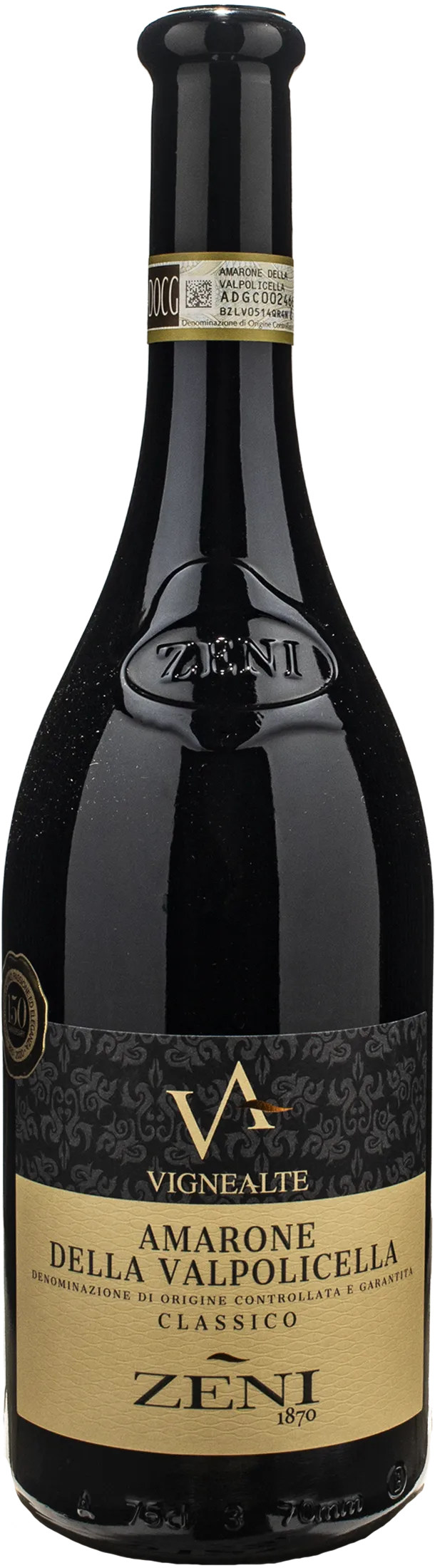
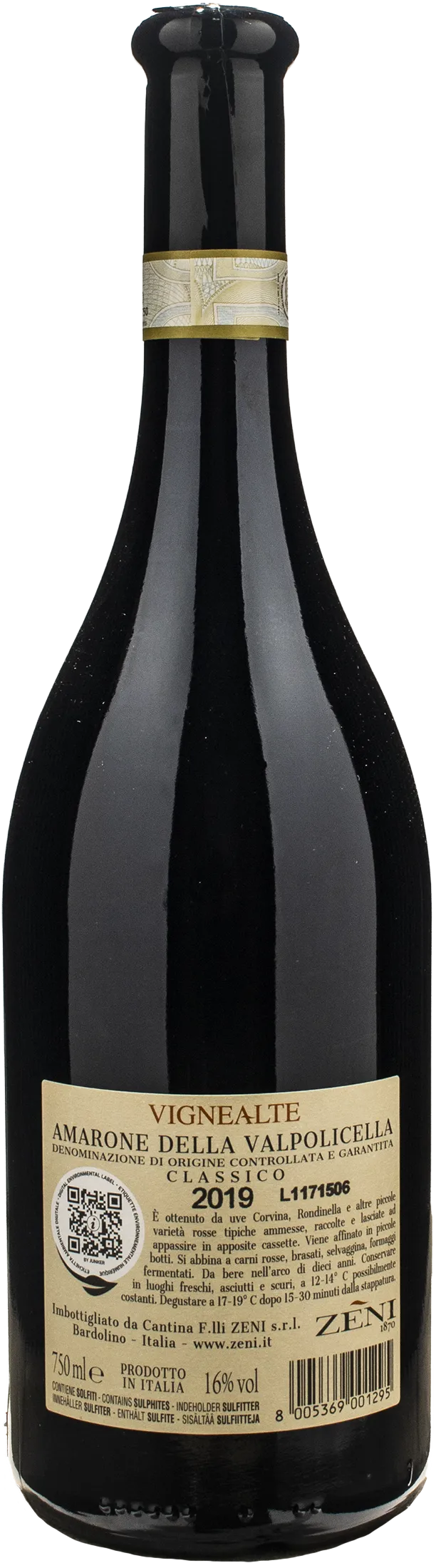
Amarone della Valpolicella Vigne Alte 2019
| Denomination | DOCG Amarone della Valpolicella Classico |
|---|---|
| Size | 0,75 l |
| Alcohol content | 16.0% by volume |
| Area | Veneto (Italy) |
| Grape varieties | Corvina, Corvinone, Rondinella |
| Aging | In 25 hl oak barrels for 2–4 years, depending on the vintage. |
- Name and vintage: Amarone della Valpolicella Classico DOCG 2019
- Grape varieties and harvest: Corvina, Corvinone and Rondinella, hand-selected
- Production: 3 months drying and 20–25 days maceration
- Ageing in oak: 25 hl barrels for 2–4 years, great harmony
- Profile and serving: 16% vol, decant for 1 hour, serve at 17–19 °C
Description
What kind of wine it is
Amarone della Valpolicella Vigne Alte by Zeni is a red wine from Veneto with Denomination of Controlled and Guaranteed Origin, created from a blend of Corvina, Corvinone and Rondinella grapes, offering an elegant profile and long persistence. The result of grape drying and lengthy ageing in oak barrels, it reveals itself in the glass with an intense ruby red colour and delicate garnet highlights. The bouquet is deep, marked by clear notes of black cherry, dried plum and wild berries, integrated with elegant nuances of preserved fruit, cocoa, caramel and fine spices. On the palate it is warm and enveloping, supported by a soft texture and dense fruit that enhances a well-integrated spiciness.
Where it comes from
This red originates in the Valpolicella Classica, the hilly area north of Verona. The grapes come from high-altitude vineyards selected within the historic area, ideal for promoting optimal concentration of the bunches. The geological nature of the subsoil, dominated by red and brown soils on debris with limestone marl and basalt, directly influences the wine's identity. This soil composition ensures remarkable aromatic complexity and intense colour depth, forging a broad structure with a strong territorial character.
How it is produced
Production begins with the rigorous manual selection of the best bunches. The grapes then rest on racks for a three-month drying period, a crucial phase to concentrate sugars, aromas and glycerine in the berries. This is followed by traditional fermentation, enriched by a skin maceration of twenty to twenty-five days to fully extract colour and structure. The evolution is completed by resting in oak barrels for a period ranging from two to four years, a fundamental step to impart harmony and stability to the sip.
History and Curiosities
A true gem from the Zeni winery, the Amarone della Valpolicella Classico Vigne Alte 2019 boasts an international reputation consolidated by outstanding scores, such as the prestigious 93 points awarded by Decanter and James Suckling, the four vines from VITAE, and the gold medal at Mundus Vini.
Awards
-
2019
 4
4Italian Sommelier Association (AIS) guide
Tasting notes

Perfume

Color

Taste
Serve at:
18 - 20 °C
Longevity:
10 - 15 years
Decanting time:
1 hour

- Start up year: 1870
- Oenologist: Fausto Zeni
- Bottles produced: 1.000.000
- Hectares: 35
Later the task was entrusted to Gaetano Zeni who in addition to the deliveries began to intercede also the products transported, among them the wine so much that in the 50's had a spacious cellar erected on the hills that from Bardolino extend to the south a few hundred meters from the slope east of Lake Garda.
At the moment Fausto Zeni is taking care of the enological part in the cellar, while his sister Federica is in charge of relations with public relations and marketing. In about 25 hectares of vineyards there are 5 denominations: Bardolino, near the headquarters, then moving to the east we have Valpolicella, Lugana, Custoza and Soave.
To mention the Wine Museum set up by the Company at the Costabella locality of Bardolino, the very spacious Bottaia where in about 1500 square meters lie different types of barrels and the beautiful "Tempio di Bacco" a room full of paintings that tells the figure of Bacchus. Read more


| Name | Zeni Amarone della Valpolicella Vigne Alte 2019 |
|---|---|
| Type | Red still |
| Denomination | Amarone della Valpolicella DOCG |
| Vintage | 2019 |
| Size | 0,75 l |
| Alcohol content | 16.0% by volume |
| Grape varieties | Corvina, Corvinone, Rondinella |
| Country | Italy |
| Region | Veneto |
| Vendor | Zeni |
| Story | History and Curiosities A true gem from the Zeni winery, the Amarone della Valpolicella Classico Vigne Alte 2019 boasts an international reputation consolidated by outstanding scores, such as the prestigious 93 points awarded by Decanter and James Suckling, the four vines from VITAE, and the gold medal at Mundus Vini. |
| Origin | Valpolicella Classica (hilly area north of Verona) |
| Soil composition | Predominantly red and brown soils on debris, calcareous marls and basalts |
| Harvest | Hand-picked, carefully selecting the best bunches from the hillside vineyards. The grapes are placed in trays and left to wither to encourage the concentration of sugars, extract, aromas and glycerine. |
| Fermentation | 20–25 days |
| Production technique | Drying of the grapes for 3 months and subsequent traditional fermentation with maceration for 20–25 days |
| Wine making | Drying of the grapes for 3 months and subsequent traditional fermentation with maceration for 20-25 days. |
| Aging | In 25 hl oak barrels for 2–4 years, depending on the vintage. |
| Allergens | Contains sulphites |