


Vinosia
Irpinia Falanghina Fontana della Loggia 2025
| Denomination | DOC Irpinia Falanghina |
|---|---|
| Size | 0,75 l |
| Alcohol content | 13.5% by volume |
| Area | Campania (Italy) |
| Grape varieties | 100% Falanghina |
| Aging | In steel for about 2 months on its fine lees. |
- Identity: Still white wine Irpinia DOC 2025, 100% Falanghina, 13.5% vol, 0.75 l bottle
- Aromas: Notes of lime, grapefruit, kiwi, green apple and jasmine, with light smoky nuances
- Palate: Pronounced minerality, medium body, smooth sip and a citrusy finish of medium length
- Vinification: 12-hour maceration; fermentation in steel at 8–10 °C; aged for 2 months
- Pairings: Ideal with white fish, raw seafood, sea urchins, omelettes and mature cheeses such as Manchego
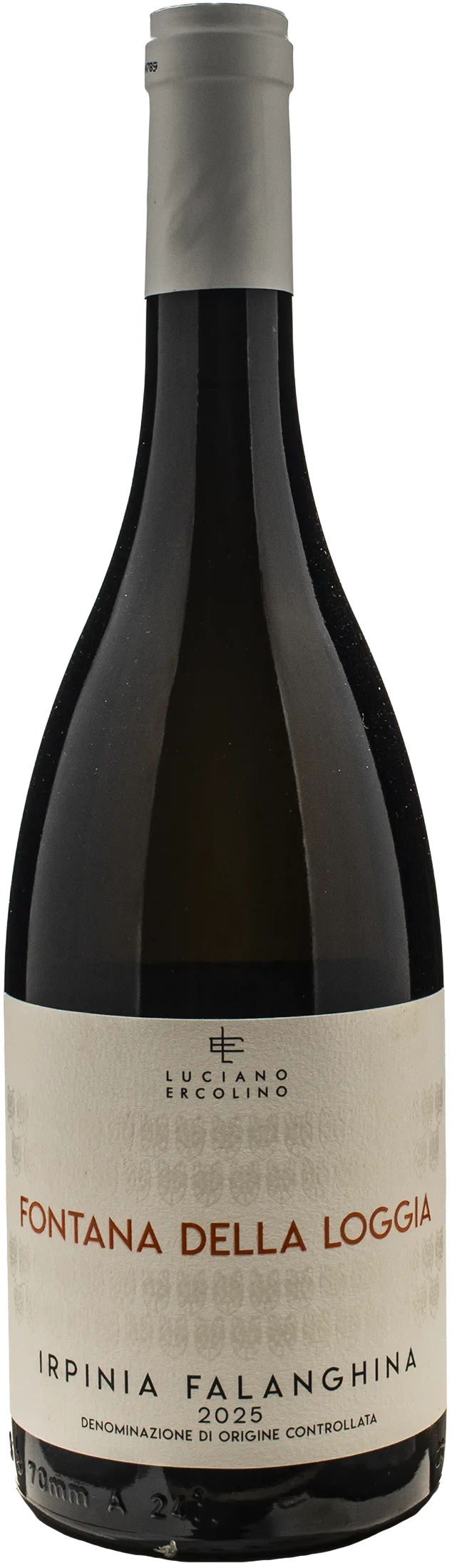
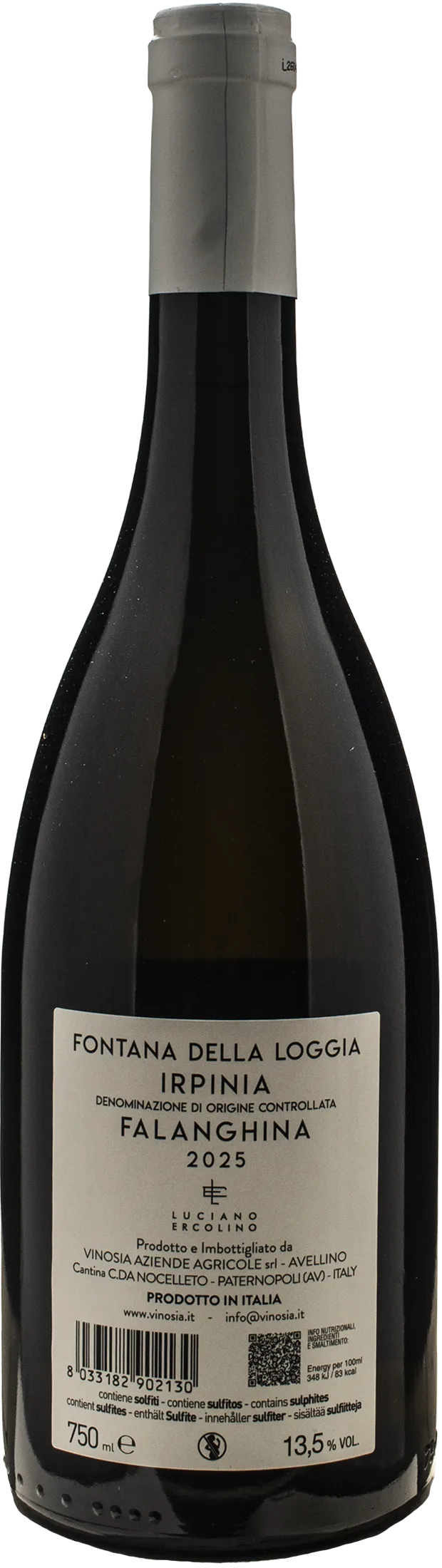
Description
What kind of wine it is
Fontana della Loggia by Vinosia is a still white wine from Campania made from Falanghina grapes. An authentic expression of the Irpinia denomination, fermented and matured in steel, it presents a fresh, elegant, and medium-bodied profile. On the nose, it offers a complex bouquet where citrus notes of lime and grapefruit stand out, with fragrant hints of kiwi and green apple, enriched by delicate jasmine flowers and light smoky nuances. On the palate, it is distinguished by an intense minerality, ensuring a smooth and satisfying sip that finishes with a citrusy, medium-length finish.
Where it comes from
This white originates from the vineyards of Fontanarosa, nestled in the hills of the province of Avellino, in the heart of Irpinia. The vines sink their roots into sandy soils rich in calcium carbonate, a fundamental geological matrix that gives the glass its unmistakable and pronounced savoury character. The Vinosia winery works to enhance the pedoclimatic specificities of the area, creating a wine with a clean and direct character, capable of impeccably balancing the mineral tension with the aromatic intensity typical of the region.
How it is produced
The process begins with a manual harvest in the first ten days of October, followed by gentle pressing and a twelve-hour cold maceration. After clarification of the must, temperature-controlled fermentation takes place in steel tanks. The process concludes with ageing on fine lees for about two months. This technique enriches the organoleptic profile of the Falanghina, giving greater balance and structural complexity to the sip, while maintaining its renowned freshness.
History and Curiosities
The company Vinosia was founded in 2004 in Paternopoli, in Irpinia, with the aim of enhancing the authentic winemaking tradition of the area through a contemporary interpretation. The Falanghina Fontana della Loggia perfectly embodies this company philosophy. Originally from Campania, this expression of Irpinia DOC is born in the vineyards of Fontanarosa, where the specific geological characteristics of the sandy soil, rich in calcium carbonate, give this wine a unique and unmistakable personality.
Tasting notes

Perfume

Color

Taste
Serve at:
12 - 14 °C
Longevity:
03 - 05 years

- Start up year: 2004
- Oenologist: Maio Ercolino, Nicola Tucci
- Bottles produced: 800.000
- Hectares: 50
We are in one of the most vocated and historical areas of Irpinia, where the 50 hectares cultivated with the native varieties, Fiano, Greco and Aglianico, insist. These serve as a solid basis for a project that aims to enhance the Irpinian wine tradition through a contemporary technical interpretation. Read more


| Name | Vinosia Irpinia Falanghina Fontana della Loggia 2025 |
|---|---|
| Type | White still |
| Denomination | Irpinia DOC |
| Vintage | 2025 |
| Size | 0,75 l |
| Alcohol content | 13.5% by volume |
| Grape varieties | 100% Falanghina |
| Country | Italy |
| Region | Campania |
| Vendor | Vinosia |
| Story | History and Curiosities The company Vinosia was founded in 2004 in Paternopoli, in Irpinia, with the aim of enhancing the authentic winemaking tradition of the area through a contemporary interpretation. The Falanghina Fontana della Loggia perfectly embodies this company philosophy. Originally from Campania, this expression of Irpinia DOC is born in the vineyards of Fontanarosa, where the specific geological characteristics of the sandy soil, rich in calcium carbonate, give this wine a unique and unmistakable personality. |
| Origin | Fontanarosa (provincia di Avellino, Irpinia, Campania) |
| Soil composition | Sandy soil rich in calcium carbonate |
| Cultivation system | Espalier with Guyot pruning |
| Plants per hectare | 5000 |
| Harvest | First ten days of October |
| Fermentation temperature | 8–10 °C |
| Production technique | Fermentation with selected yeasts at controlled temperature; gentle pressing and maceration for about 12 hours; maturation in steel on fine lees |
| Wine making | Manual harvest; gentle pressing; cold maceration for about 12 hours; pressing and clarification of the must; fermentation in stainless steel tanks at controlled temperature (8–10 °C) with selected yeasts; maturation for about 2 months in stainless steel on fine lees. |
| Aging | In steel for about 2 months on its fine lees. |
| Allergens | Contains sulphites |