


Vigne Toscane Chianti Classico 2023
| Denomination | DOCG Chianti Classico |
|---|---|
| Size | 0,75 l |
| Alcohol content | 13.5% by volume |
| Area | Tuscany (Italy) |
| Grape varieties | Sangiovese |
| Aging | Minimum ageing of 12 months in oak barrels, followed by at least 3 months of further ageing in the bottle |
- Name: Chianti Classico DOCG 2023, still red Tuscan wine made from Sangiovese grapes
- Vinification: hand-picked, fermented in steel at 25–28 °C with maceration for 10–15 days
- Ageing: at least 12 months in oak barrels followed by a minimum of 3 months in bottle
- Sensory profile: notes of cherry and blackberry, violet, black pepper, tobacco and light balsamic hints
- Serving: decant for 1 hour at 16-18 °C; ideal with ragù, red meats and pecorino cheese
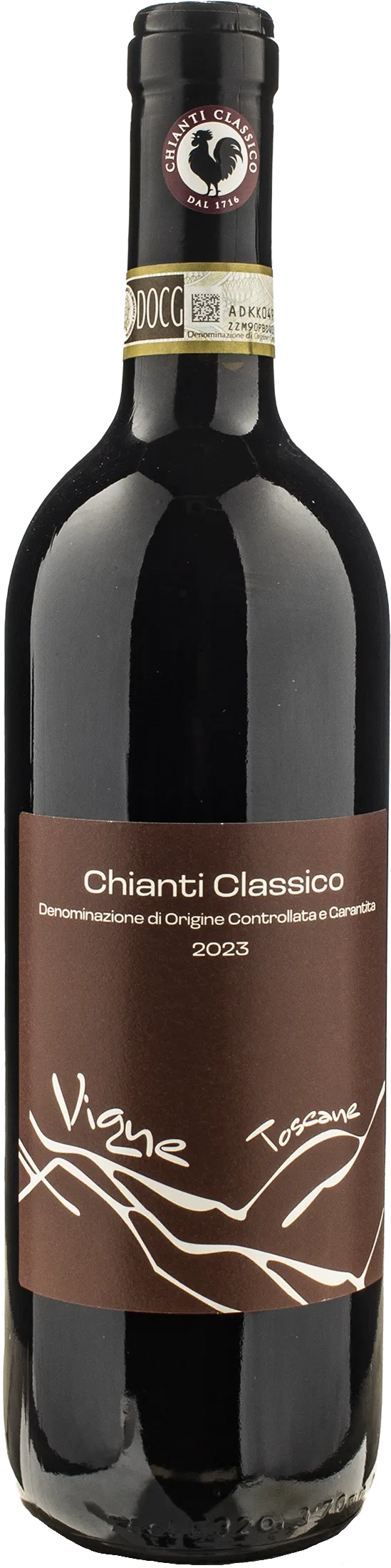
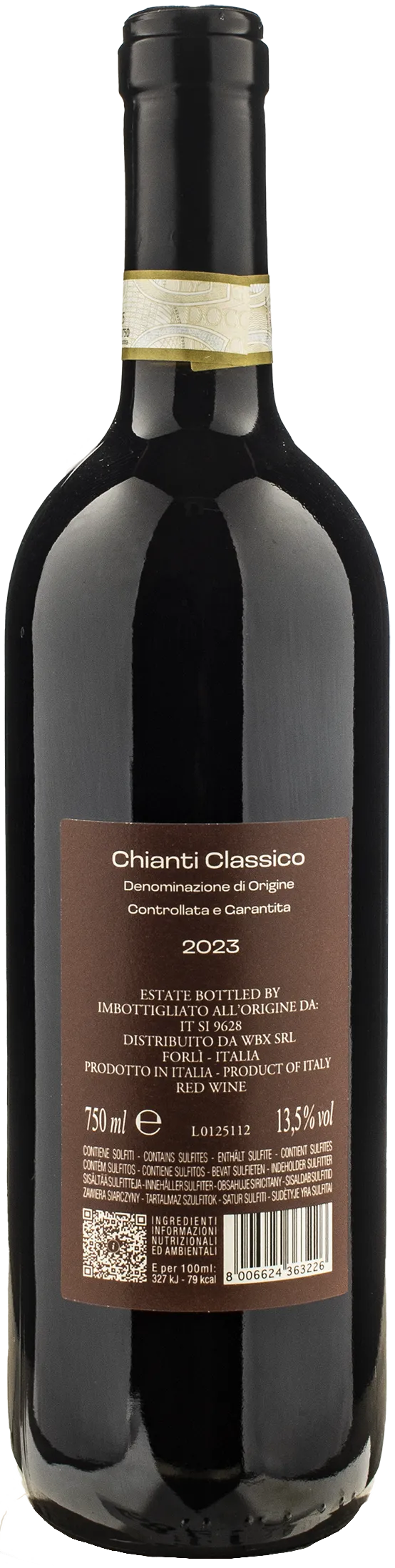
Description
What kind of wine is it
Vigne Toscane Chianti Classico is a still red wine that highlights Sangiovese, offering an authentic expression of the region. On the palate, it reveals a medium to full body, enveloping the senses with a firm yet balanced tannic structure. The nose is marked by intense notes of cherry, blackberry and violet, enriched by spicy hints of black pepper. With a bright ruby colour tending towards garnet, it finishes with a persistent aftertaste, making it ideal to pair with succulent grilled red meats or flavourful dishes.
Where does it come from
This wine originates in Tuscany, in the renowned Chianti Classico area. The vineyards are rooted in soils dominated by galestro, a clay marl rich in stones that gives great structure. Alberese, a key limestone rock, is also present, imparting finesse, along with portions of sand and clay. This specific terroir ensures a perfect balance between freshness and complexity, promoting a clear and elegant taste progression.
How is it produced
Production begins with a manual harvest carried out between the end of September and mid-October. Fermentation takes place in temperature-controlled steel tanks, with maceration on the skins for about fifteen days, punctuated by pumping over and délestage. Once malolactic fermentation is complete, the wine matures for at least twelve months in oak barrels. A final three-month refinement in the bottle definitively consolidates its intense and spicy profile.
History and Curiosities
This Chianti Classico DOCG from 2023 embodies the soul of Tuscany, enhancing the Sangiovese grown on galestro and alberese soils. Marked by the famous Black Rooster symbol, the wine is produced from a meticulous manual harvest and matures for 12 months in oak barrels. The result is a medium to full-bodied glass that releases complex aromas of cherry, violet and black pepper. Ideal with a succulent Florentine steak, it envelops the palate with firm yet balanced tannins and a persistent finish, elegantly celebrating the most authentic winemaking tradition.
Tasting notes

Perfume

Color

Taste
Serve at:
16 - 18 °C
Longevity:
05 - 10 years
Decanting time:
1 hour

| Name | Vigne Toscane Chianti Classico 2023 |
|---|---|
| Type | Red still |
| Denomination | Chianti Classico DOCG |
| Vintage | 2023 |
| Size | 0,75 l |
| Alcohol content | 13.5% by volume |
| Grape varieties | Sangiovese |
| Country | Italy |
| Region | Tuscany |
| Story | History and Curiosities This Chianti Classico DOCG from 2023 embodies the soul of Tuscany, enhancing the Sangiovese grown on galestro and alberese soils. Marked by the famous Black Rooster symbol, the wine is produced from a meticulous manual harvest and matures for 12 months in oak barrels. The result is a medium to full-bodied glass that releases complex aromas of cherry, violet and black pepper. Ideal with a succulent Florentine steak, it envelops the palate with firm yet balanced tannins and a persistent finish, elegantly celebrating the most authentic winemaking tradition. |
| Origin | Tuscany |
| Soil composition | Galestro (marly clay soils rich in stones), alberese (limestone rocks that produce finer and more elegant wines), with smaller percentages of sand and clay |
| Harvest | Manual harvest between the end of September and the first half of October |
| Fermentation temperature | 25-28 °C |
| Fermentation | 10–15 days |
| Production technique | Vendemmia manuale; fermentazione alcolica in acciaio inox a temperatura controllata; macerazione sulle bucce con rimontaggi e délestage; affinamento in botti di rovere |
| Wine making | Manual harvest between the end of September and the first half of October; alcoholic fermentation in stainless steel at controlled temperature (25–28 °C); maceration on the skins for 10–15 days with pumping over and délestage; malolactic fermentation in steel or wood; minimum ageing of 12 months in oak barrels with further ageing in bottle for at least 3 months. |
| Aging | Minimum ageing of 12 months in oak barrels, followed by at least 3 months of further ageing in the bottle |
| Allergens | Contains sulphites |