


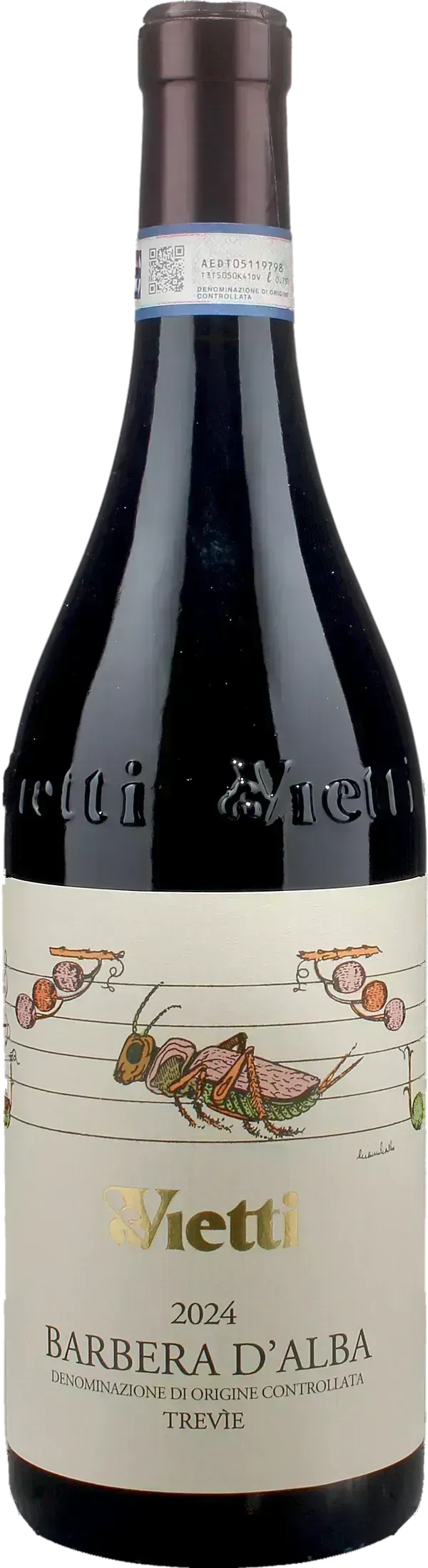
Vietti
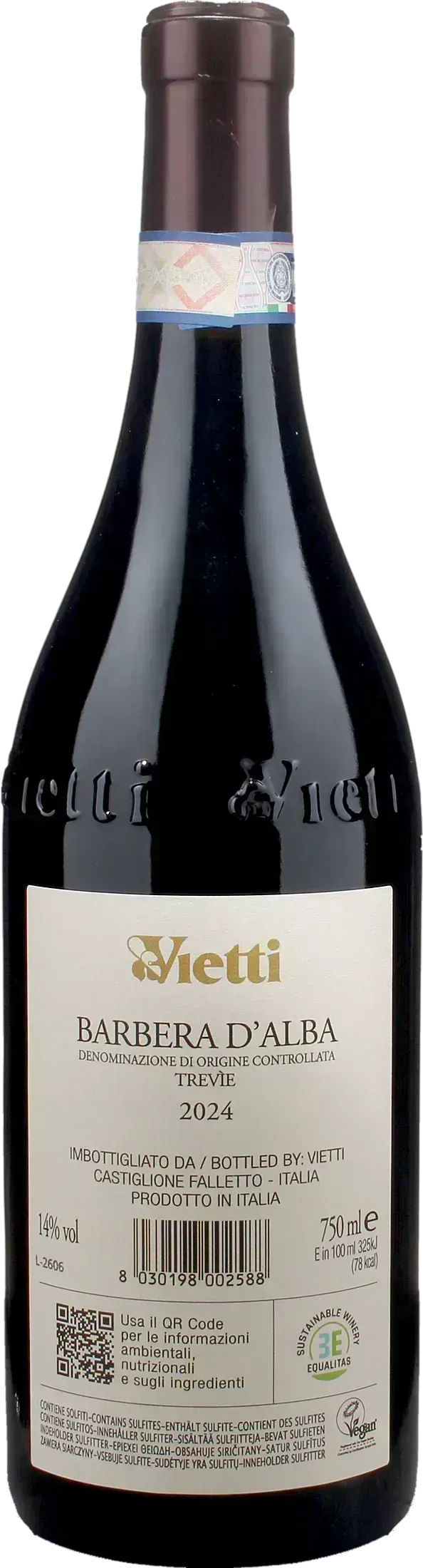
Barbera d'Alba Trevigne 2024
| Denomination | DOC Barbera d'Alba |
|---|---|
| Size | 0,75 l |
| Alcohol content | 14.0% by volume |
| Area | Piedmont (Italy) |
| Grape varieties | 100% Barbera |
| Aging | Ageing for approximately one year, split between large casks, barriques and stainless steel. |
- Profile: 100% Barbera delle Langhe DOC red wine, from 28–43 year old vines.
- Aromas: Fragrance of ripe cherry and vanilla, enriched by notes of violet and sweet spices
- Taste: Well-rounded structure, lively acidity and soft tannins; long-lasting persistence on the palate
- Vegan production: Fermented in steel and aged for 1 year in wood and steel.
- Pairings: Ideal with roasts, game, pasta, grilled vegetables and mature cheeses
Description
What type of wine it is
Vietti's Barbera d'Alba Tre Vigne is a still red wine from Piedmont produced using exclusively Barbera grapes. Belonging to the Barbera d'Alba appellation, it is distinguished by a round and full-bodied style, supported by a bright natural acidity and soft tannins. Fermented in stainless steel tanks and aged in wood, this wine offers a harmonious profile, characterised by notes of ripe cherry, vanilla and sweet spices. This sincere and artisanal expression of the grape variety provides a perfect introduction to the peculiarities of its territory of origin and the precise winemaking methods.
Where it comes from
This Piedmontese red originates from the Langhe hills, within municipalities historically suited to viticulture such as Castiglione Falletto, Monforte d'Alba and La Morra. The limestone-clay matrix soils offer the ideal environment for the development of the old vines, cultivated using the Guyot system. This combination of soil composition and mature vines gives the clusters a clear expression and remarkable quality. The territorial characteristics decisively shape the character of the wine, ensuring a profound balance between lively freshness and the full ripeness of the fruit.
How it is produced
Winemaking follows a rigorous approach, ensuring a final product compatible with a vegan diet. The production process begins with an alcoholic fermentation of about two weeks in steel tanks, supported by frequent délestage and daily pumping over to optimise the extraction of colour and substances. The subsequent malolactic fermentation also takes place entirely in steel. To achieve full structural expression, the wine undergoes ageing for about a year, divided between casks, barriques and steel, enriching the taste with a pleasant and persistent finish.
Tasting notes

Perfume

Color
Taste
Serve at:
14 -16 °C
Longevity:
10 - 15 years
Decanting time:
1 hour
- Start up year: 1873
- Oenologist: Eugenio Palumbo
- Bottles produced: 600.000
- Hectares: 75
We train our expertise and winemakers’ sensitivity, while looking after every detail. That’s the style that makes our winery stand out.
We have always opted for the most natural and artisanal processing techniques. This commitment stems from continuous observation, patient waiting, and from the respect for the natural cycle followed by our plants. We know every vineyard, observe each of them in their unique growing season, and respect them.
We respect our land, the techniques, and the ancient knowledge that, along with continuous training, make our wine unique. We take care of the work that we do, aligned with the values of respect, inclusivity, fairness, and social well-being.
This is part of our philosophy and approach because what makes our wine great is the complete respect towards our territory. While working, we aim to reduce the interventions on the vineyard, and we use natural resources with care and consideration. Read more



| Name | Vietti Barbera d'Alba Trevie 2024 |
|---|---|
| Type | Red green still |
| Denomination | Barbera d'Alba DOC |
| Vintage | 2024 |
| Size | 0,75 l |
| Alcohol content | 14.0% by volume |
| Grape varieties | 100% Barbera |
| Country | Italy |
| Region | Piedmont |
| Vendor | Vietti |
| Origin | Castiglione Falletto, Monforte d'Alba, La Morra and other villages of the Langhe |
| Soil composition | Calcareous-clayey |
| Cultivation system | Tablemount |
| Plants per hectare | Approximately 4,500 vines/ha |
| Fermentation | About two weeks |
| Production technique | Alcoholic fermentation in stainless steel tanks (approx. 2 weeks) with frequent rack-and-return and daily pump-overs; malolactic fermentation in stainless steel; ageing for approximately one year in a combination of large barrels, barriques and stainless steel. |
| Wine making | Alcoholic fermentation for approximately two weeks in stainless steel tanks with frequent délestage and daily pump-overs; malolactic fermentation in stainless steel; ageing for approximately one year in a combination of large casks, barriques and stainless steel. |
| Aging | Ageing for approximately one year, split between large casks, barriques and stainless steel. |
| Allergens | Contains sulphites |