


Vie di Romans
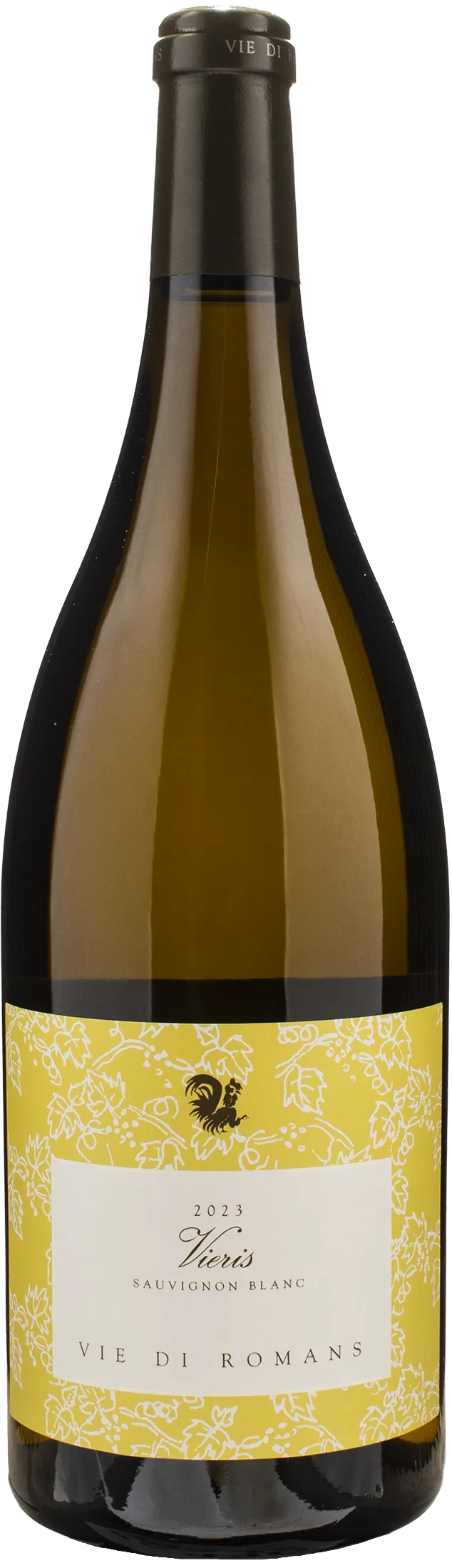
Vieris Sauvignon Blanc 2023
| Denomination | DOC Friuli Isonzo Sauvignon |
|---|---|
| Size | 1,50 l |
| Alcohol content | 14.0% by volume |
| Area | Friuli-Venezia Giulia (Italy) |
| Grape varieties | 100% Sauvignon |
| Aging | 8 months on lees and aged in bottle for 8 months |
- Magnum format 1.5 l: suitable for sharing and for maintaining freshness over time
- Grape variety and vintage: 100% Sauvignon Blanc, harvested in 2023, alcohol content 14%
- Aromatic profile: floral and fruity notes, with papaya, ripe peach and hints of ginger
- Careful vinification: maceration at 8°C, fermentation for 25 days, no malolactic fermentation
- Complex ageing: 8 months on the lees followed by 8 months in the bottle for greater depth

Description
What kind of wine it is
Vie di Romans Vieris Sauvignon Blanc is a still white wine that embodies the essence of Friuli Isonzo. Made from Sauvignon Blanc grapes, it displays an intense and brilliant golden yellow hue. On the nose, it offers a floral and fruity bouquet, with notes of papaya, ripe peach and delicate hints of ginger. On the palate, it is fresh and harmonious, supported by subtle woody notes that prolong the exotic fruit flavours. Its significant structure makes it ideal to pair with fish and shellfish, sushi, delicate starters and goat’s cheeses.
Where it comes from
This wine originates in Mariano del Friuli, within the Friuli Isonzo area in Friuli-Venezia Giulia. The vines, trained using the simple Guyot method, grow on shallow soils rich in stones. The soil is characterised by a silty-sandy texture with a reddish colour, due to the presence of iron and aluminium oxides. This substrate, with its high drainage capacity and limited water reserves, promotes optimal vegetative balance and gives the grapes a distinct territorial identity.
How it is produced
Vinification begins with destemming and crushing of the grapes, followed by a cold skin maceration at eight degrees to maximise aromatic extraction. After static clarification, the must ferments at a controlled temperature for twenty-five days, without undergoing malolactic fermentation to maintain a dynamic and lively profile. The wine’s complex character develops during an eight-month period on the lees, then is completed by a careful bottle ageing for a further eight months.
History and Curiosities
The Vieris Sauvignon Blanc 2023 from Vie di Romans embodies the most authentic essence of the Friuli Isonzo DOC. Produced from vines rooted in distinctive reddish soils rich in stones, this outstanding wine boasts meticulous ageing on the lees for eight months. Awarded the 3 Gold Stars by Veronelli, it is enhanced by the exclusive 1.5 l Magnum format, ideal for preserving its elegant complexity over time. Each sip reveals extraordinary freshness, enriched by vibrant notes of exotic fruit and hints of ginger that fully celebrate the authentic Friulian terroir.
Awards
-
2023
 3
3One of the most prestigious wine guides in Italy.
Tasting notes
Perfume

Color

Taste
Serve at:
12 - 14 °C
Longevity:
05 - 10 years
- Start up year: 1900
- Oenologist: Gianfranco Gallo
- Bottles produced: 300.000
- Hectares: 67
Since 1978, the winery has been run by Gianfranco who, through rigorous and daring viticultural choices, combined with careful oenological interpretation, has affirmed a qualitative style of great personality, which has distinguished the Vie di Romans winery over the last twenty years.
Important milestones in this last historical journey have been: 1978 first bottling and first commercial label, 1982 start of a cycle of viticultural modernisation aimed at high quality, 1989 construction of the new cellar built on three floors, 1990 vinification of grapes separated according to cru of origin, 1992 commercial release of the 1990s vintage and from this date onwards white wines will always be marketed two years after the harvest. Read more


| Name | Vie di Romans Vieris Sauvignon Blanc Magnum 2023 |
|---|---|
| Type | White still |
| Denomination | Friuli Isonzo DOC |
| Vintage | 2023 |
| Size | 1,50 l |
| Alcohol content | 14.0% by volume |
| Grape varieties | 100% Sauvignon |
| Country | Italy |
| Region | Friuli-Venezia Giulia |
| Vendor | Vie di Romans |
| Story | History and Curiosities The Vieris Sauvignon Blanc 2023 from Vie di Romans embodies the most authentic essence of the Friuli Isonzo DOC. Produced from vines rooted in distinctive reddish soils rich in stones, this outstanding wine boasts meticulous ageing on the lees for eight months. Awarded the 3 Gold Stars by Veronelli, it is enhanced by the exclusive 1.5 l Magnum format, ideal for preserving its elegant complexity over time. Each sip reveals extraordinary freshness, enriched by vibrant notes of exotic fruit and hints of ginger that fully celebrate the authentic Friulian terroir. |
| Origin | Mariano del Friuli (GO) |
| Soil composition | Shallow with abundant skeleton, reddish silt-sandy fraction due to the presence of iron and aluminium oxides, well-drained, low water retention capacity. |
| Cultivation system | Single Guyot |
| Plants per hectare | 6,000 vines/ha |
| Yield per hectare | 4,625 kg/ha |
| Harvest | 1, 4 and 5 September |
| Fermentation temperature | 16–19 °C |
| Fermentation | 25 days |
| Production technique | Destemming and crushing; cold skin maceration (8 °C); cold static settling; fermentation at 16–19 °C for 25 days; malolactic fermentation not carried out; 8 months on the lees and ageing in bottle for 8 months |
| Wine making | Destemming and crushing. Cold skin maceration: 8°C. Clarification: static cold. Fermentation temperature: 16 to 19°C. Fermentation duration: 25 days. Malolactic fermentation: not carried out. |
| Aging | 8 months on lees and aged in bottle for 8 months |
| Total acidity | 6.0 gr/L |
| PH | 3.24 |
| Allergens | Contains sulphites |