


Venica
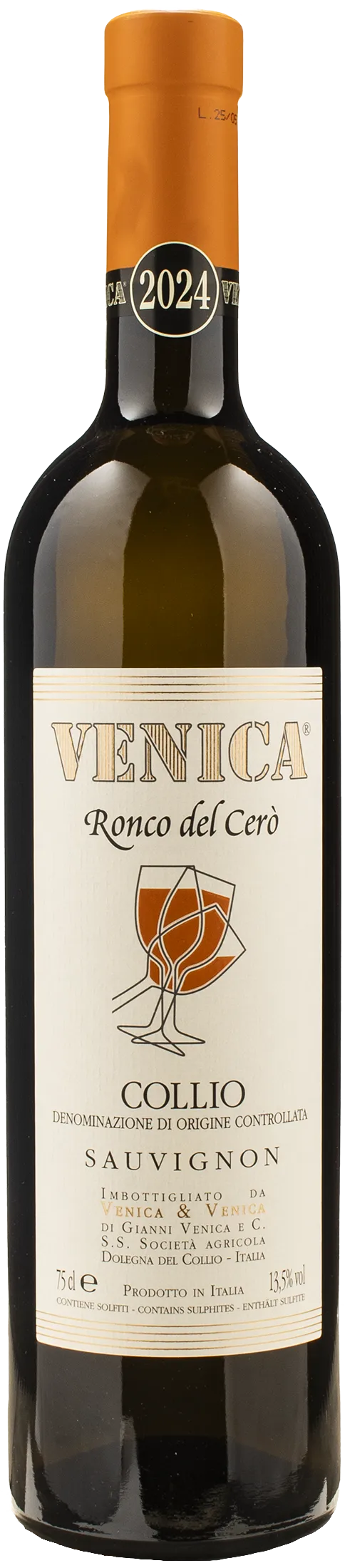
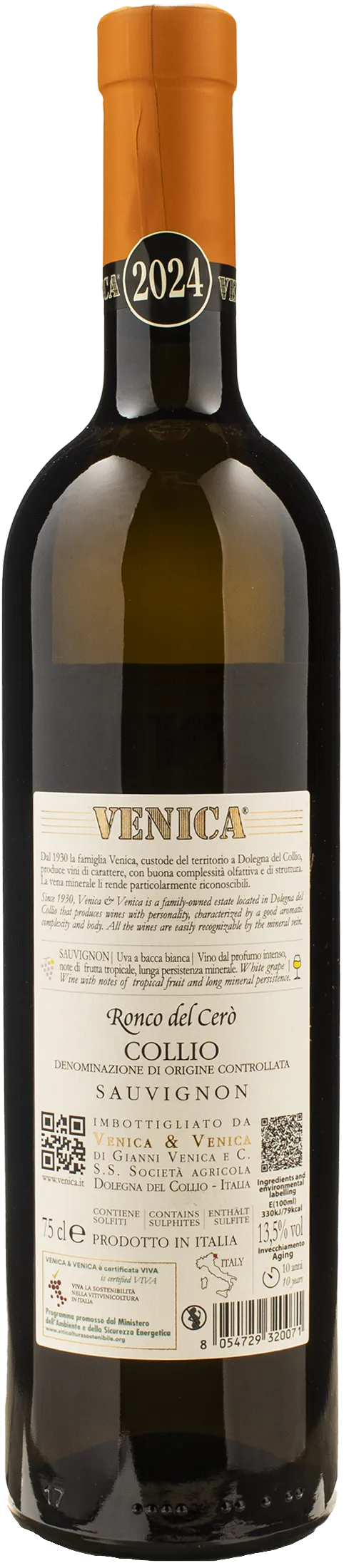
Ronco del Cerò Sauvignon 2024
| Denomination | DOC Collio Goriziano Sauvignon |
|---|---|
| Size | 0,75 l |
| Alcohol content | 13.5% by volume |
| Area | Friuli-Venezia Giulia (Italy) |
| Grape varieties | 100% Sauvignon |
| Aging | 10% of the must ferments and matures on the lees for 6 months in large wooden barrels (20–27 hl), while the remainder matures in stainless steel containers; bottle ageing takes place during the full moons between the end of March and May. |
- Grape variety and vintage: 100% Sauvignon Blanc, harvested in 2024, alcohol content 13.5%
- Origin and designation: Collio DOC in Friuli-Venezia Giulia, Ronco del Cerò selection
- Vinification: maceration for 18–20 hours at 10–12°C, matured in stainless steel and 10% in large barrels
- Aromatic profile: notes of gooseberry, bergamot, guava, passion fruit and mineral hints
- Taste and serving: fresh, savoury, balanced and persistent; serving temperature 12–14°C
Description
What kind of wine is it
Ronco del Cerò Sauvignon is a still white wine produced by Venica in the Collio region of Friuli-Venezia Giulia. Made from Sauvignon grapes, it expresses a fresh and elegant style. The intense aromatic profile offers scents of gooseberry, bergamot and passion fruit, blended with fresh herbal notes of boxwood and calamint. On the palate, the sip is vibrant and faithfully reflects the aromas, characterised by a marked savouriness that makes it balanced, persistent and pleasantly velvety in texture.
Where does it come from
The roots of this wine lie in the heart of the Collio area of Gorizia, a hilly region between the Isonzo and Judrio rivers. The historic Ronco del Cerò hill, purchased in 1929, enjoys southern exposure and optimal altitudes for viticulture. The distinctive marl and sandstone soils impart an unmistakable mineral character to the grapes, fundamental to the wine's structure. The area benefits from a temperate microclimate, protected to the north by the Julian Prealps and tempered by breezes from the nearby Adriatic Sea, ensuring ideal ripening and a precise expressive identity.
How is it produced
Production begins with destemming and a low-temperature maceration on the skins in containers protected from oxygen. This technique uses recycled fermentation carbon dioxide to preserve the purity of the aromas. Fermentation and maturation take place in both steel tanks and large barrels, where the wine rests on the lees for six months, gaining structural roundness. The final stage involves bottle ageing in accordance with natural rhythms, completed during the full moons of the spring months.
History and Curiosities
Purchased in 1929, the Ronco del Cerò hill marks the beginning of the Sauvignon tradition signed by Venica. Today, this prestigious cru is a symbol of the Collio, created from grapes sourced from seven different vineyards and processed separately to achieve an extraordinary aromatic complexity. The winery preserves its elegance by using containers protected from oxygen, which allow the recycling of fermentation carbon dioxide. Bottle ageing follows natural rhythms, concluding in line with the full moons between the end of March and May.
Tasting notes

Perfume

Color

Taste
Serve at:
12 - 14 °C
Longevity:
05 - 10 years
- Start up year: 1930
- Oenologist: Gianni Venica, Francesco La Coppola
- Bottles produced: 350.000
- Hectares: 40


| Name | Venica Ronco del Cero Sauvignon 2024 |
|---|---|
| Type | White still |
| Denomination | Collio DOC |
| Vintage | 2024 |
| Size | 0,75 l |
| Alcohol content | 13.5% by volume |
| Grape varieties | 100% Sauvignon |
| Country | Italy |
| Region | Friuli-Venezia Giulia |
| Vendor | Venica |
| Story | History and Curiosities Purchased in 1929, the Ronco del Cerò hill marks the beginning of the Sauvignon tradition signed by Venica. Today, this prestigious cru is a symbol of the Collio, created from grapes sourced from seven different vineyards and processed separately to achieve an extraordinary aromatic complexity. The winery preserves its elegance by using containers protected from oxygen, which allow the recycling of fermentation carbon dioxide. Bottle ageing follows natural rhythms, concluding in line with the full moons between the end of March and May. |
| Origin | Dolegna del Collio (Gorizia) |
| Climate | Mild temperate microclimate |
| Soil composition | Marly-arenaceous soils |
| Plants per hectare | Minimum 4,000 vines/ha |
| Yield per hectare | Maximum 11 t/ha |
| Harvest | Summer (late August) |
| Production technique | Low-temperature maceration on the skins in containers protected from oxygen with recycling of fermentation carbon dioxide; fermentation in steel and large wooden casks; ageing on the lees |
| Wine making | The grapes were harvested and destemmed between 22 and 24 August, then macerated for 18–20 hours at 10–12 °C in oxygen-protected containers with recirculation of fermentation carbon dioxide; 10% of the must ferments and ages on the lees for 6 months in large wooden barrels (20–27 hl), while the remainder ferments and matures in steel containers; bottle ageing takes place during the full moons between late March and May. |
| Aging | 10% of the must ferments and matures on the lees for 6 months in large wooden barrels (20–27 hl), while the remainder matures in stainless steel containers; bottle ageing takes place during the full moons between the end of March and May. |
| Total acidity | 4.8 gr/L |
| Allergens | Contains sulphites |