


Venica
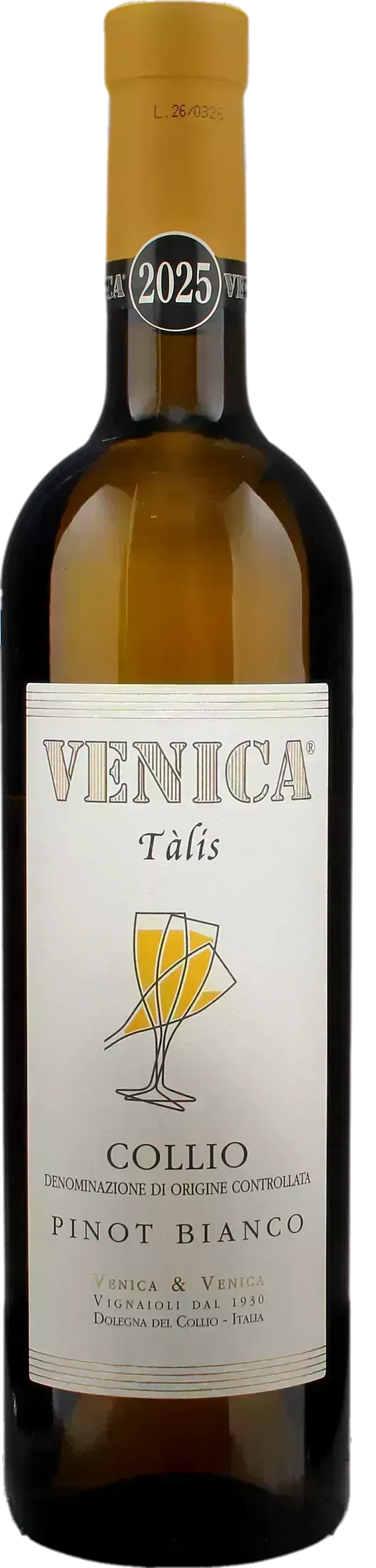
Collio Pinot Bianco Talis 2025
| Denomination | DOC Collio Goriziano Pinot Bianco |
|---|---|
| Size | 0,75 l |
| Alcohol content | 13.5% by volume |
| Area | Friuli-Venezia Giulia (Italy) |
| Grape varieties | 100% Pinot Bianco |
| Aging | Ageing on the lees for 5 months: 60% in stainless steel and 40% in large oak casks (20–27 hl), with further ageing in the bottle. |
- Type and grape: Still white wine with Collio designation made from Pinot Bianco grapes, 13.5% vol
- Nose: Notes of chamomile, Pippin apple and citrus; clear and persistent bouquet
- Palate: Fresh and elegant, medium-bodied, with mineral sapidity and a balanced finish
- Vinification: 12-hour maceration at 10–12 °C; aged on the lees for 5 months
- Region: Dolegna del Collio, calcareous and stony soils; climate influenced by Adriatic breezes
Description
What type of wine it is
Venica's Tàlis is a still white wine that expresses the full potential of the Collio territory. Produced with Pinot Bianco grapes, it presents itself on the palate with a fresh, elegant style and a firm mouthfeel. On the nose, it reveals a clear aromatic profile, characterised by delicate floral and fruity notes reminiscent of chamomile, russet apple, and citrus fruits, with a notable mineral persistence. The winemaking process involves a cold maceration phase on the skins in the absence of oxygen, followed by five months of ageing divided between stainless steel tanks and large oak barrels, for a clean and harmonious finish.
Where it comes from
The grapes for this Pinot Bianco come from the vineyards of Dolegna del Collio, in the province of Gorizia, situated on hills at an altitude between 60 and 270 metres in the heart of Friuli-Venezia Giulia. The calcareous and stony soils, combined with a cool climate, give the wine its distinct mineral character and excellent structure. Breezes from the Adriatic Sea and the protection of the Julian Prealps create an ideal microclimate for slow and progressive ripening, capable of enhancing the purity of the aromas and the natural freshness of the bunches.
How it is produced
Production begins with a meticulous manual harvest, on 14 September, and the destemming of the bunches. This is followed by cold maceration on the skins for about 12 hours at low temperatures (10-12 °C), conducted in the absence of oxygen to preserve the aromatic profile intact. The must ferments and continues with ageing on the lees for five months: one part matures in steel to maintain freshness, while the other rests in large oak barrels, giving the wine a velvety and complex texture, before bottling carried out according to the lunar phases.
History and curiosities
Pinot Bianco Tàlis originates in Dolegna del Collio from a noble grape variety of Alsatian origin, which has been cultivated in this renowned area for over one hundred and fifty years. The Friulian term that gives it its name is a sincere tribute to the dandelion flower, which is deeply rooted in local tradition. A fascinating peculiarity of the production process is the traditional bottling that scrupulously follows the lunar phases, an ancient method aimed at preserving the wine's authenticity. Thanks to this historical and artisanal care, a critically acclaimed expression is achieved.
Tasting notes

Perfume

Color
Taste
Serve at:
12 - 14 °C
Longevity:
05 - 10 years
- Start up year: 1930
- Oenologist: Gianni Venica, Francesco La Coppola
- Bottles produced: 350.000
- Hectares: 40


| Name | Venica Collio Pinot Bianco Talis 2025 |
|---|---|
| Type | White green still semi-aromatic |
| Denomination | Collio DOC |
| Vintage | 2025 |
| Size | 0,75 l |
| Alcohol content | 13.5% by volume |
| Grape varieties | 100% Pinot Bianco |
| Country | Italy |
| Region | Friuli-Venezia Giulia |
| Vendor | Venica |
| Story | History and curiosities Pinot Bianco Tàlis originates in Dolegna del Collio from a noble grape variety of Alsatian origin, which has been cultivated in this renowned area for over one hundred and fifty years. The Friulian term that gives it its name is a sincere tribute to the dandelion flower, which is deeply rooted in local tradition. A fascinating peculiarity of the production process is the traditional bottling that scrupulously follows the lunar phases, an ancient method aimed at preserving the wine's authenticity. Thanks to this historical and artisanal care, a critically acclaimed expression is achieved. |
| Origin | Dolegna del Collio (GO), province of Gorizia, Friuli-Venezia Giulia, Italy |
| Climate | Cool climate |
| Soil composition | Calcareous and stony soils |
| Plants per hectare | 4,000 vines/ha |
| Yield per hectare | 11 tonnes/ha |
| Harvest | 14 September |
| Fermentation | Five months |
| Production technique | Cold maceration on the skins for approximately 12 hours at 10–12 °C in the absence of oxygen (protected maceration) |
| Wine making | After manual harvesting and destemming, the grapes macerate on the skins for approximately 12 hours at 10–12 °C in oxygen-protected containers (recycling their own fermentation carbon dioxide to reduce the addition of antioxidants). The must ferments and ages on the lees for 5 months: 60% in stainless steel and 40% in large oak casks (20–27 hl), with further ageing in the bottle. |
| Aging | Ageing on the lees for 5 months: 60% in stainless steel and 40% in large oak casks (20–27 hl), with further ageing in the bottle. |
| Total acidity | 4.5 gr/L |
| Allergens | Contains sulphites |