


Vallone
Graticciaia 2020
| Denomination | IGT Salento |
|---|---|
| Size | 0,75 l |
| Alcohol content | 14.5% by volume |
| Area | Apulia (Italy) |
| Grape varieties | 100% Negro Amaro |
| Aging | Maturation in stainless steel for approximately 2 years, followed by ageing for approximately 1 year in small Allier and Nevers oak barrels. |
- Grape variety and origin: 100% Negroamaro from Salento PGI, Puglia
- Historic vineyards: 70–80-year-old bush-trained vines on limestone-clay soils
- Traditional drying (appassimento): Grapes dried for up to a month on reed and wicker mats
- Ageing: Two years in stainless steel followed by one year in small Allier and Nevers oak barrels
- Characteristics and pairings: Notes of dried fruit and liquorice, suitable for roasts, game and cheeses
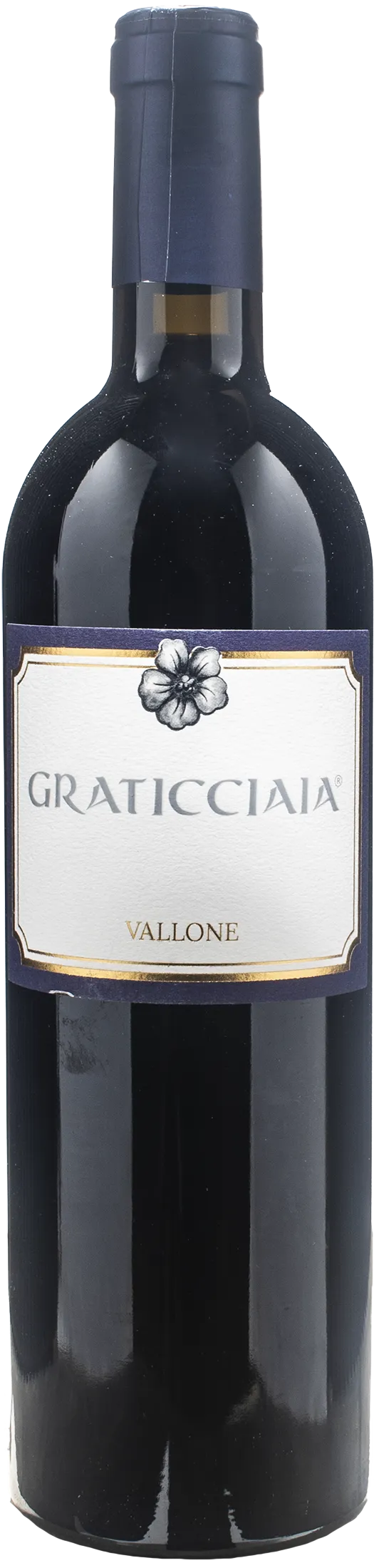
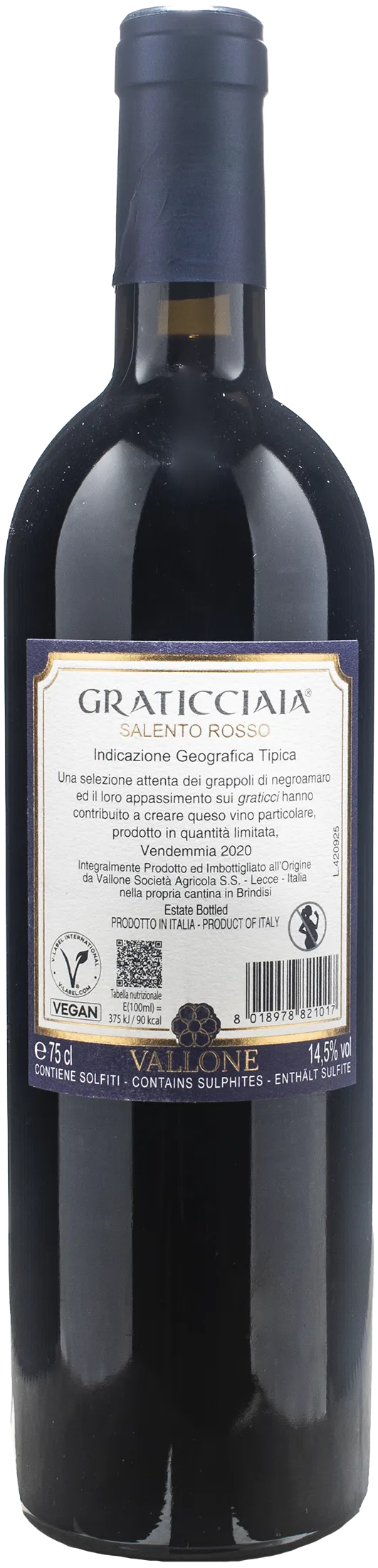
Description
What type of wine it is
Graticciaia is a still red wine with a Typical Geographical Indication produced by Vallone, a pure expression of the Negroamaro grape variety grown in Salento. It is distinguished by the particular natural drying technique on traditional mats, which allows for the concentration of flavours and aromas. Visually, it presents a dark ruby red colour with elegant garnet nuances and a complex aromatic profile, with notes of dried fruit, liquorice, tobacco and vanilla. On the palate, it reveals a structured, warm and elegant texture, ensuring a balanced and deep sip.
Where it comes from
The grapes come from the historic Caragnuli vineyard of the Iore Estate, located in the Salice Salentino area. These are old head-trained vines with an average age of about eighty years, rooted in clay-limestone soils that give the wine an intense profile. The mild and sunny climate, constantly mitigated by the sea breeze, favours optimal phenolic ripening of the bunches and creates the ideal conditions for the subsequent aromatic concentration.
How it is produced
Harvested manually in September, the Negroamaro grapes are left to rest for up to a month on wicker and reed mats, the typical drying racks (graticci). In late autumn, vinification begins with a slow fermentation at a controlled temperature to preserve the purity of the musts. The wine matures in steel for about two years, then completes its ageing for a further year in small oak barrels from Allier and Nevers. This meticulous production process confers extraordinary longevity, allowing the wine to evolve magnificently over time.
History and interesting facts
Created in 1986 from the vision of Severino Garofano, Graticciaia is the flagship wine of the Vallone winery, a pioneer since 1935 in the promotion of Apulian winemaking excellence. Produced exclusively in the best vintages with Negroamaro grapes from the historic Caragnuli vineyard, this iconic Salento IGP takes its name from the traditional reed and wicker mats used for the meticulous natural drying process. Highly acclaimed by critics, the wine embodies the vision of a family dedicated to enhancing the authentic identity of the region.
Awards
-
2020
 5
5Italian Sommelier Foundation (FIS) guide This has been one of the most prestigious wine guides in Italy for over 10 years.
-
2020
 3
3One of the most prestigious wine guides in Italy.
-
2020
 4
4Italian Sommelier Association (AIS) guide
Tasting notes

Perfume

Color

Taste
Serve at:
18 - 20 °C
Longevity:
10 - 15 years
Decanting time:
1 hour

- Start up year: 1934
- Oenologist: Marco Mascellani
- Bottles produced: 800.000
- Hectares: 180
The company born from the union of the lands of Professor Donato Vallone with those given as a dowry by Commendatore De Marco to his daughter Maria: the marriage deed of 1934 establishes the merger of two estates, the Tenuta Flaminio of Brindisi with the Tenuta Iore of San Pancrazio Salentino. Later, at the end of the 1960s, the splendid Castel Serranova estate was added. Read more


| Name | Vallone Graticciaia 2020 |
|---|---|
| Type | Red green still |
| Denomination | Salento IGT |
| Vintage | 2020 |
| Size | 0,75 l |
| Alcohol content | 14.5% by volume |
| Grape varieties | 100% Negro Amaro |
| Country | Italy |
| Region | Apulia |
| Vendor | Vallone |
| Story | History and interesting facts Created in 1986 from the vision of Severino Garofano, Graticciaia is the flagship wine of the Vallone winery, a pioneer since 1935 in the promotion of Apulian winemaking excellence. Produced exclusively in the best vintages with Negroamaro grapes from the historic Caragnuli vineyard, this iconic Salento IGP takes its name from the traditional reed and wicker mats used for the meticulous natural drying process. Highly acclaimed by critics, the wine embodies the vision of a family dedicated to enhancing the authentic identity of the region. |
| Origin | Caragnuli Vineyard, Iore Estate (San Pancrazio Salentino), Salice Salentino DOC area, Salento (Apulia, Italy) |
| Climate | Mild climate, with a refreshing sea breeze and plenty of sunshine. |
| Soil composition | Calcareous-clayey |
| Cultivation system | Sapling |
| Harvest | Mid/late September |
| Production technique | Natural air-drying of the grapes on racks (reed and wicker mats), slow fermentation at a controlled temperature, maturation in stainless steel and ageing in small oak barrels. |
| Wine making | After manual harvesting in mid to late September, the Negroamaro grapes are left to dry naturally on racks (reed and wicker mats) for a variable period of up to about a month. Once the drying process is complete, vinification follows in late autumn with slow fermentation at a strictly controlled must temperature. Maturation in steel for approximately 2 years and subsequent ageing for about 1 year in small Allier and Nevers oak barrels. |
| Aging | Maturation in stainless steel for approximately 2 years, followed by ageing for approximately 1 year in small Allier and Nevers oak barrels. |
| Allergens | Contains sulphites |