


Torrevento
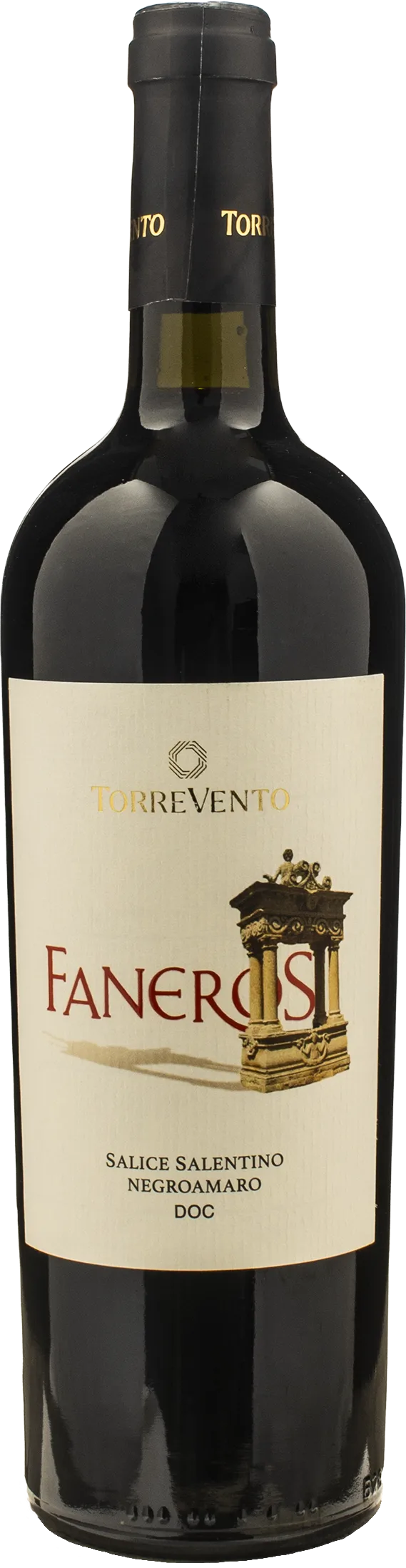
Salice Salentino Negroamaro Faneros 2023
| Denomination | DOC Salice Salentino Negroamaro |
|---|---|
| Size | 0,75 l |
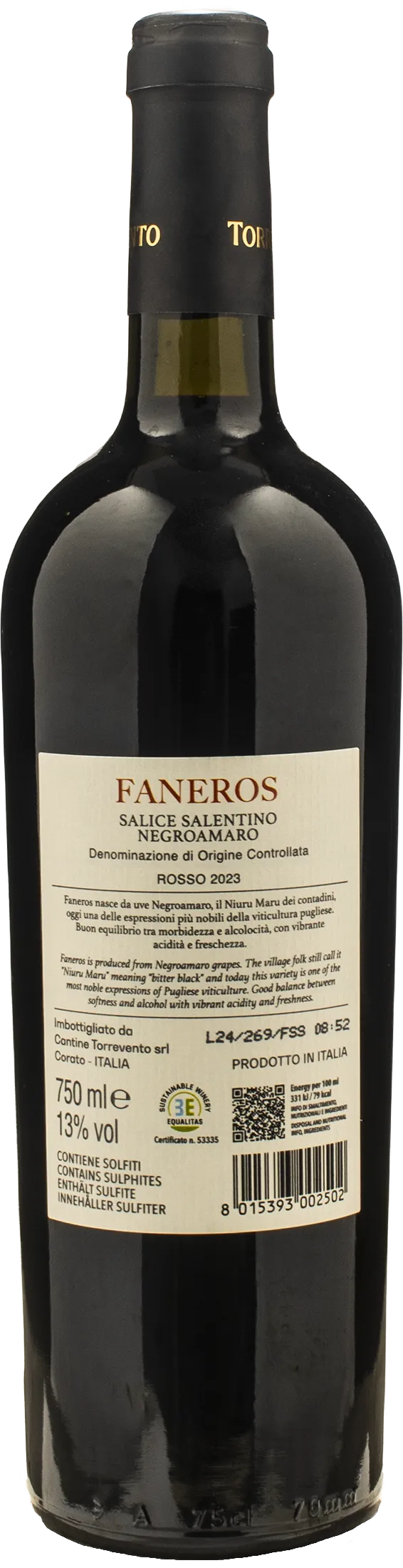
| Alcohol content | 13.0% by volume |
| Area | Apulia (Italy) |
| Grape varieties | Malvasia Nera, Negro Amaro |
| Aging | Aged in stainless steel for about 10 months, followed by bottle ageing. |
- Grape varieties and designation: Salice Salentino DOC, Negroamaro with Malvasia Nera
- Intense aromas: black cherry, blackberry, damp earth, liquorice and fine spices
- Aged in steel: prolonged maceration, 10 months in stainless steel and subsequent rest in bottle
- On the palate: full-bodied structure, savouriness, velvety tannins, creamy texture and spicy finish
- Serving and pairings: 16–18 °C, 1 hour decanting; ideal with roasts and cheeses
Description
What kind of wine it is
Faneros Salice Salentino by Torrevento is created from a blend of Negroamaro and Malvasia Nera. An authentic expression of Salice Salentino, this blend offers a full and balanced character. Its aromatic profile evokes notes of damp earth, black cherry, blackberry and intriguing hints of liquorice. On the palate, it delivers a savoury sip, enhanced by soft tannins and a pleasant creamy texture that leads to an elegant spicy finish, making it ideal for pairing with roast meats or mature cheeses.
Where it comes from
The vines take root in the Apulian region, between the Alta Murgia National Park and the heart of Salice Salentino. The vineyards, cultivated using the ancient Apulian bush vine system at around fifty metres above sea level, benefit from generous sunshine, significant temperature variations and constant sea breezes. The medium-textured clay soils, enriched with limestone veins, ensure excellent aromatic concentration in the fruit, giving the wine a solid structure and a pleasant savouriness.
How it is produced
After the September harvest, production involves careful maceration on the skins followed by alcoholic fermentation in stainless steel tanks. To preserve the freshness and pure expression of the fruit, no wood ageing is carried out. The wine matures in steel for about ten months before further resting in the bottle, an essential phase to allow the sip to reach its perfect expressive balance.
History and Curiosities
Faneros embodies the vocation of Torrevento, a historic Apulian winery founded in 1989. This harmonious red is born in the renowned Salice Salentino DOC from sustainable and rigorous agriculture. Oenologist Leonardo Palumbo enhances the ancient Apulian bush vine method, combining the native Negroamaro and Malvasia Nera grape varieties. Thanks to minimal use of wood, aimed at preserving its freshness, the wine matures in steel and rests in evocative cellars carved into the rock, offering an authentic sip true to the purest local tradition.
Tasting notes

Perfume

Color

Taste
Serve at:
16 - 18 °C
Longevity:
05 - 10 years
Decanting time:
1 hour

- Start up year: 1989
- Oenologist: Leonardo Palumbo
- Bottles produced: 2.600.000
- Hectares: 500
Vineyards are only grown with autochthonous vines, following the dictates of sustainable agriculture. At the winery, the production method follows a non-excessively long maceration time and a non-excessive use of wood. Francesco Liantonio has been at the helm; there have been many interventions: the expansion of the vineyard area, investments in technology and innovation and the start of the process for quality certification. It has 500 hectares of vineyards and 2,600,000 bottles, yet it can amaze and innovate, producing wines combining large numbers and quality. Read more


| Name | Torrevento Salice Salentino Negroamaro Faneros 2023 |
|---|---|
| Type | Red green still |
| Denomination | Salice Salentino DOC |
| Vintage | 2023 |
| Size | 0,75 l |
| Alcohol content | 13.0% by volume |
| Grape varieties | Malvasia Nera, Negro Amaro |
| Country | Italy |
| Region | Apulia |
| Vendor | Torrevento |
| Story | History and Curiosities Faneros embodies the vocation of Torrevento, a historic Apulian winery founded in 1989. This harmonious red is born in the renowned Salice Salentino DOC from sustainable and rigorous agriculture. Oenologist Leonardo Palumbo enhances the ancient Apulian bush vine method, combining the native Negroamaro and Malvasia Nera grape varieties. Thanks to minimal use of wood, aimed at preserving its freshness, the wine matures in steel and rests in evocative cellars carved into the rock, offering an authentic sip true to the purest local tradition. |
| Origin | Apulian territory, Salice Salentino DOC area (Alta Murgia National Park) |
| Climate | Mediterranean climate, sunny with sea breezes, constant ventilation and strong diurnal temperature variation |
| Soil composition | Medium-textured clay |
| Cultivation system | Apulian bush vine |
| Plants per hectare | 4500 |
| Yield per hectare | 100 quintals/ha |
| Harvest | Second decade of September |
| Production technique | Long maceration followed by alcoholic fermentation mainly in stainless steel tanks; maturation in stainless steel for about 10 months, then bottle ageing |
| Wine making | Long maceration followed by alcoholic fermentation mainly in stainless steel tanks; red fermentation with not excessively long maceration; ageing in stainless steel for about 10 months, then further ageing in bottle. |
| Aging | Aged in stainless steel for about 10 months, followed by bottle ageing. |
| Allergens | Contains sulphites |