


Tiefenbrunner
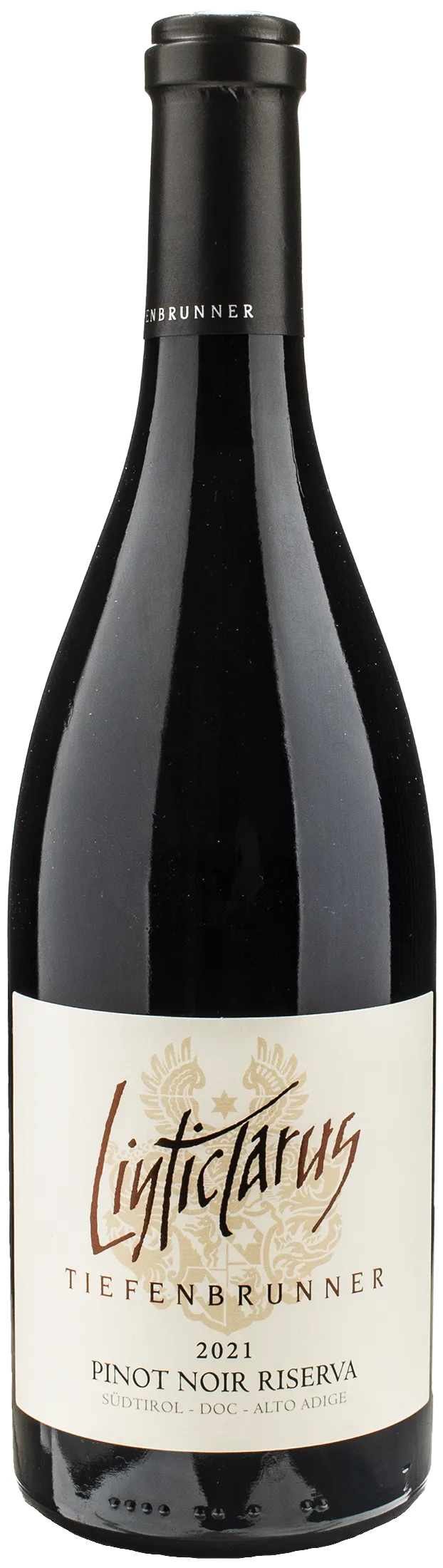
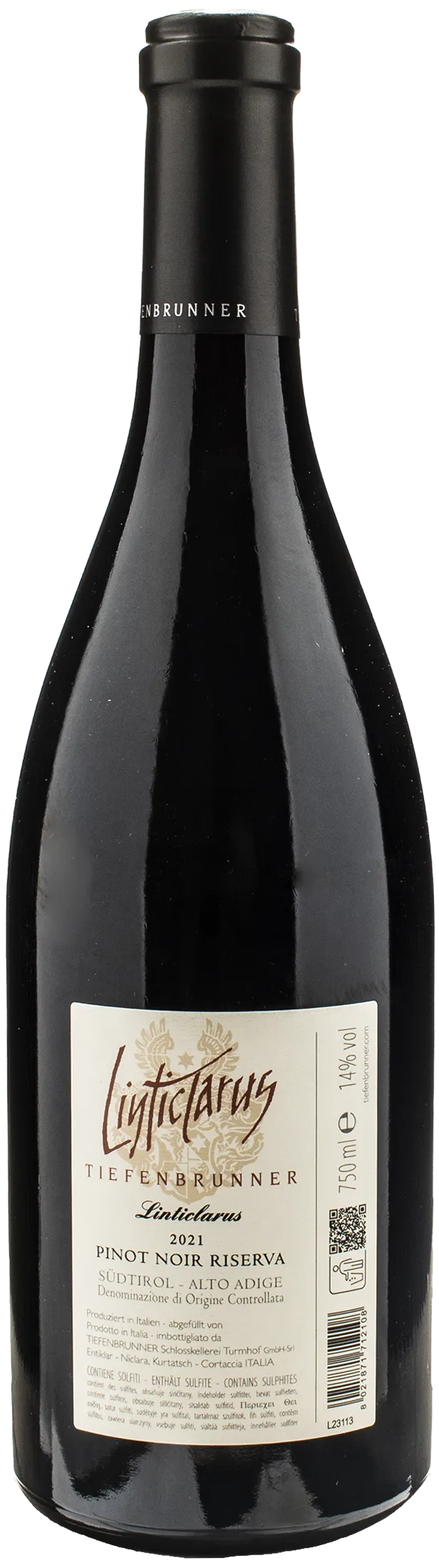
Linticlarus Pinot Nero Riserva 2021
| Denomination | DOC Alto Adige Pino Nero Riserva |
|---|---|
| Size | 0,75 l |
| Alcohol content | 14.0% by volume |
| Area | Trentino Alto Adige (Italy) |
| Grape varieties | 100% Pinot Nero |
| Aging | After malolactic fermentation, aged for 12 months in barriques (40% new), then 6 months in large casks and finally 12 months in bottle. |
- Name and vintage: Alto Adige DOC Pinot Nero Riserva 2021, still and dry red wine
- Aromatic profile: notes of wild berries and cherry; ruby colour with garnet highlights
- Vinification: hand-picked; 70% destemmed and partly whole cluster fermented in concrete
- Ageing: 12 months in barrique (40% new), 6 months in large cask, 12 months in bottle
- Serving and pairings: serve at 16-18 °C, decant for 1 hour; excellent with lamb and game
Description
What kind of wine it is
Linticlarus Pinot Nero Riserva by Tiefenbrunner is a highly prestigious red wine produced in the Alto Adige region. In the glass, it displays an intense ruby red colour with garnet highlights, which anticipates a clear bouquet with refined aromas of wild berries and cherry. On the palate, it reveals an elegant and rounded body, supported by a structured texture that leads to a persistent and harmonious finish, perfect for accompanying feathered game dishes or mature cheeses.
Where it comes from
The Pinot Nero grapes grow in sun-kissed hillside vineyards, located in the areas of Montagna and Corona with a privileged south and south-west exposure. The altitudes range between 450 and 800 metres, creating an ideal microclimate for slow and complex ripening. The diversity of calcareous-clay soils of morainic origin in Corona and the clay-sandy compositions on dolomitic rock in Montagna give the wine extraordinary aromatic precision and marked elegance.
How it is produced
Manual harvesting allows for meticulous selection of the bunches, which are mostly destemmed, leaving only a small part whole. The process begins with a cold maceration, followed by fermentation in cement vats. After malolactic fermentation, the wine matures for twelve months in small oak barrels, partly new, then completes its maturation for a further six months in large barrels. A final period of rest in the bottle refines its balance before release to the market.
History and Curiosities
The Linticlarus Pinot Nero Riserva 2021 embodies the excellence of the historic Tiefenbrunner estate, active since 1848. This elegant red wine is produced on the slopes of Montagna and Corona, in Alto Adige, on calcareous-clay soils. Awarded 93 points by James Suckling, this prestigious Alto Adige DOC stands out for its enveloping structure and a persistent finish, offering an exceptional sensory experience, perfect for accompanying refined game dishes.
Awards
-
2021
 93
93/100
James Suckling is an influential American wine critic and journalist who worked at Wine Spectator for 30 years. He left the magazine in 2010 to start his own website and guidebook (JamesSuckling.com). He specialises in Italian and Bordeaux wines.
Tasting notes

Perfume

Color
Taste
Serve at:
16 - 18 °C
Longevity:
10 - 15 years
Decanting time:
1 hour
- Start up year: 1848
- Oenologist: Stephan Rohregger
- Bottles produced: 650.000
- Hectares: 88
It is both an honor and a responsibility to carry on the legacy and to continue writing the story of the Tiefenbrunner family, chapter by chapter, year after year, vintage after vintage. Read more


| Name | Tiefenbrunner Linticlarus Pinot Nero Riserva 2021 |
|---|---|
| Type | Red still |
| Denomination | Alto Adige DOC |
| Vintage | 2021 |
| Size | 0,75 l |
| Alcohol content | 14.0% by volume |
| Grape varieties | 100% Pinot Nero |
| Country | Italy |
| Region | Trentino Alto Adige |
| Vendor | Tiefenbrunner |
| Story | History and Curiosities The Linticlarus Pinot Nero Riserva 2021 embodies the excellence of the historic Tiefenbrunner estate, active since 1848. This elegant red wine is produced on the slopes of Montagna and Corona, in Alto Adige, on calcareous-clay soils. Awarded 93 points by James Suckling, this prestigious Alto Adige DOC stands out for its enveloping structure and a persistent finish, offering an exceptional sensory experience, perfect for accompanying refined game dishes. |
| Origin | Hillside vineyards in Montagna and Corona |
| Climate | Altitude 450–800 m a.s.l.; south/south-west exposure |
| Soil composition | Sandy clay soils on dolomitic rock in Montagna; calcareous clay soil from morainic sediments in Corona |
| Cultivation system | Espalier |
| Plants per hectare | 6000-8000 |
| Yield per hectare | 40-45 hl/ha |
| Fermentation | Approximately 21 days |
| Production technique | Manual harvest; approximately 70% of the grapes destemmed and the remainder vinified as whole bunches in concrete tanks; cold maceration; alcoholic fermentation; malolactic fermentation; ageing in barriques and large barrels, then in bottle |
| Wine making | After manual harvesting, about 70% of the grapes are gently destemmed while the remaining portion is vinified as whole bunches in concrete vats; cold maceration for about 7 days, followed by alcoholic fermentation for around 21 days. Malolactic fermentation is completed before ageing; aged for 12 months in barriques (40% new), then 6 months in large casks and finally 12 months in bottle. |
| Aging | After malolactic fermentation, aged for 12 months in barriques (40% new), then 6 months in large casks and finally 12 months in bottle. |
| Total acidity | 5.5 gr/L |
| Residual sugar | 0.5 gr/L |
| Allergens | Contains sulphites |