


Sirch Azienda Agricola
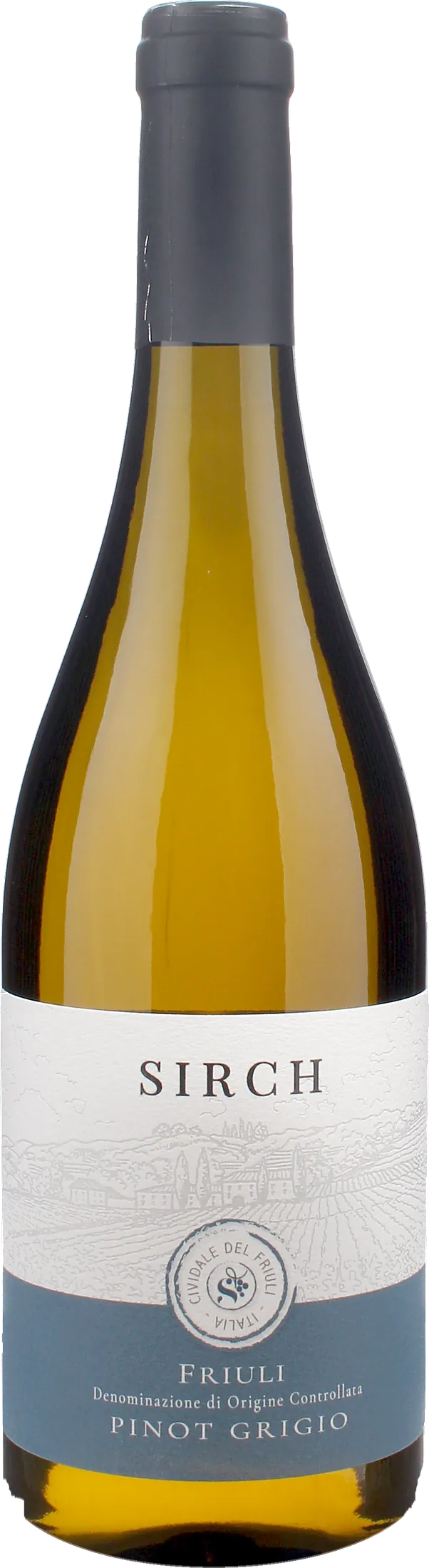
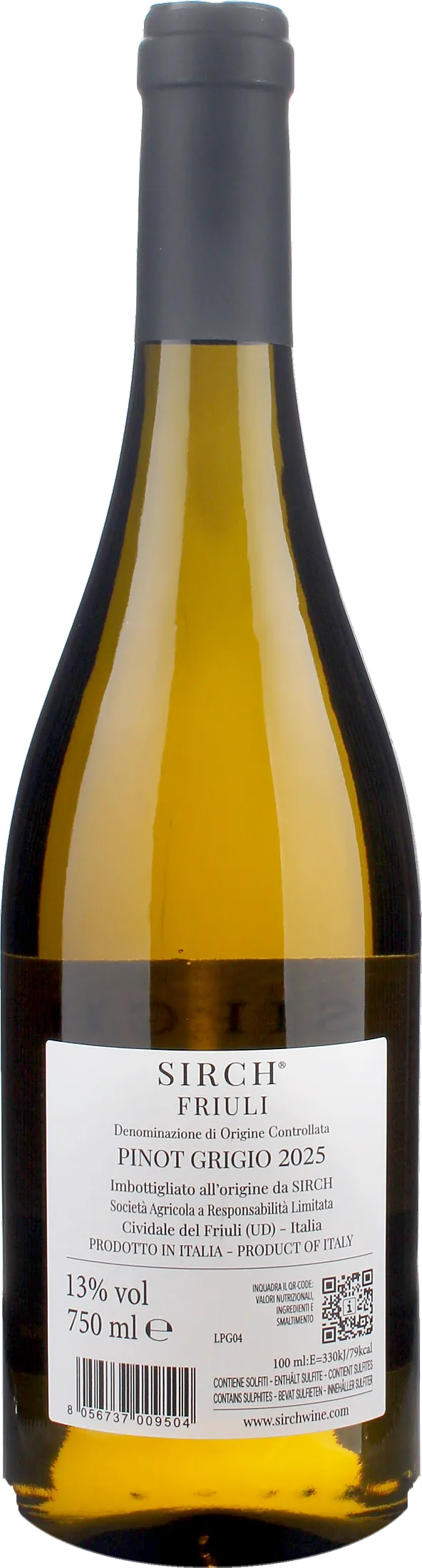
Pinot Grigio 2025
| Denomination | DOC Colli Orientali del Friuli Pinot Grigio |
|---|---|
| Size | 0,75 l |
| Alcohol content | 13.0% by volume |
| Area | Friuli-Venezia Giulia (Italy) |
| Grape varieties | 100% Pinot Grigio |
| Aging | At the end of fermentation, the wine remains on the lees for several months in stainless steel tanks with periodic stirring; it is then bottled and aged in the bottle before being released for sale. |
- Denomination and grape: Friuli Colli Orientali DOC, 100% Pinot Grigio, 2025 harvest
- Olfactory profile: jasmine, wisteria, apricot, melon, white peach and balsamic notes
- Tasting characteristics: enveloping freshness, refined savouriness and long citrus persistence
- Vinification in steel: gentle pressing, fermentation at 16–18 °C, ageing on the lees
- Format and pairings: 750 ml bottle, 13.5% vol; ideal with fish, shellfish and savoury tarts
Description
What type of wine it is
Sirch Pinot Grigio is a still white wine from Friuli-Venezia Giulia with the Friuli Colli Orientali designation, fermented in stainless steel. The bouquet opens with floral notes of jasmine and white wisteria, making way for hints of apricot, melon, and white peach, enriched by balsamic nuances. The palate is distinguished by an elegant savouriness that balances the enveloping body, ensuring a pleasant tension. The progression concludes with a lingering finish and a fresh citrusy aftertaste.
Where it comes from
This wine is born on the hills of Friuli-Venezia Giulia, an ideal habitat for the cultivation of Pinot Grigio. The vineyards extend over slopes characterised by a cool climate. The soil is composed of marl and sandstone of Eocene origin. In these territories, Sirch has been working its vineyards since 1970, enhancing a deeply rooted viticultural heritage.
How it is produced
Vinification begins upon reaching phenolic ripeness, through destemming and soft pressing. The must undergoes static settling at a low temperature, followed by fermentation in stainless steel tanks at a controlled temperature. Once this phase is finished, the wine rests in careful ageing on the lees for several months, supported by periodic stirring which provides structure and complexity. A final rest in the bottle completes the process, stabilising the perfect taste balance.
History and interesting facts
Introduced to Friuli-Venezia Giulia at the beginning of the nineteenth century, Pinot Grigio originates from a famous mutation of Pinot Noir. This grape variety has found its ideal habitat among the cool heights of the DOC Friuli Colli Orientali, a territory historically dedicated to creating world-class excellence. The Sirch winery, passionately led by the family since 1970, masterfully interprets this centuries-old heritage, offering an elegant white wine that wins over international palates with its unmistakable refinement.
Tasting notes
Perfume

Color
Taste
Serve at:
12 - 14 °C
Longevity:
03 - 05 years
- Start up year: 2015
- Oenologist: Luca Sirch
- Bottles produced: 650.000
- Hectares: 100
Sirch has invested in land, people and facilities and today cultivates its vineyards in three different locations in the Friuli Colli Orientali DOC region: Cividale del Friuli, Orsaria and Cladrecis. From here, it exports to many European countries and even reaching the United States of America thanks to Terlato Wines, a worldwide reality in wine distribution, which has chosen our company for its Terlato Vineyards label. SIRCH: the experience that comes from manual skills in the vineyard and in the cellar! A solid path of growth, which owes its fortune to the wise balance between contemporary vision and loyalty to its historical and natural roots. These are the values of tradition guiding SIRCH on this delicate path Read more


| Name | Sirch Pinot Grigio 2025 |
|---|---|
| Type | White still |
| Denomination | Colli Orientali del Friuli DOC |
| Vintage | 2025 |
| Size | 0,75 l |
| Alcohol content | 13.0% by volume |
| Grape varieties | 100% Pinot Grigio |
| Country | Italy |
| Region | Friuli-Venezia Giulia |
| Vendor | Sirch Azienda Agricola |
| Story | History and interesting facts Introduced to Friuli-Venezia Giulia at the beginning of the nineteenth century, Pinot Grigio originates from a famous mutation of Pinot Noir. This grape variety has found its ideal habitat among the cool heights of the DOC Friuli Colli Orientali, a territory historically dedicated to creating world-class excellence. The Sirch winery, passionately led by the family since 1970, masterfully interprets this centuries-old heritage, offering an elegant white wine that wins over international palates with its unmistakable refinement. |
| Origin | Eastern Hills of Friuli (Friuli-Venezia Giulia, north-eastern Italy) |
| Climate | Cool weather |
| Soil composition | Predominantly marls and sandstones of Eocene origin |
| Cultivation system | Predominantly Double Arched Cane, Casarsa and Guyot. |
| Harvest | Upon reaching phenolic maturity. |
| Fermentation temperature | 16–18°C |
| Production technique | Destemming and soft pressing; static settling of the must at a low temperature; fermentation in temperature-controlled stainless steel tanks (16–18 °C); ageing on the lees in steel with periodic stirring; bottle ageing. |
| Wine making | The grapes are destemmed and softly pressed; the must undergoes static settling at a low temperature and then ferments in stainless steel tanks at a controlled temperature of 16–18 °C. After fermentation, the wine remains on the lees in steel for a few months with periodic stirring, then it is bottled and aged in the bottle before commercialisation. |
| Aging | At the end of fermentation, the wine remains on the lees for several months in stainless steel tanks with periodic stirring; it is then bottled and aged in the bottle before being released for sale. |
| Allergens | Contains sulphites |