


Sella & Mosca
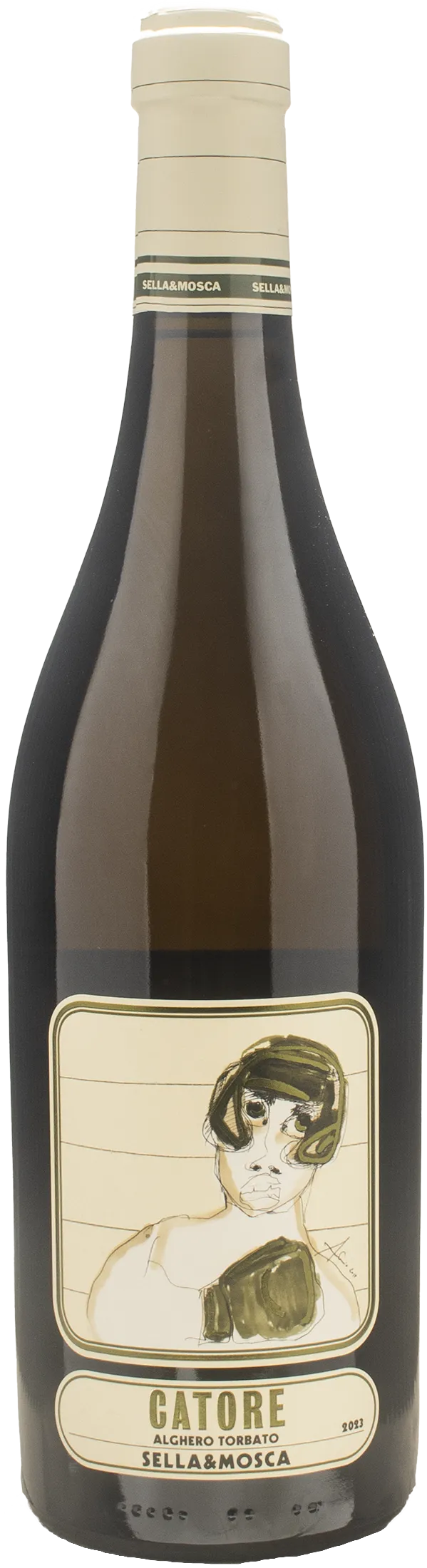
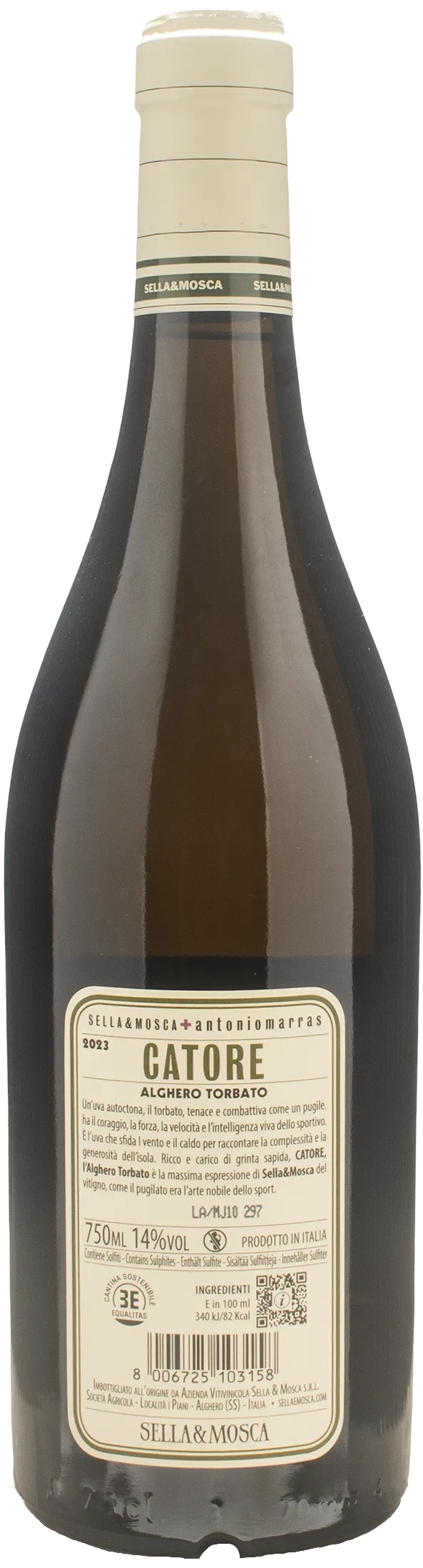
Alghero Torbato Catore 2023
| Denomination | DOC Alghero Torbato |
|---|---|
| Size | 0,75 l |
| Alcohol content | 14.0% by volume |
| Area | Sardinia (Italy) |
| Grape varieties | 100% Torbato |
| Aging | A few months of ageing in the bottle |
- Grape variety and origin: Still white wine Alghero DOC, 100% native Torbato, 2023 harvest
- Aromas: Notes of Mediterranean scrub, helichrysum, pear and chamomile; straw yellow colour
- Taste: Enveloping structure, slightly skin-contact, savoury and fresh; dense and energetic texture
- Vinification: Cold maceration, fermentation in steel; partly on skins and in barrique
- Serving and pairings: At 12-14 °C with lean fish and cheeses; natural cork stopper
Description
What kind of wine is it
Catore by Sella & Mosca is a still white wine that expresses the most authentic soul of the Alghero denomination. Made from Torbato grapes, it boasts a dense and enveloping aromatic profile. On the nose, clear scents of Mediterranean scrub emerge, with notes of helichrysum, pear and chamomile standing out. On the palate, it offers a multifaceted and energetic texture, with a soft consistency enriched by a pleasant tactile sensation from skin contact. The absence of malolactic fermentation ensures a marked savouriness and vibrant freshness, making it ideal for fish and cheese dishes.
Where does it come from
This wine originates in Sardinia, in the surroundings of Alghero, a territory historically linked to the cultivation of Torbato. The vineyards are trained using the spur-pruned cordon method, with a planting density designed to ensure balanced yields and excellent aromatic concentration. The secret to its freshness lies in the medium-textured soil, characterised by a strong limestone component that gives the wine a distinct saline imprint. Sella & Mosca cultivate these lands by enhancing the synergy between the grape variety and the characteristics of the Sardinian terroir, offering an authentic portrait of the area's geological nature.
How is it produced
The production process begins with a careful manual harvest. In the winery, the grapes undergo gentle destemming and crushing, followed by cold maceration. After gentle pressing, fermentation takes place in stainless steel tanks at a controlled temperature. To enrich the structure without overpowering the varietal profile, part of the must undergoes skin maceration for one hundred days, while a small portion ferments in new barrels. As malolactic fermentation is not carried out, the wine retains its natural tension, completing its journey with cellar ageing aimed at integrating and enhancing the aromas.
History and Curiosities
The Alghero Torbato Catore 2023 by Sella & Mosca celebrates a history dating back to 1899, highlighting the most authentic soul of Sardinia. This native grape variety, which has its roots in calcareous soils, offers the palate a vibrant saline freshness. The meticulous vinification, partly carried out on the skins and in new barriques, gives rise to a broad and captivating white wine, enriched with intense notes of helichrysum, pear and chamomile.
Tasting notes
Perfume

Color
Taste
Serve at:
12 - 14 °C
Longevity:
03 - 05 years
- Start up year: 1899
- Oenologist: Giovanni Pinna
- Bottles produced: 4.800.000
- Hectares: 520


| Name | Sella & Mosca Alghero Torbato Catore 2023 |
|---|---|
| Type | White green still |
| Denomination | Alghero DOC |
| Vintage | 2023 |
| Size | 0,75 l |
| Alcohol content | 14.0% by volume |
| Grape varieties | 100% Torbato |
| Country | Italy |
| Region | Sardinia |
| Vendor | Sella & Mosca |
| Story | History and Curiosities The Alghero Torbato Catore 2023 by Sella & Mosca celebrates a history dating back to 1899, highlighting the most authentic soul of Sardinia. This native grape variety, which has its roots in calcareous soils, offers the palate a vibrant saline freshness. The meticulous vinification, partly carried out on the skins and in new barriques, gives rise to a broad and captivating white wine, enriched with intense notes of helichrysum, pear and chamomile. |
| Origin | Alghero, Sardegna |
| Soil composition | Medium-textured soil with a significant presence of limestone |
| Cultivation system | Spurred cordon |
| Plants per hectare | 4000 |
| Yield per hectare | 95 q/ha |
| Harvest | First days of October |
| Fermentation temperature | 18 °C |
| Fermentation | Approximately 100 days |
| Production technique | Cold maceration; gentle pressing; fermentation in stainless steel at controlled temperature (18 °C); partial fermentation with the skins; partial fermentation in new barriques; no malolactic fermentation |
| Wine making | Very gentle destemming and crushing followed by 24 hours of cold maceration; gentle pressing; fermentation in stainless steel at a controlled temperature of 18°C; a small portion ferments with the skins for about 100 days; a small portion of the must ferments in new barriques; no malolactic fermentation. |
| Aging | A few months of ageing in the bottle |
| Total acidity | 4.8 gr/L |
| Year production | 4800000 bottles |
| Allergens | Contains sulphites |