


Santadi
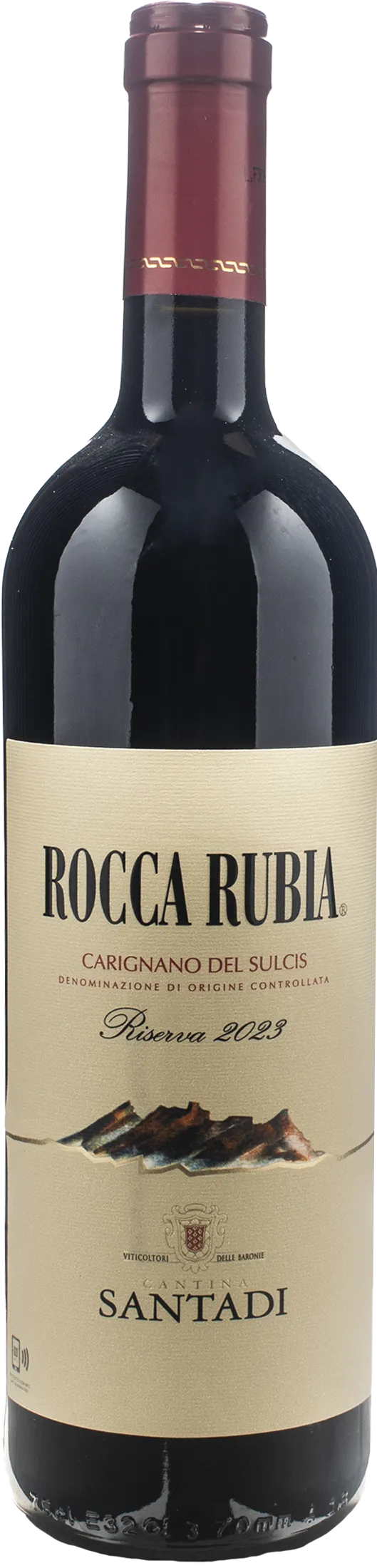
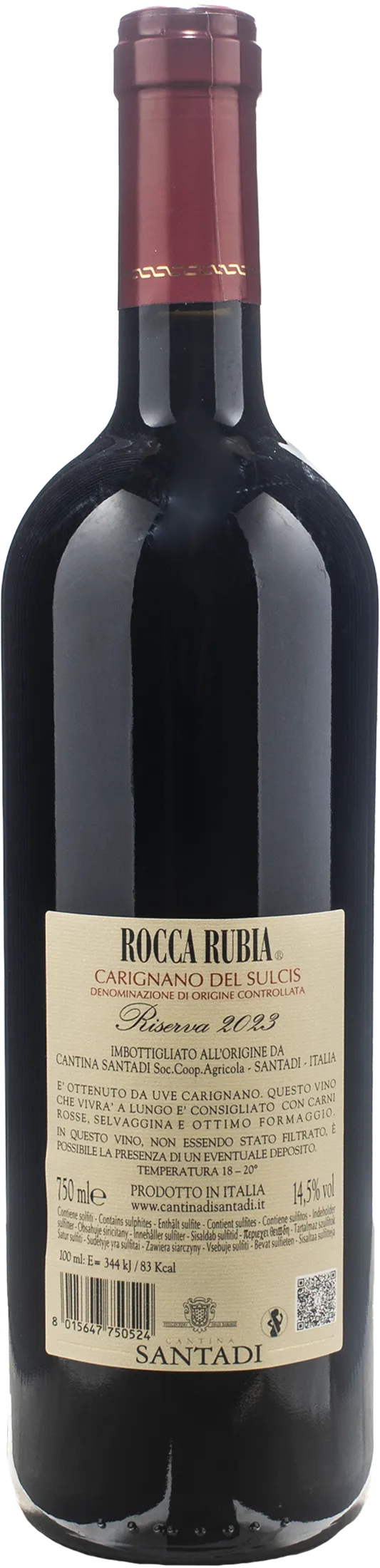
Carignano del Sulcis Rocca Rubia Riserva 2023
| Denomination | DOC Carignano del Sulcis Rosso Riserva |
|---|---|
| Size | 0,75 l |
| Alcohol content | 14.5% by volume |
| Area | Sardinia (Italy) |
| Grape varieties | 100% Carignano |
| Aging | Once malolactic fermentation is complete, the wine is racked into small first- and second-passage fine-grained French oak barrels/barriques for 10–12 months; it then ages in the bottle for several months (around 6) to develop its bouquet. |
- Denomination and grape: Carignano del Sulcis DOC Riserva, made exclusively from Carignano
- Aromas: notes of blackberry, blueberry, vanilla, myrtle, leather and liquorice
- Vinification: 12-14 days in steel at 25-28 °C with frequent pump-overs
- Maturation: 10-12 months in French oak barriques and 6 months in bottle
- Serving: decant for 1 hour, serve at 16-18 °C. Ideal with red meats and pecorino cheese
Description
What type of wine it is
Rocca Rubia Carignano del Sulcis Riserva by Santadi is a still red wine with a controlled designation of origin that embodies the essence of Sardinia. Produced exclusively from Carignano grapes, it is distinguished by a deep ruby colour and aromas of blackberry, blueberry, vanilla, myrtle, leather and liquorice. On the palate, it expresses a structured, broad and velvety body, with a tannic texture defined by ageing in wood. The remarkable aromatic persistence leads into a long finish, offering a solid and harmonious sip.
Where it comes from
The grapes are grown in Lower Sulcis, in an area ranging from the coastal strip to the mid-mountain zones. The hot and arid climate of the summer, contrasted with temperate winters, favours optimal ripening of the bunches. The vines take root in sandy and clay soils, poor in organic matter and with a limestone matrix, which give great concentration to the fruit. Part of the vineyards is cultivated as bush vines on their own roots, according to the traditional Latin vineyard system.
How it is produced
The manual harvest takes place between the end of September and the beginning of October. The destemmed bunches undergo fermentation and maceration in stainless steel at a controlled temperature for twelve to fourteen days, with frequent pump-overs to encourage polyphenolic extraction. Once malolactic fermentation is complete, the wine matures in fine-grained French oak barrels, first and second fill, for a period of ten to twelve months. The production process concludes with ageing in the bottle for approximately six months. This meticulous approach faithfully preserves the authentic character of the wine, avoiding invasive filtration.
Tasting notes

Perfume

Color

Taste
Serve at:
18 - 20 °C
Longevity:
05 - 10 years
Decanting time:
1 hour
- Start up year: 1960
- Oenologist: Riccardo Curreli, Giorgio Marone
- Bottles produced: 1.800.000
- Hectares: 650
Since then, the only direction has been upwards, as the Santadi wines continue to spread and reap appreciation worldwide. A success story made possible by the whole team, which includes the grape growers, directors, marketing staff and all winery workers, forming a reservoir of expertise that is an asset for the whole territory. Read more


| Name | Santadi Carignano del Sulcis Rocca Rubia Riserva 2023 |
|---|---|
| Type | Red green still |
| Denomination | Carignano del Sulcis DOC |
| Vintage | 2023 |
| Size | 0,75 l |
| Alcohol content | 14.5% by volume |
| Grape varieties | 100% Carignano |
| Country | Italy |
| Region | Sardinia |
| Vendor | Santadi |
| Origin | Coast of Lower Sulcis, Sardinia |
| Climate | Hot and arid in summer, temperate in winter |
| Soil composition | Sandy and clayey soils, poor in organic matter; generally loose, medium-textured, sandy and calcareous |
| Cultivation system | Alberello training (Latin vine), on its own roots |
| Harvest | Manual harvesting from late September to the first or second ten-day period of October |
| Fermentation temperature | Approximately 25–28 °C |
| Fermentation | Approximately 12–14 days |
| Production technique | Fermentation and maceration in temperature-controlled stainless steel tanks with frequent pumping over; malolactic fermentation; ageing in French oak barriques (first and second fill) followed by bottle ageing. |
| Wine making | The grapes are destemmed and crushed, then ferment and macerate for 12–14 days in stainless steel tanks at a controlled temperature (approximately 25–28 °C) with frequent pump-overs; once malolactic fermentation is complete, the wine is racked into small French oak barrels/barriques of first and second fill for 10–12 months and completes its ageing in the bottle for several months (approximately 6). |
| Aging | Once malolactic fermentation is complete, the wine is racked into small first- and second-passage fine-grained French oak barrels/barriques for 10–12 months; it then ages in the bottle for several months (around 6) to develop its bouquet. |
| Total acidity | 5.0 gr/L |
| Residual sugar | 0.6 gr/L |
| Allergens | Contains sulphites |