


San Giovenale
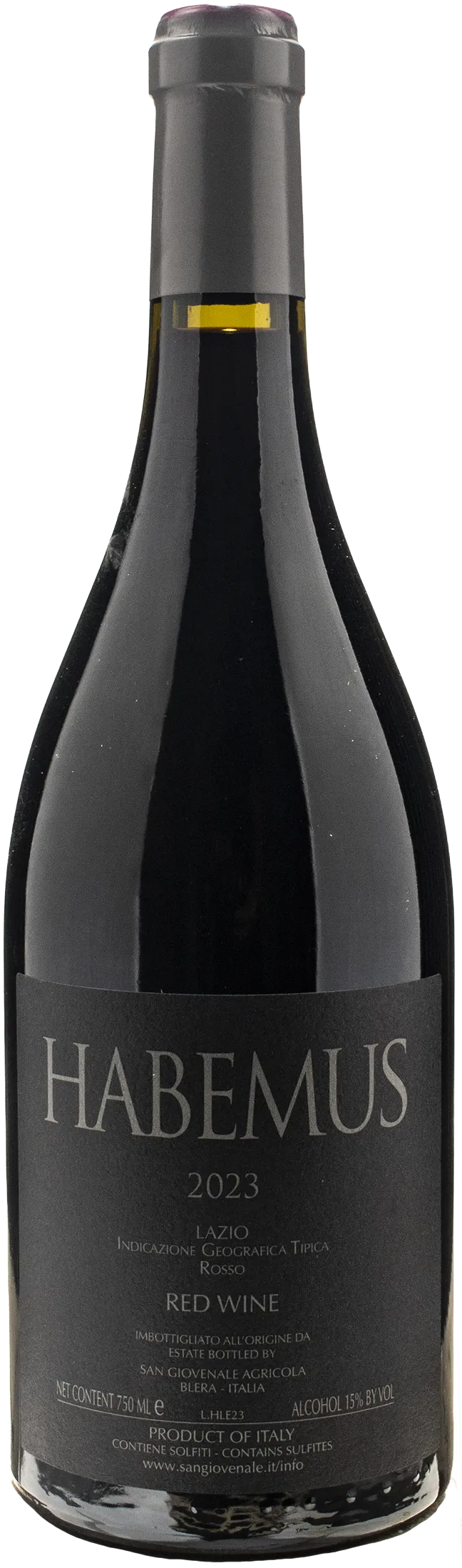
Habemus Etichetta Nera 2023
Other years:
2022| Denomination | IGT Lazio |
|---|---|
| Size | 0,75 l |
| Alcohol content | 15.0% by volume |
| Area | Lazio (Italy) |
| Grape varieties | 100% Grenache |
| Aging | Aged for 30 months in barrique, 6 months in bottle |
| Other years | 2022 |
- Grape variety and style: Still red wine IGT Lazio made from 100% Grenache grapes, 2023 harvest
- Region: Tuscia at 380m, clay soils with stones and Tyrrhenian breezes
- Vinification: Hand-picked, crushed and destemmed within an hour, 15-day fermentation
- Ageing: Matured for 30 months in barrique and 6 months in bottle for complexity and persistence
- Details: 15% vol, 0.75 l; certified organic by San Giovenale; contains sulphites
Description
What kind of wine is it
Habemus Etichetta Nera by San Giovenale is an enveloping still red wine from Lazio, a pure expression of Grenache grapes. This label is the result of strict organic farming and stands out for its profound structural complexity. The founder, Emanuele Pangrazi, aimed to create a wine with a bold character, capable of evolving beautifully over time thanks to careful ageing in barrels that enhances its aromatic richness and persistence on the palate.
Where does it come from
The vines take root in the heart of Tuscia, on clay soils with stones that give the wine a distinct mineral imprint. The vineyards are cultivated as bush vines at an altitude of 380 metres, protected by mountain ranges and constantly refreshed by breezes from the Tyrrhenian Sea. This particularly dry climate, combined with extremely low yields in the vineyard, encourages excellent aromatic concentration in the grapes, delivering the authentic strength of the Lazio region in the glass.
How is it produced
The grapes are hand-harvested in the second half of September, ensuring the bunches are processed within just one hour of picking. Under the care of oenologist Marco Casolanetti, fermentation lasts for fifteen days, allowing for the extraction of a significant structure. The definition of the sip is achieved with a long ageing in barrels for thirty months, completed by a period of rest in glass to ensure maximum elegance and a memorable depth of flavour.
History and Curiosities
The Habemus Etichetta Nera from San Giovenale is a refined oenological tribute to the ancient lands of the Etruscans. This majestic organic Lazio IGT, produced exclusively from Grenache grapes at an altitude of 380 metres, captures the Tyrrhenian breeze and the essence of the clay soils. To preserve its excellence, the hand-picked bunches are pressed within an hour of harvesting. The wine's exceptional complexity comes to life thanks to meticulous 30-month ageing in barriques, followed by a further 6 months in the bottle, which bestow upon it an unforgettable structure.
Tasting notes

Color

Taste
Serve at:
16 - 18 °C
Longevity:
15 - 25 years
Decanting time:
1 hour

- Oenologist: Marco Casolanetti
- Bottles produced: 9.000
- Hectares: 10
Attention to the environment is an essential value for San Giovenale, which works the vineyards with high-density planting criteria to obtain quality grapes. Spring water for irrigation and an eco-sustainable wine cellar with photovoltaic panels complete the commitment to sustainability. The result is wines of extraordinary structure and complexity, such as the excellent Habemus, an oenological homage to the lands of the Etruscans. Read more


| Name | San Giovenale Habemus Etichetta Nera 2023 |
|---|---|
| Type | Red still |
| Denomination | Lazio IGT |
| Vintage | 2023 |
| Size | 0,75 l |
| Alcohol content | 15.0% by volume |
| Grape varieties | 100% Grenache |
| Country | Italy |
| Region | Lazio |
| Vendor | San Giovenale |
| Story | History and Curiosities The Habemus Etichetta Nera from San Giovenale is a refined oenological tribute to the ancient lands of the Etruscans. This majestic organic Lazio IGT, produced exclusively from Grenache grapes at an altitude of 380 metres, captures the Tyrrhenian breeze and the essence of the clay soils. To preserve its excellence, the hand-picked bunches are pressed within an hour of harvesting. The wine's exceptional complexity comes to life thanks to meticulous 30-month ageing in barriques, followed by a further 6 months in the bottle, which bestow upon it an unforgettable structure. |
| Origin | Blera (VT) |
| Climate | Dry and constantly ventilated by the Tyrrhenian Sea |
| Soil composition | Clayey with stones |
| Cultivation system | Alberello |
| Plants per hectare | 13000 |
| Yield per hectare | 25 quintali per ettaro |
| Harvest | Second half of September |
| Fermentation | 15 giorni |
| Production technique | Crushing and destemming within 1 hour of harvesting |
| Wine making | Crushing and destemming within 1 hour of harvesting; fermentation for 15 days; ageing for 30 months in barrique and 6 months in bottle. |
| Aging | Aged for 30 months in barrique, 6 months in bottle |
| Year production | 9000 bottles |
| Allergens | Contains sulphites |