


Salvioni - La Cerbaiola
Rosso di Montalcino 2023
| Denomination | DOC Rosso di Montalcino |
|---|---|
| Size | 0,75 l |
| Alcohol content | 14.0% by volume |
| Area | Tuscany (Italy) |
| Grape varieties | 100% Sangiovese |
| Aging | After racking, the wine remains in stainless steel for several months undergoing malolactic fermentation, then matures for about 12 months in large Slavonian oak barrels of 18-22 hectolitres with medium toasting; this is followed by bottle ageing and it is released onto the market in the second year after the harvest. |
| Other years | 2022 , 2024 |
- Name and grape variety: Rosso di Montalcino DOC 2023, 100% Sangiovese
- Aromatic profile: spicy and smoky notes with cherry, blueberry, graphite and black tea
- Taste structure: taut and balanced sip, warm and enveloping, velvety tannins
- Vinification and ageing: indigenous yeasts, 12 months in Slavonian oak barrels
- Serving: decant for 1 hour at 18-20°C; perfect with red meats, game and cheeses
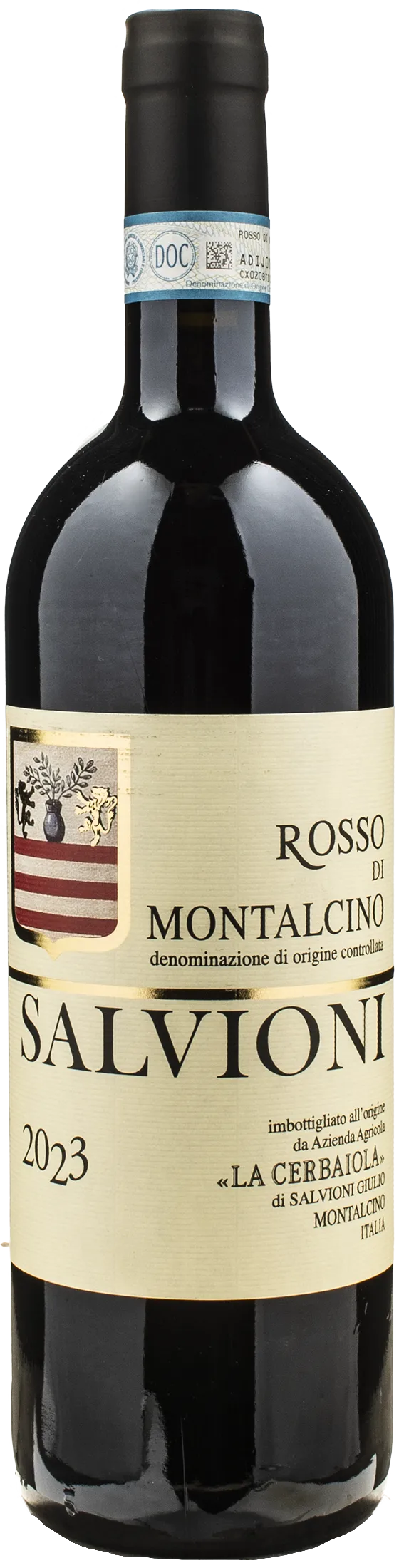
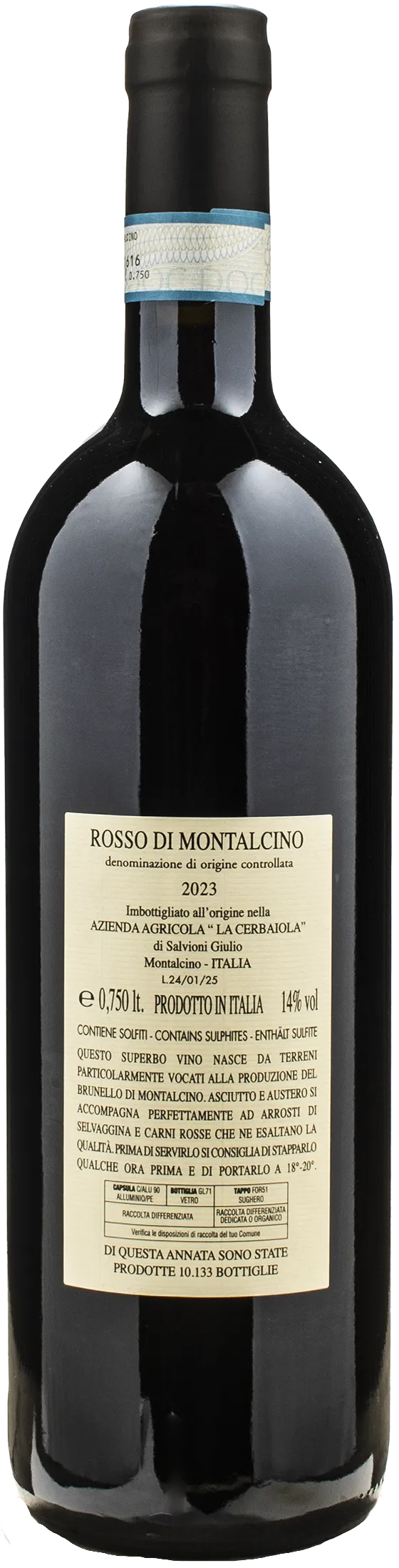
Description
What kind of wine it is
Salvioni La Cerbaiola Rosso di Montalcino precisely interprets the character of Sangiovese. On the nose, it reveals an intense profile, led by spicy and smoky aromas that precede notes of ripe cherry, blueberry, graphite, black tea and powder. The structure is warm and enveloping, with a tense and well-balanced palate, supported by silky tannins that accompany a finish of great length. This Tuscan expression by Salvioni is ideal paired with red meats and game or long-aged cheeses.
Where it comes from
The vineyards are located on the renowned Tuscan hill of Montalcino, at an altitude between 420 and 440 metres. The rows benefit from south-eastern exposure and constant natural ventilation. The galestro soil, distinctly stony and clayey, provides the vines with the ideal balance between acidity and structural softness. The agronomic management includes strict pruning and precise thinning of the bunches, ensuring low yields to maximise the concentration and qualitative integrity of the grapes.
How it is produced
Harvesting takes place between September and October, scheduled according to careful ripeness analysis. In the cellar, the must undergoes spontaneous fermentation triggered by indigenous yeasts in stainless steel tanks, accompanied by frequent pumping over and délestage operations. The prolonged maceration of almost a month encourages deep aromatic and polyphenolic extraction. After malolactic fermentation in steel, the wine matures for about twelve months in medium-toasted Slavonian oak barrels. A final ageing period definitively consolidates the harmony of this Rosso di Montalcino.
History and Curiosities
Born from the historic passion of the Salvioni family, this rare Rosso di Montalcino DOC embodies the authentic elegance of Sangiovese. The meticulous artisanal vinification takes place in cellars adjacent to the vineyards through a process of spontaneous fermentation with indigenous yeasts. Patiently matured in large Slavonian oak barrels between the estate and the historic village, this wine is produced only in the most favourable years to ensure the highest quality.
Awards
-
2023
 4
4Italian Sommelier Foundation (FIS) guide This has been one of the most prestigious wine guides in Italy for over 10 years.
-
2023
 2
2This guide is highly respected and offers the most comprehensive review of Italian wines. It has a long tradition and is based on blind tastings carried out by over 100 experts.
-
2023
 3
3One of the most prestigious wine guides in Italy.
-
2023
 4
4Italian Sommelier Association (AIS) guide
Tasting notes

Perfume

Color

Taste
Serve at:
18 - 20 °C
Longevity:
10 - 15 years
Decanting time:
1 hour

- Start up year: 1985
- Oenologist: Attilio Pagli
- Bottles produced: 10.000
- Hectares: 4
The different geological nature of soils corresponds to as many expressive variables in grapes matured. The consolidated relationship between Giulio and Attilio Pagli, company winemaker, guarantees continuity in the quality of production: "If the Brunello does not deserve, I only make Red"; So Julius clearly expresses, revealing an almost maniacal attention to the quality of the grapes. Moreover, it is only from perfectly matured grapes that it is possible to produce a great wine, capable of achieving excellence in every year of its marketing.
The balance and the perfect balance of wines comes from a rare mixture of freshness (we are 420 at sea level), exposure to the morning sun (southeast), clayey matrix and plant density not exaggerated to allow Plants have plenty of space available, favoring air circulation.
Read more


| Name | Salvioni La Cerbaiola Rosso di Montalcino 2023 |
|---|---|
| Type | Red still |
| Denomination | Rosso di Montalcino DOC |
| Vintage | 2023 |
| Size | 0,75 l |
| Alcohol content | 14.0% by volume |
| Grape varieties | 100% Sangiovese |
| Country | Italy |
| Region | Tuscany |
| Vendor | Salvioni - La Cerbaiola |
| Story | History and Curiosities Born from the historic passion of the Salvioni family, this rare Rosso di Montalcino DOC embodies the authentic elegance of Sangiovese. The meticulous artisanal vinification takes place in cellars adjacent to the vineyards through a process of spontaneous fermentation with indigenous yeasts. Patiently matured in large Slavonian oak barrels between the estate and the historic village, this wine is produced only in the most favourable years to ensure the highest quality. |
| Origin | Collina di Montalcino, Tuscany, Italy |
| Soil composition | Galestro soil (stony/clay) |
| Plants per hectare | 3,000 (older vineyard) and 5,000 (younger vineyard) plants per hectare |
| Harvest | Usually from late September to early October |
| Fermentation | 28-30 days |
| Production technique | Spontaneous fermentation with indigenous yeasts in stainless steel tanks (35–40 hl), with frequent pump-overs and often délestage; maceration for 28–30 days; malolactic fermentation in steel; maturation for about 12 months in large Slavonian oak casks (18–22 hl, medium toast) followed by further ageing in bottle. |
| Wine making | Vinification takes place in the winery next to the vineyards in stainless steel vats of 35-40 hectolitres; spontaneous fermentation occurs in non-climate-controlled rooms with temperature managed through frequent pump-overs and often délestage; maceration lasts 28-30 days. After racking, the wine remains in stainless steel for several months to undergo malolactic fermentation, then matures for around 12 months in large Slavonian oak casks of 18-22 hectolitres with medium toasting, followed by bottle ageing and release to the market in the second year after the harvest. |
| Aging | After racking, the wine remains in stainless steel for several months undergoing malolactic fermentation, then matures for about 12 months in large Slavonian oak barrels of 18-22 hectolitres with medium toasting; this is followed by bottle ageing and it is released onto the market in the second year after the harvest. |
| Allergens | Contains sulphites |