


Ruggeri
Valdobbiadene Prosecco Superiore Santo Stefano Dry
| Denomination | DOCG Conegliano Valdobbiadene Prosecco Spumante Superiore Dry |
|---|---|
| Size | 0,75 l |
| Alcohol content | 11.0% by volume |
| Area | Veneto (Italy) |
| Grape varieties | Glera, Verdiso |
| Aging | Slow refermentation (prise de mousse) in large closed vessels using the Charmat method at 12–14 °C; maintaining the second fermentation in autoclave to preserve the bubbles. |
- Name and origin: Valdobbiadene Prosecco Superiore DOCG, Veneto (province of Treviso)
- Grape variety: At least 85% Glera, up to 15% Verdiso and other local white grape varieties
- Production method: Sparkling wine produced using the Charmat method, second fermentation in a pressurised tank
- Tasting notes: Hints of ripe apple and lemon blossom, fine and persistent perlage
- Pairings and serving: Suitable for pastries and cheeses, serve at 5–8°C, 11% vol
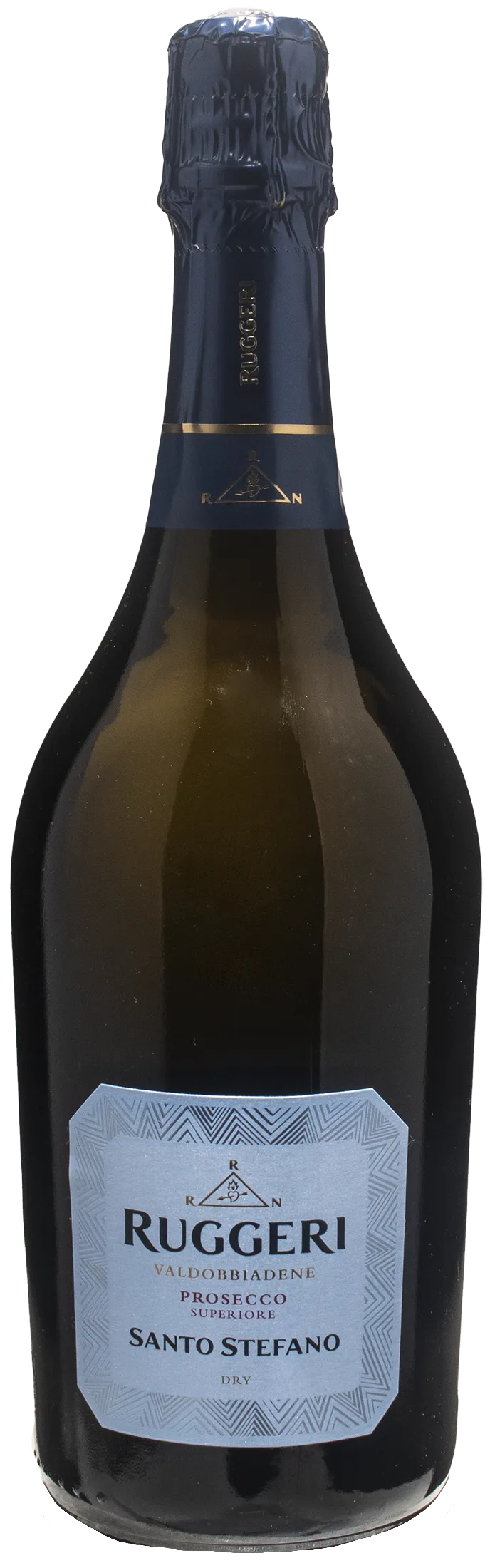
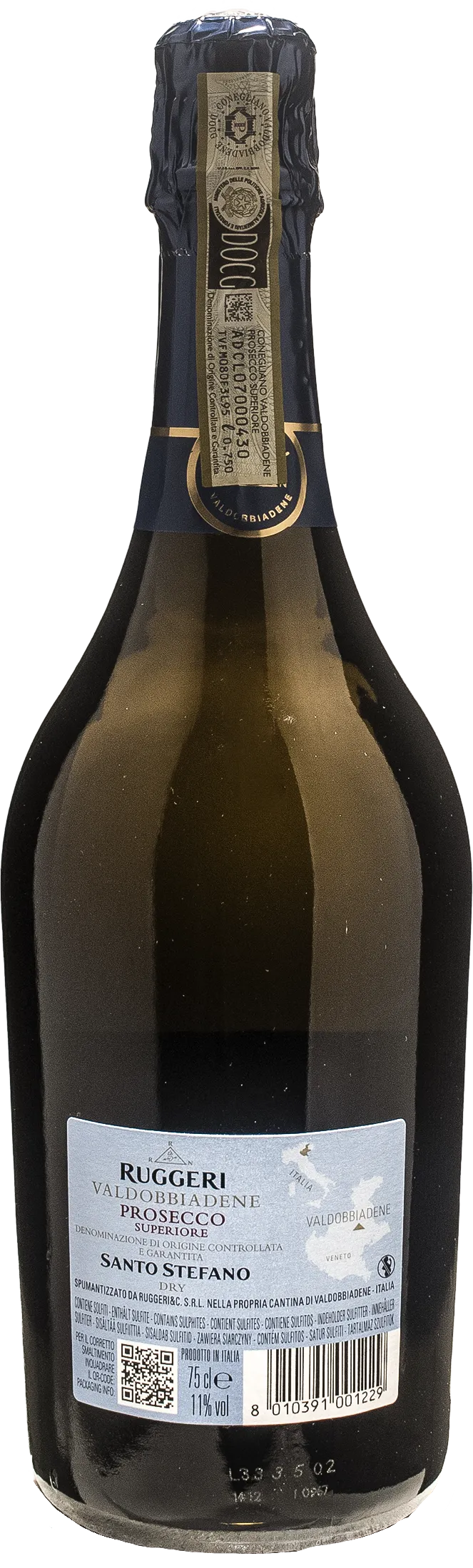
Description
What kind of wine it is
Valdobbiadene Prosecco Superiore Santo Stefano Dry by Ruggeri is a sparkling wine produced using the Charmat method with a typically Venetian character. This blend is created from Glera, Verdiso and other local white grape varieties. In the glass, it displays a bright greenish hue, enlivened by a fine and persistent perlage that precedes a delicate bouquet. On the nose, notes of ripe apple and lemon blossom emerge, while on the palate it is fresh and slightly sweet, supported by a rounded and structured body. The gently fruity finish provides persistence, ensuring a harmonious and satisfying tasting experience.
Where it comes from
The origins of this wine trace back to the renowned vineyards of Santo Stefano, located among the hills of the production area. Its inclusion in the Valdobbiadene Prosecco Superiore denomination attests to its deep connection with the Treviso region, which imparts a clear aromatic purity to the wine. The Ruggeri winery tends these vines with care, allowing the local microclimate to be reflected in the wine's clarity and enhancing its original aromas. This attention ensures an excellent expression of the territory, resulting in an authentic and balanced glass.
How it is produced
Vinification is carried out in white at a controlled temperature to preserve the aromatic integrity of the grapes. The prise de mousse follows a slow second fermentation in a pressurised tank, a crucial step in defining the elegance of the bubbles and a measured final softness. Thanks to its aromatic and fresh profile, this sparkling wine is an ideal pairing with pastries, perfectly complementing leavened cakes, macarons and semifreddos, as well as offering a pleasant contrast with delicate dessert cheeses.
History and Curiosities
This Valdobbiadene Prosecco Superiore DOCG originates from the prestigious vineyards of Santo Stefano, in the heart of the Treviso hills. It represents the perfect synthesis of the Ruggeri family tradition, whose roots date back to the nineteenth century, well before the official founding of the company in 1950. Cared for by five generations of the Bisol family and oenologist Fabio Roversi, it expresses Venetian excellence. Thanks to 28 hectares of vineyards and an award-winning production, each bottle encapsulates the art and the local winemaking history.
Awards
-
 2
2One of the most prestigious wine guides in Italy.
Tasting notes

Perlage

Perfume

Color

Taste
Serve at:
06 - 08 °C
Longevity:
03 - 05 years
- Start up year: 1950
- Oenologist: Fabio Roversi
- Bottles produced: 1.700.000
- Hectares: 28
Ruggeri’s roots stretch far back to the nineteenth century, to Eliseo Bisol, who, along with his son Luigi was one of the first winemakers in Valdobbiadene. The business’s significant growth began in 1950 when Giustino Bisol founded the current winery with his cousin, and it was his surname, Ruggeri, that was chosen as the company name. The unswerving commitment to excellence continued with the work of Giustino’s son, Paolo, and granddaughter Isabella.
Since 2017, Ruggeri has been part of the Rotkäppchen-Mumm Group, a highly fruitful partnership which has paired our shared visions, trust in common values and a mutual commitment to ever higher quality standards. Read more


| Name | Ruggeri Valdobbiadene Prosecco Superiore Santo Stefano Dry |
|---|---|
| Type | White charmat method sparkling wine dry |
| Denomination | Conegliano Valdobbiadene Prosecco DOCG |
| Size | 0,75 l |
| Alcohol content | 11.0% by volume |
| Grape varieties | Glera, Verdiso |
| Country | Italy |
| Region | Veneto |
| Vendor | Ruggeri |
| Story | History and Curiosities This Valdobbiadene Prosecco Superiore DOCG originates from the prestigious vineyards of Santo Stefano, in the heart of the Treviso hills. It represents the perfect synthesis of the Ruggeri family tradition, whose roots date back to the nineteenth century, well before the official founding of the company in 1950. Cared for by five generations of the Bisol family and oenologist Fabio Roversi, it expresses Venetian excellence. Thanks to 28 hectares of vineyards and an award-winning production, each bottle encapsulates the art and the local winemaking history. |
| Origin | Valdobbiadene, Santo Stefano vineyards |
| Harvest | End of September - mid October |
| Fermentation temperature | Temperature-controlled fermentation at 16–20 °C; second fermentation in an autoclave at approximately 12–15 °C |
| Production technique | Charmat method |
| Wine making | White vinification, i.e. without the skins, at a controlled temperature of 20 °C. Secondary fermentation via slow refermentation in large closed containers (Charmat method) at 12–14 °C. Bottle pressure: 4.5 atm. |
| Aging | Slow refermentation (prise de mousse) in large closed vessels using the Charmat method at 12–14 °C; maintaining the second fermentation in autoclave to preserve the bubbles. |
| Residual sugar | 26.0 gr/L |
| Allergens | Contains sulphites |