
Ricasoli 1141
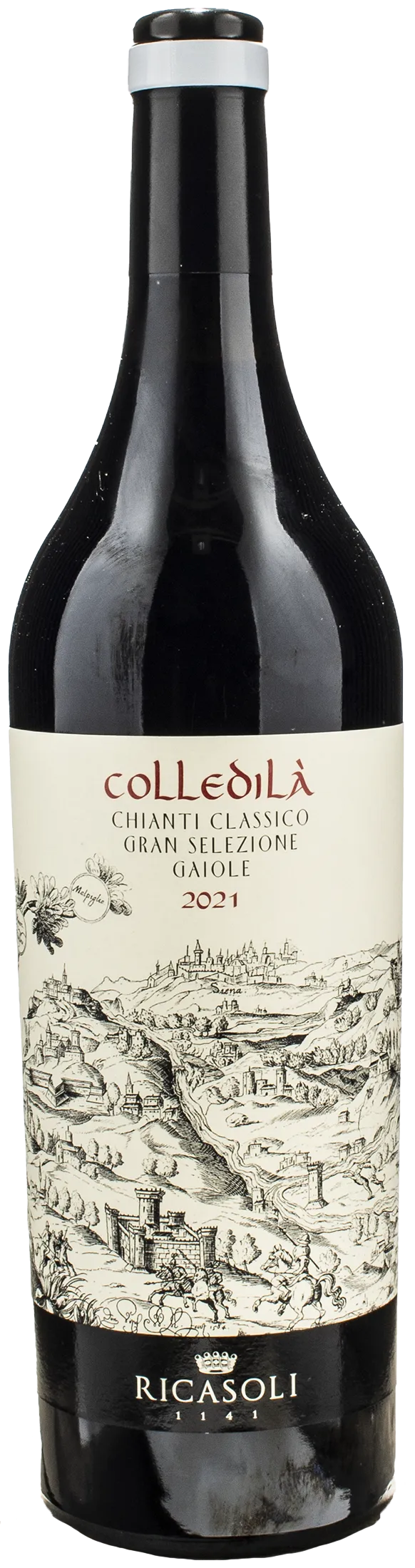
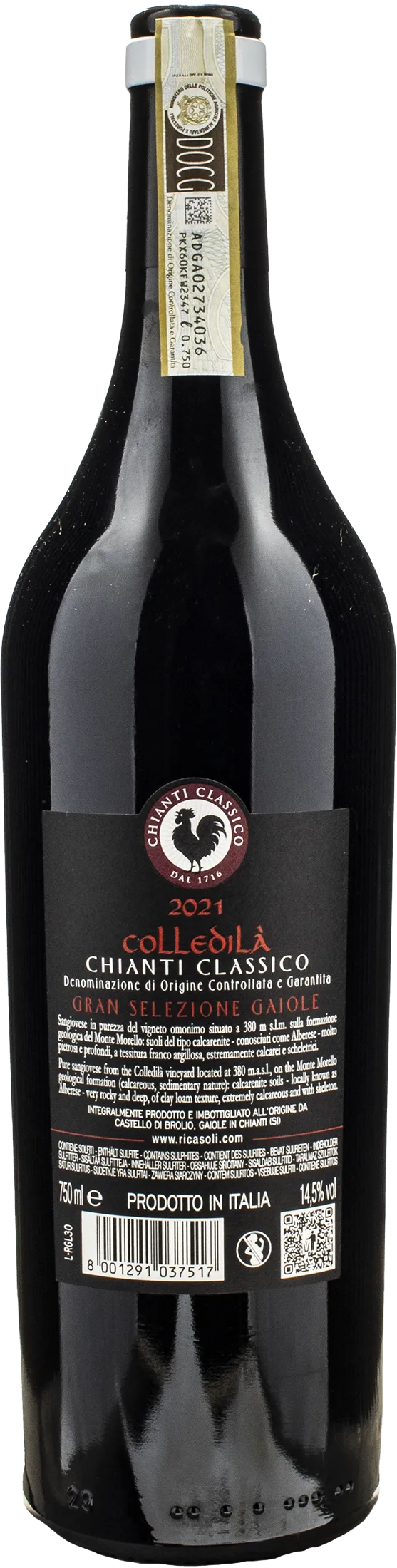
Chianti Classico Gran Selezione Colledila Gaiole 2021
| Denomination | DOCG Chianti Classico Gran Selezione |
|---|---|
| Size | 0,75 l |
| Alcohol content | 14.5% by volume |
| Area | Tuscany (Italy) |
| Grape varieties | 100% Sangiovese |
| Aging | 22 months in 500-litre tonneaux, of which 30% are new and 70% are second use. |
- Name and variety: Chianti Classico Gran Selezione DOCG, 100% Sangiovese
- Origin of the cru: Single vineyard Colledilà in Gaiole in Chianti, 380 metres above sea level
- Vinification: In steel at 24–27°C with skin maceration for 14–16 days
- Ageing: 22 months in 500-litre tonneaux, very little new wood to preserve the fruit
- Taste: Dry, notes of cherry and blackberry; long finish with hints of coffee and tobacco
Description
What kind of wine it is
Colledilà by Barone Ricasoli is an authentic Tuscan red wine with the Chianti Classico Gran Selezione designation, made from Sangiovese grapes, vinified in steel and aged in oak barrels. It displays a ruby red colour and a complex structure. On the nose, the bouquet weaves together notes of violets, ripe red fruit and white chocolate, which are echoed on the palate and enriched by hints of cherry and blackberry. Supported by a pronounced tannin, the sip offers a persistent finish characterised by herbal spices, espresso coffee and tobacco.
Where it comes from
This Sangiovese originates from the Tuscan hills of Gaiole in Chianti. The grapes come from the single, highly regarded Colledilà cru, located at 380 metres above sea level and managed using organic methods. Here, the vines sink their roots into a typical clay-limestone alberese soil, particularly stony and low in organic matter. The interaction between this microclimate and the soil gives the wine a pronounced aromatic definition and a deep tannic texture.
How it is produced
After manual harvesting, the destemmed bunches are transferred by gravity into steel vats. Fermentation is accompanied by a prolonged maceration on the skins with daily punch-downs, essential for extracting structure and colour. Subsequently, the wine matures for 22 months in oak barrels, favouring the use of non-new wood. This careful cellar ageing allows the tannins to harmonise, while respecting the purity of the fruit.
History and Curiosities
Mentioned for centuries in the records of Brolio, the Colledilà cru expresses the absolute vocation of pure Sangiovese. Grown at an altitude of 380 metres on the hills of Gaiole in Chianti, this outstanding red is the result of Barone Ricasoli's meticulous research into original clones and calcareous-clay soils. Its complex elegance has earned it the prestigious 3 Bicchieri Gambero Rosso and an impressive 97 points from Wine Spectator. A true oenological masterpiece, presented in an elegant wooden case of six bottles, perfect for enhancing your collections.
Awards
-
2021
 3
3This guide is highly respected and offers the most comprehensive review of Italian wines. It has a long tradition and is based on blind tastings carried out by over 100 experts.
-
2021
 93
93/100
One of the most prestigious wine guides in Italy.
-
2021
 3
3One of the most prestigious wine guides in Italy.
-
2021
 4
4Italian Sommelier Association (AIS) guide
Tasting notes

Perfume

Color

Taste
Serve at:
18 - 20 °C
Longevity:
10 - 15 years
Decanting time:
2 hours
- Start up year: 1141
- Oenologist: Carlo Ferrini
- Bottles produced: 2.500.000
- Hectares: 235
Francesco Ricasoli, current owner and President of the company, has generated new ideas and concepts to render the vineyards sustainable. The ongoing study of soil types and the clonal selection of the Brolio Sangiovese are among his greatest passions, and he has totally renovated the vineyards and completely mapped them. The new wines are therefore the expression of research carried out with the same scientific rigor of his illustrious ancestor but with a contemporary spirit, like a runner receiving the baton and carrying it forward with renewed energy. Read more


| Name | Ricasoli 1141 Chianti Classico Gran Selezione Colledila Gaiole 2021 |
|---|---|
| Type | Red still |
| Denomination | Chianti Classico DOCG |
| Vintage | 2021 |
| Size | 0,75 l |
| Alcohol content | 14.5% by volume |
| Grape varieties | 100% Sangiovese |
| Country | Italy |
| Region | Tuscany |
| Vendor | Ricasoli 1141 |
| Story | History and Curiosities Mentioned for centuries in the records of Brolio, the Colledilà cru expresses the absolute vocation of pure Sangiovese. Grown at an altitude of 380 metres on the hills of Gaiole in Chianti, this outstanding red is the result of Barone Ricasoli's meticulous research into original clones and calcareous-clay soils. Its complex elegance has earned it the prestigious 3 Bicchieri Gambero Rosso and an impressive 97 points from Wine Spectator. A true oenological masterpiece, presented in an elegant wooden case of six bottles, perfect for enhancing your collections. |
| Origin | Gaiole in Chianti (SI) |
| Climate | Altitude: 380 m above sea level. The climate trend during the 2019 harvest was very variable, but with overall average temperatures. Short and intense rainfall was recorded mainly in June. Veraison began regularly at the beginning of August, with the first ripe grapes appearing at the end of August and the beginning of September. |
| Soil composition | Clay-limestone soil (alberese), very stony, rich in calcium carbonate and clay, poor in organic matter. |
| Cultivation system | Spur cordon |
| Plants per hectare | 6600 |
| Harvest | Hand-harvested on 4 October |
| Fermentation temperature | 24-27 °C |
| Fermentation | 14–16 days |
| Production technique | Skin maceration |
| Wine making | Destemmed grapes are transferred by gravity into 100 hl truncated cone-shaped stainless steel tanks; fermentation with selected yeasts at 24–27 °C with daily punch-downs and maceration on the skins for about 14–16 days. |
| Aging | 22 months in 500-litre tonneaux, of which 30% are new and 70% are second use. |
| Total acidity | 5.83 gr/L |
| PH | 3.16 |
| Dry extract | 27.18 gr/L |
| Allergens | Contains sulphites |