


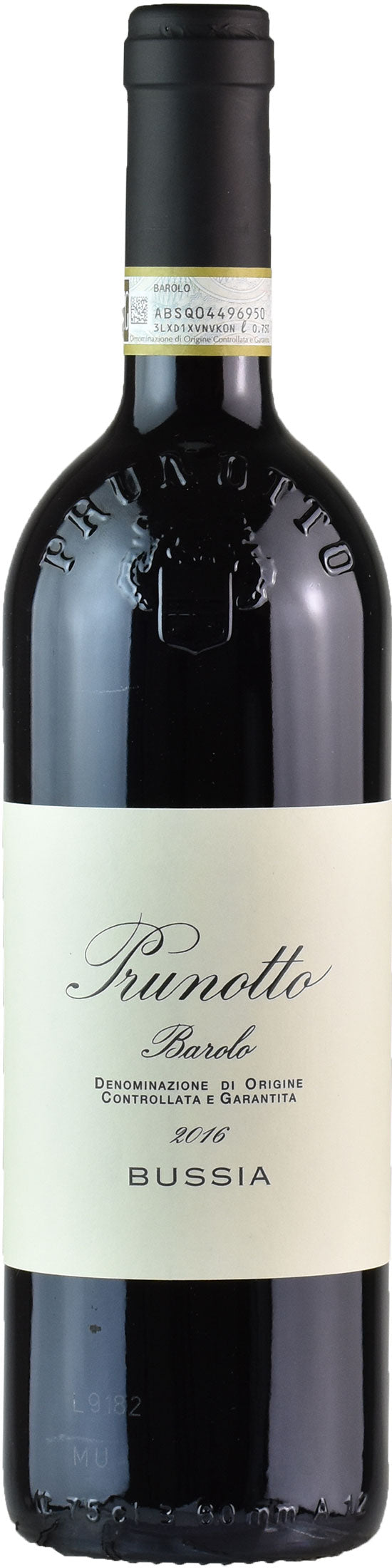
Prunotto
Barolo Bussia 2016
| Denomination | DOCG Barolo |
|---|---|
| Size | 0,75 l |
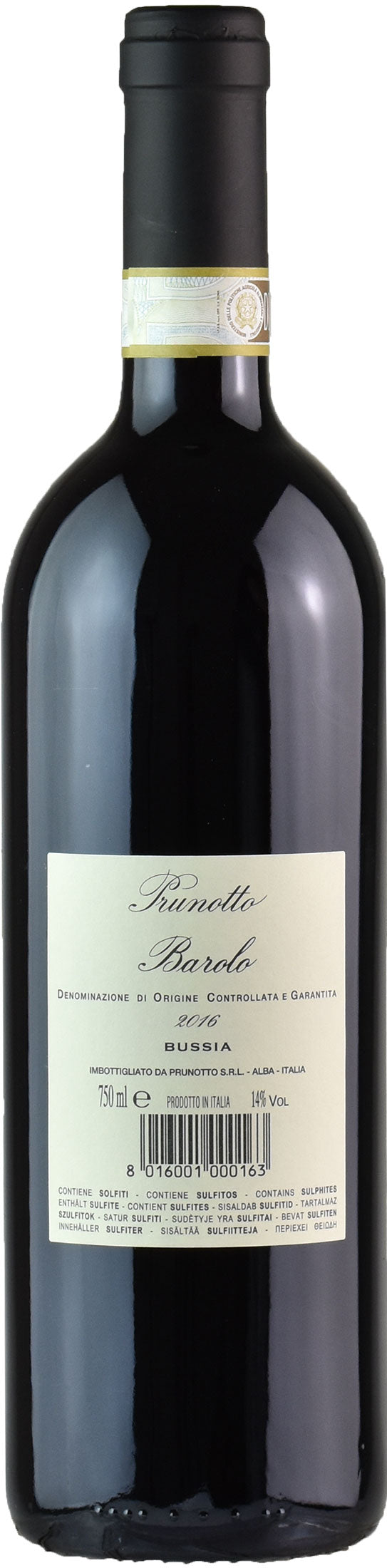
| Alcohol content | 14.0% by volume |
| Area | Piedmont (Italy) |
| Grape varieties | 100% Nebbiolo |
| Aging | Aged for 24 months, partly in 50 hl French oak casks and partly in second-fill barriques; a further 12 months of bottle ageing in the Prunotto cellars before release. |
| Other years | 2010 , 2021 |
- Origin: Barolo DOCG 100% Nebbiolo from the Bussia cru
- Aroma: Red fruits, floral and spicy notes
- Palate: Full structure, sweet and persistent tannins
- Ageing: 24 months in oak and 12 in bottle
- Pairing: Excellent at 18°C with braised meats and cheeses
Description
Type of wine
Barolo Bussia by Prunotto is a still red wine with a Controlled and Guaranteed Designation of Origin, produced in Piedmont exclusively from Nebbiolo grapes. Aged in oak barrels, it presents itself in the glass with an intense garnet colour, enriched by clear ruby reflections. The aromatic profile intertwines scents of ripe-fleshed fruit with delicate floral and spicy notes, giving life to a complex bouquet. On the palate, it shows a full structure, supported by silky and sweet tannins that accompany the sip towards a long, harmonious, and persistent finish.
Provenance
This wine originates in the famous Bussia sub-zone, a cru located in the Alba area of Piedmont. The vineyards extend at an altitude of approximately 350 metres, benefiting from an optimal south and south-west exposure that ensures the perfect ripening of the clusters. The vine roots sink into soils of Tortonian origin, characterised by the famous Sant’Agata fossil marls. This peculiar composition, which alternates compact calcareous clays with sandy and silty layers, gives the wine its marked chromatic intensity and deep flavour complexity.
How it is produced
The process begins with a rigorous selection of the grapes, followed by the destemming and crushing phases. Maceration on the skins lasts from eight to fifteen days at a controlled temperature, promoting a balanced extraction. Malolactic fermentation is completed before the end of winter, lending greater smoothness to the structure. Subsequently, the wine matures for twenty-four months, partly in French oak barrels and partly in second-passage barrels; an ageing process that concludes with a further year of resting in the bottle to achieve its structured elegance.
History and facts
The Bussia cru represents a milestone for the Antinori family's Prunotto winery: it was indeed the first single-vineyard Barolo produced by the estate, appearing on the label since 1961. The magnificent 2016 vintage has received significant recognition, including 5 Grappoli Bibenda, 93 Vinous points and 94 points from James Suckling and Wine Spectator.
Awards
-
2016
 5
5Italian Sommelier Foundation (FIS) guide This has been one of the most prestigious wine guides in Italy for over 10 years.
-
2016
 94
94/100
James Suckling is an influential American wine critic and journalist who worked at Wine Spectator for 30 years. He left the magazine in 2010 to start his own website and guidebook (JamesSuckling.com). He specialises in Italian and Bordeaux wines.
-
2016
 3
3One of the most prestigious wine guides in Italy.
-
2016
 93
93/100
Vinous is the online guide from Antonio Galloni, one of the world's leading wine connoisseurs.
-
2016
 94
94/100
Wine spectator is the most influential wine guide on the internet.
Tasting notes

Perfume

Color

Taste
Serve at:
18 - 20 °C
Longevity:
15 - 25 years
Decanting time:
1 hour

- Start up year: 1904
- Oenologist: Gianluca Torrengo
- Bottles produced: 1.116.400
- Hectares: 70
The Antinori family, charmed by such rich natural beauty, unique vineyards and soils, decided to invest time and energy in this terroir confident that their efforts would make Prunotto what it is today, one of the most important winemaking estates in the Piedmont region. Read more


| Name | Prunotto Barolo Bussia 2016 |
|---|---|
| Type | Red still |
| Denomination | Barolo DOCG |
| Vintage | 2016 |
| Size | 0,75 l |
| Alcohol content | 14.0% by volume |
| Grape varieties | 100% Nebbiolo |
| Country | Italy |
| Region | Piedmont |
| Vendor | Prunotto |
| Story | History and facts The Bussia cru represents a milestone for the Antinori family's Prunotto winery: it was indeed the first single-vineyard Barolo produced by the estate, appearing on the label since 1961. The magnificent 2016 vintage has received significant recognition, including 5 Grappoli Bibenda, 93 Vinous points and 94 points from James Suckling and Wine Spectator. |
| Origin | Bussia (Alba, Cuneo), Piedmont, Italy |
| Climate | Altitude: 350 metres above sea level. Aspect: south. |
| Soil composition | Soils of the Tortonian period (Sant’Agata fossil marls): compact calcareous clays alternating with sandy layers. |
| Fermentation temperature | Maximum 30°C |
| Fermentation | 8–15 days |
| Production technique | Destemming and crushing; maceration for 8–15 days (max 30°C); malolactic fermentation; ageing for 24 months in French oak casks (50 hl) and in second-fill barriques, followed by 12 months in bottle. |
| Wine making | The grapes are sorted on arrival, destemmed and crushed. Maceration lasts from 8 to 15 days at a maximum temperature of 30°C. Malolactic fermentation is completed before the end of winter. |
| Aging | Aged for 24 months, partly in 50 hl French oak casks and partly in second-fill barriques; a further 12 months of bottle ageing in the Prunotto cellars before release. |
| Allergens | Contains sulphites |