


Prunotto
Barbera d'Alba 2025
| Denomination | DOC Barbera d'Alba |
|---|---|
| Size | 0,75 l |
| Alcohol content | 14.0% by volume |
| Area | Piedmont (Italy) |
| Grape varieties | 100% Barbera |
| Aging | Aged for approximately 10 months in oak barrels, followed by around 4 months in bottle. |
- Name and grape: Barbera d’Alba DOC 2025, 100% Barbera, 14% vol
- Aromas: notes of rose, blackberry and ripe cherry with light spicy nuances
- Appearance: bright ruby red with intense violet highlights
- Production process: maceration for 5–7 days at 28–30 °C; aged for 10 months in oak barrels
- Pairings and serving: serve at 16 °C, decant for 1 hour; ideal with pasta, pizza and boiled meats
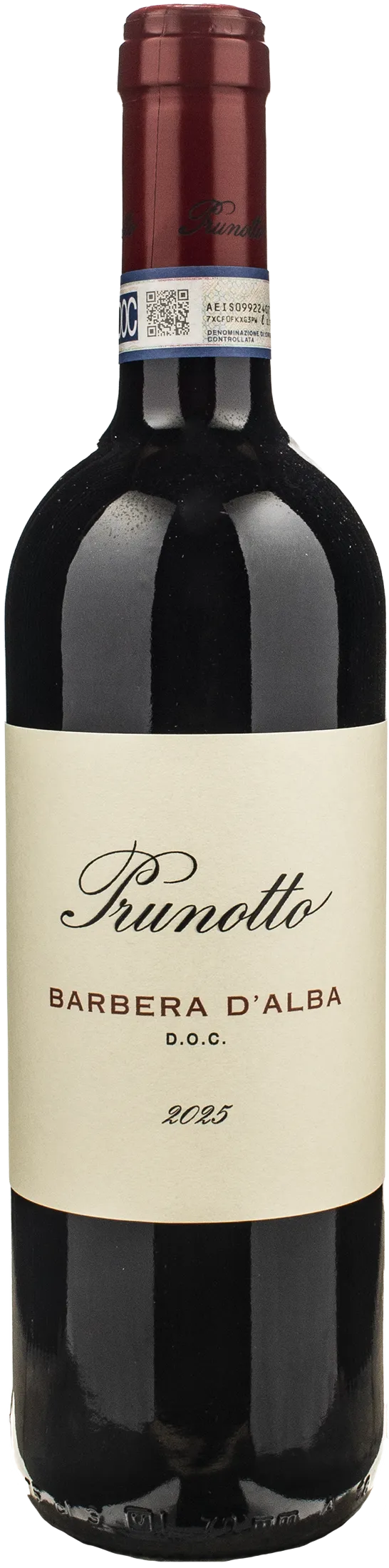
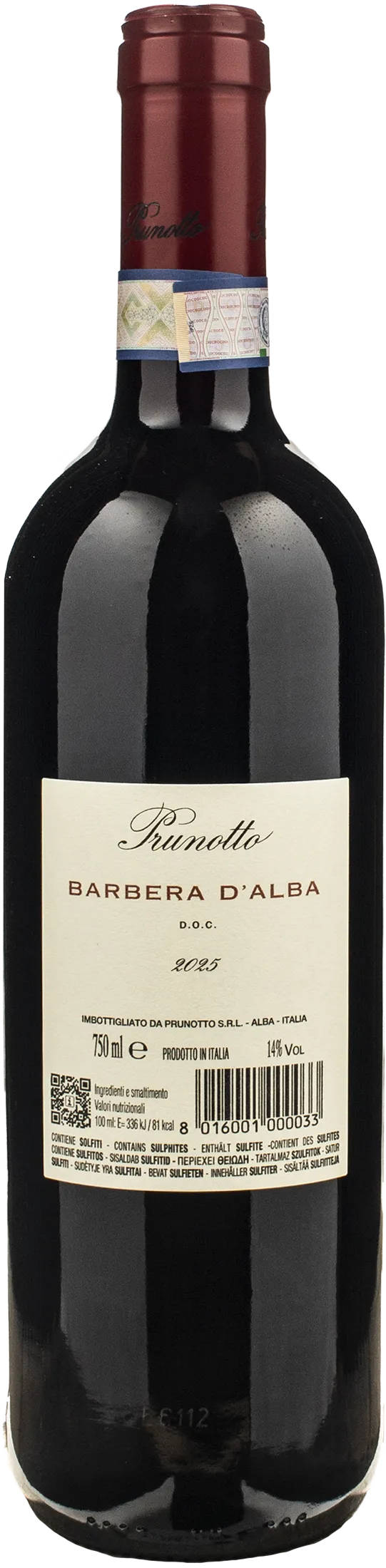
Description
What kind of wine it is
Prunotto Barbera d’Alba is a still red wine from Piedmont made from Barbera grapes. Its sensory profile is characterised by a ruby red colour enriched with intense violet highlights. On the nose, it offers clear floral notes of rose intertwined with hints of ripe fruit, particularly blackberry and cherry, softened by subtle spicy nuances. On the palate, it delivers a smooth and elegant sip, ensuring a full and harmonious balance, supported by a pleasant freshness.
Where it comes from
This Piedmontese red originates in the Alba area, the heartland of the renowned Barbera d’Alba. The vineyards thrive on clay and sandy soils, a geological composition that helps support the wine’s structure and colour intensity, while also ensuring a lively flavour profile. Careful vineyard management and selective thinning of the grape clusters allow the grapes to reach ideal ripeness, preserving the natural freshness of the fruit and enhancing its varietal characteristics.
How it is produced
The vinification process begins with crushing and destemming the grapes. The must then undergoes a skin maceration for about five to seven days at a controlled temperature, a crucial stage for extracting the typical colour and aromatic components. After malolactic fermentation, which softens the sensory profile, the final blend is created in spring by assembling wines from different vineyards. The process concludes with around ten months of ageing in oak barrels, followed by a further period of rest before release.
History and Curiosities
This Barbera d’Alba DOC embodies the excellence of Piedmontese winemaking tradition, signed by Prunotto. Born from a challenging vintage, its quality is ensured by careful thinning in the vineyard, which has preserved its typical freshness. In the cellar, the wine matures for about ten months in large oak barrels of various capacities, acquiring softness and complexity. The meticulous spring blending of the different vineyards finally gives an impeccable harmonious balance, completed by a four-month refinement in the bottle.
Tasting notes

Perfume

Color

Taste
Serve at:
14 -16 °C
Longevity:
05 - 10 years
Decanting time:
1 hour
- Start up year: 1904
- Oenologist: Gianluca Torrengo
- Bottles produced: 1.116.400
- Hectares: 70
The Antinori family, charmed by such rich natural beauty, unique vineyards and soils, decided to invest time and energy in this terroir confident that their efforts would make Prunotto what it is today, one of the most important winemaking estates in the Piedmont region. Read more


| Name | Prunotto Barbera d'Alba 2025 |
|---|---|
| Type | Red still |
| Denomination | Barbera d'Alba DOC |
| Vintage | 2025 |
| Size | 0,75 l |
| Alcohol content | 14.0% by volume |
| Grape varieties | 100% Barbera |
| Country | Italy |
| Region | Piedmont |
| Vendor | Prunotto |
| Story | History and Curiosities This Barbera d’Alba DOC embodies the excellence of Piedmontese winemaking tradition, signed by Prunotto. Born from a challenging vintage, its quality is ensured by careful thinning in the vineyard, which has preserved its typical freshness. In the cellar, the wine matures for about ten months in large oak barrels of various capacities, acquiring softness and complexity. The meticulous spring blending of the different vineyards finally gives an impeccable harmonious balance, completed by a four-month refinement in the bottle. |
| Origin | Alba, Piedmont, Italy |
| Climate | Mild winter with some rain; generally mild vegetative restart; late spring and summer tend to be rainy |
| Soil composition | Clay and sand |
| Harvest | The grapes were crushed and destemmed. |
| Fermentation temperature | 28–30 °C |
| Fermentation | Approximately 5–7 days |
| Production technique | Uve pigiate e diraspate; macerazione di 5–7 giorni a 28–30 °C; fermentazione malolattica completata; assemblaggio dei vini in primavera; imbottigliamento; affinamento per circa 10 mesi in botti di rovere, seguito da circa 4 mesi in bottiglia |
| Wine making | Crushing and destemming of the grapes, followed by maceration on the skins for about 5–7 days at 28–30 °C; malolactic fermentation completed (in mid-December); blending of the wines in spring and subsequent bottling. |
| Aging | Aged for approximately 10 months in oak barrels, followed by around 4 months in bottle. |
| Allergens | Contains sulphites |