


Pojer e Sandri
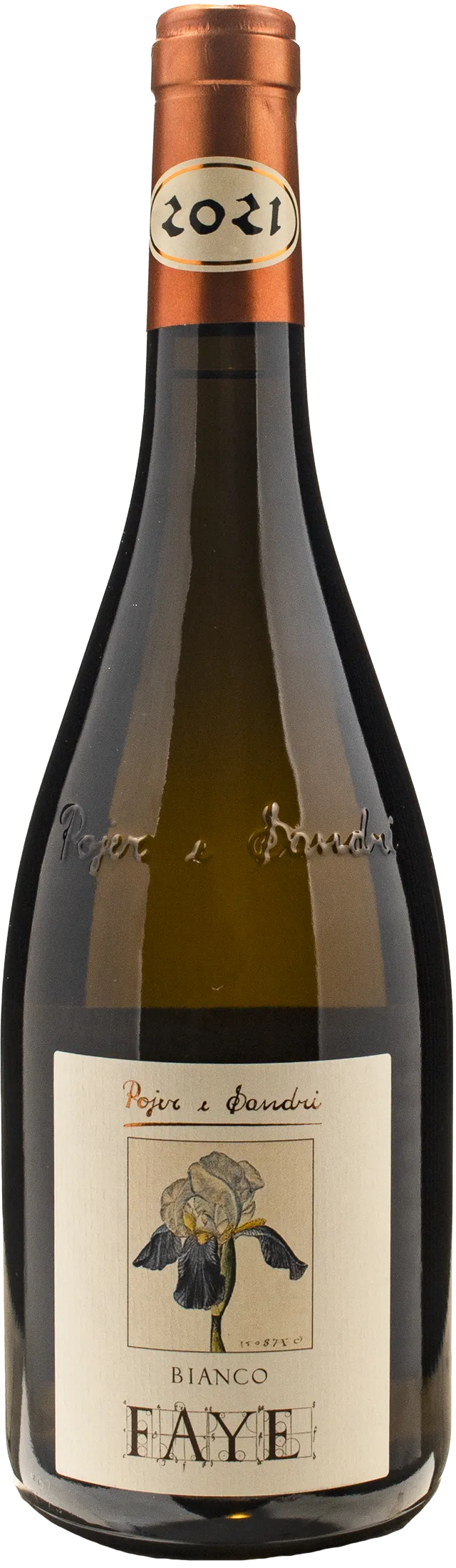
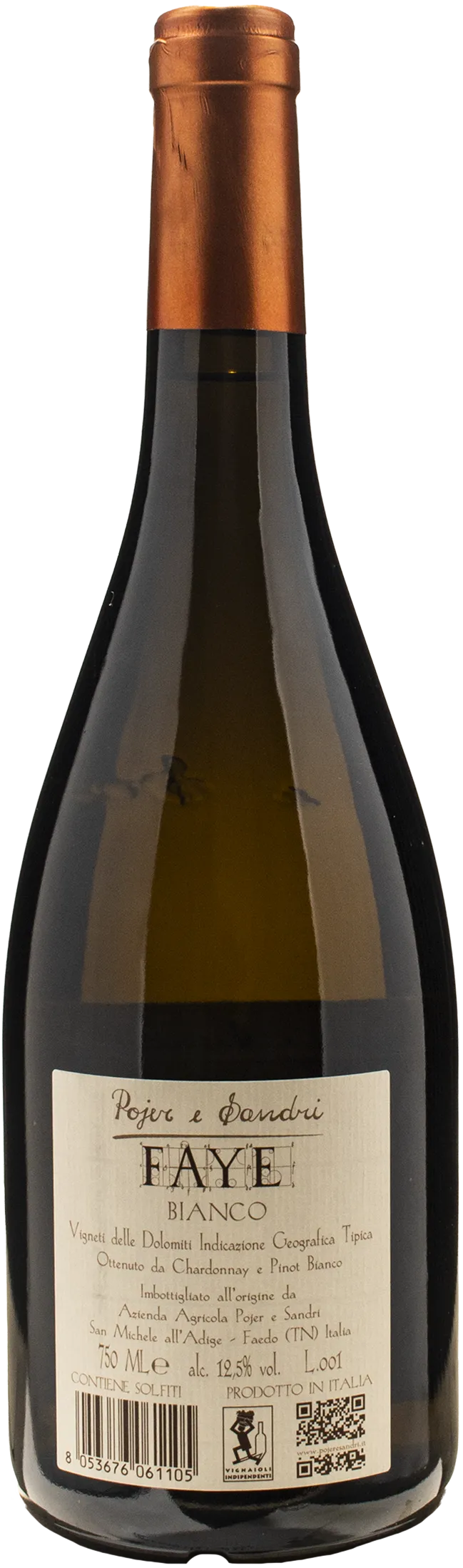
Bianco Faye 2021
| Denomination | IGT Vigneti delle Dolomiti |
|---|---|
| Size | 0,75 l |
| Alcohol content | 12.5% by volume |
| Area | Trentino Alto Adige (Italy) |
| Grape varieties | Chardonnay, Pinot Bianco |
| Aging | Fermentation and maturation for about 6 months in small oak barrels in contact with its own yeasts (hourglass effect); further ageing in stainless steel and in bottle for a couple of years before being released on the market. |
- Grape varieties and designation: Chardonnay and Pinot Blanc, Dolomiti Vineyards IGT
- Aged in wood: 6 months on the lees in small barrels, maturation with hourglass effect
- Aromas: vanilla, almond paste, hazelnut, hay, moss and flint
- Taste and appearance: dry and direct, significant structure; straw yellow with green highlights
- Recommended pairings and analytical data: roast fish and white meats; 12.5% vol; 91 points Vinous
Description
What kind of wine it is
Bianco Faye by Pojer e Sandri is a still white wine from Trentino-Alto Adige. This structured blend combining Chardonnay and Pinot Bianco originates from the Vigneti delle Dolomiti area. On the palate, it offers a dry and substantial profile, characterised by a broad and clear bouquet. The olfactory analysis reveals aromas of vanilla, almond paste, hazelnut, hay and moss, accompanied by a deep mineral nuance of flint. Its elegant and enveloping style derives from careful maturation on fine lees.
Where it comes from
The grapes come from the municipality of Faedo, between the areas of Cosleri, Pianezzi and Palai. The vineyards are situated on slopes facing south and south-west, at an altitude between 300 and 700 metres, constantly benefiting from the Ora del Garda breeze. The silty-limestone soils, about a metre deep, rest on a marl substrate where volcanic rock meets dolomitic formations. This specific geological and climatic combination gives the sip a distinctive flavour definition and a dry character.
How it is produced
The rows are trained using the open Trentino pergola system, allowing optimal yield management. Vinification involves fermentation in small oak barrels, where the must remains for about six months in contact with its own yeasts, utilising a unique hourglass effect. After a period in steel and a final ageing phase, the wine presents an intense straw yellow colour with greenish highlights. Thanks to its significant structure, it is the ideal pairing for white meats and perfectly enhances roast fish.
History and Curiosities
Among the curiosities of Bianco Faye is the innovative technique of maturation on the lees with a unique hourglass effect in small oak barrels. Born from the passion of Pojer and Sandri, its vineyards benefit from the exclusive influence of the Ora del Garda, a wind coming from the nearby large lake. This unique approach, combined with respect for the land, has allowed the wine to stand out, earning the important recognition of 91 points from Vinous.
Awards
-
2021
 4
4Italian Sommelier Foundation (FIS) guide This has been one of the most prestigious wine guides in Italy for over 10 years.
-
2021
 3
3One of the most prestigious wine guides in Italy.
-
2021
 91
91/100
Vinous is the online guide from Antonio Galloni, one of the world's leading wine connoisseurs.
-
2021
 3
3Italian Sommelier Association (AIS) guide
Tasting notes
Perfume

Color

Taste
Serve at:
10 - 12 °C
Longevity:
05 - 10 years
- Start up year: 1975
- Oenologist: Mario Pojer
- Bottles produced: 250.000
- Hectares: 33
Faedo 1998: We are already starting to show our thirst for innovation: we are among the first at a national level to market Chardonnay, which until then was practically unknown.
Faedo 2002: We patent the reduction and press vinification with nitrogen recovery, which drastically reduces the use of sulphites. We then begin to wash the grapes through the grape jacuzzi.
The arrival of Marianna, Matteo, Fiamma, Elisa and Federico has brought further life and energy to this dream in which passion and innovation are the keystone.
Faedo 2013: The Zero Infinito project is born: Zero chemical treatments in the countryside, Zero sulphur dioxide, Zero commercial yeasts, Zero clarifying agents, Zero filtrations, Zero antioxidants. Read more


| Name | Pojer e Sandri Bianco Faye 2021 |
|---|---|
| Type | White green still |
| Denomination | Vigneti delle Dolomiti IGT |
| Vintage | 2021 |
| Size | 0,75 l |
| Alcohol content | 12.5% by volume |
| Grape varieties | Chardonnay, Pinot Bianco |
| Country | Italy |
| Region | Trentino Alto Adige |
| Vendor | Pojer e Sandri |
| Story | History and Curiosities Among the curiosities of Bianco Faye is the innovative technique of maturation on the lees with a unique hourglass effect in small oak barrels. Born from the passion of Pojer and Sandri, its vineyards benefit from the exclusive influence of the Ora del Garda, a wind coming from the nearby large lake. This unique approach, combined with respect for the land, has allowed the wine to stand out, earning the important recognition of 91 points from Vinous. |
| Origin | Faedo (localities Cosleri, Pianezzi and Palai), Trentino-Alto Adige, Italy |
| Climate | Breezy locations due to the influence of the Ora del Garda (wind from the nearby large lake) |
| Soil composition | Faedo is located between the Permian formation of the porphyritic platform (volcanic rock) and the Werfenian deposits of sandstones, siltstones, marls, limestones and dolomites. The soil has a variable depth from 30 to 100 cm, is of a silty-calcareous type and rests on a marly conglomerate. |
| Cultivation system | Pergoletta trentina aperta |
| Plants per hectare | 6500 |
| Yield per hectare | 80–90 quintals per hectare |
| Fermentation | About 6 months |
| Production technique | Fermentation and maturation in small oak barrels for about 6 months in contact with its own lees, with an hourglass effect; further maturation in stainless steel and in bottle for a couple of years before release to the market. |
| Wine making | Fermentation and ageing in small oak barrels for about 6 months in contact with its own lees, with the effect of the "hourglass"; further maturation in stainless steel and in bottle for a couple of years before being released to the market. |
| Aging | Fermentation and maturation for about 6 months in small oak barrels in contact with its own yeasts (hourglass effect); further ageing in stainless steel and in bottle for a couple of years before being released on the market. |
| Allergens | Contains sulphites |