


Terre Cevico
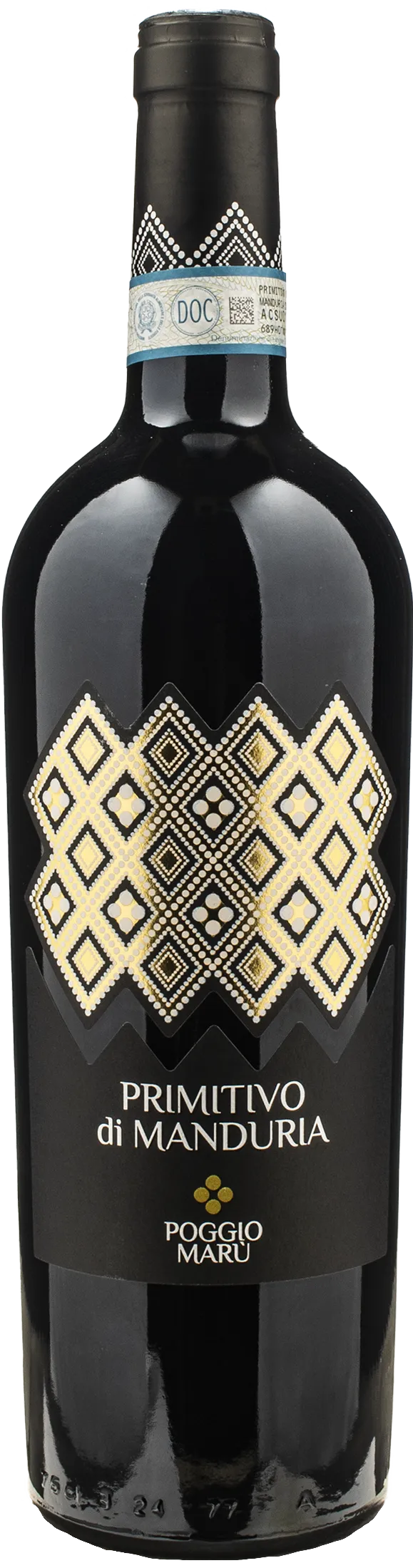
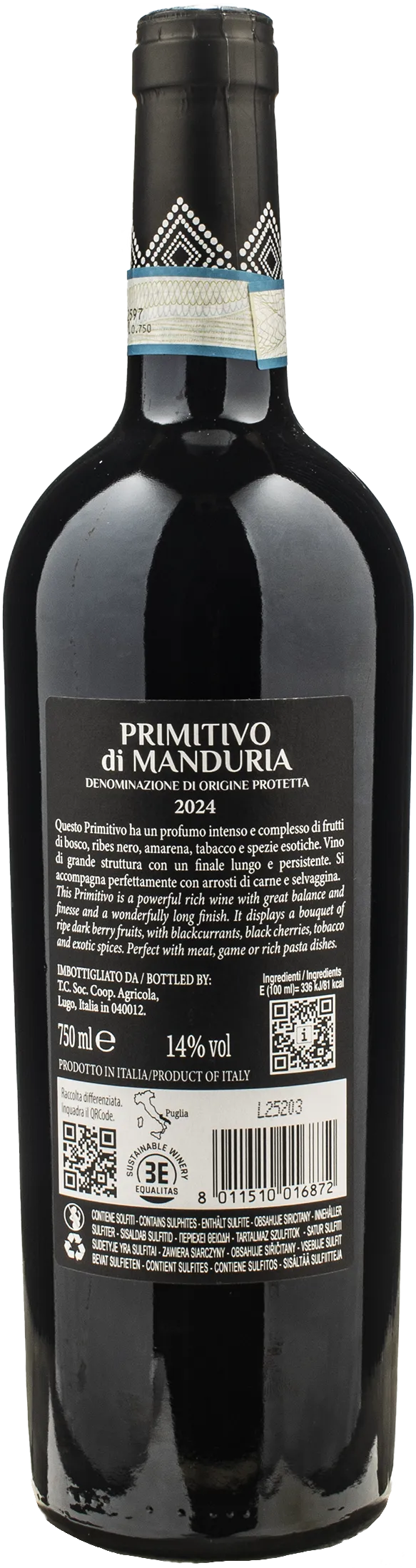
Poggio Maru Primitivo di Manduria 2024
| Denomination | DOC Primitivo di Manduria |
|---|---|
| Size | 0,75 l |
| Alcohol content | 14.0% by volume |
| Area | Apulia (Italy) |
| Grape varieties | 100% Primitivo |
| Aging | After malolactic fermentation, 40% in first-use French and American oak barriques for 8 months and 60% in stainless steel at 18°C |
- Name and vintage: Primitivo di Manduria DOP 2024, still red wine
- Alcohol content and format: 14% alcohol, 750 ml bottle
- Aromas and colour: intense violet colour, notes of blackcurrant and ripe blackberry with hints of oak
- Ageing: 40% in oak barriques for 8 months, 60% in stainless steel
- Pairings: ideal with grilled red meats and flavourful first courses. Serve at 14-16°C
Description
What kind of wine it is
Poggio Maru Primitivo di Manduria is an enveloping still red wine that expresses the vocation of the Apulian territory, made from Primitivo grapes. In the glass, it displays a deep dark violet colour, hinting at aromas of blackcurrant and ripe blackberry enriched by delicate oak notes. On the palate, it is dry and full-bodied, offering a fruity sip accompanied by a slight herbal nuance. The persistent finish delivers soft notes of plum and spices. This solid structure makes it the ideal pairing to enhance grilled red meats and flavourful first courses.
Where it comes from
The grapes for this wine originate in the Primitivo di Manduria area, specifically between the towns of Avetrana and Manduria, in the heart of Salento. The vines, cultivated using the traditional Apulian bush vine system, benefit from intense sun exposure and have an average age of around thirty years. Thanks to strict low-yield management, the bunches achieve optimal aromatic concentration and full ripeness. These specific agronomic conditions allow for an expression with a rich body and a profound territorial identity.
How it is produced
The process begins with manual harvesting towards the end of August, preserving the integrity of the fruit. After destemming, the berries undergo fermentation in stainless steel at a controlled temperature, during which pumping over and delestage techniques ensure a gentle extraction of aromas and tannins. Following malolactic fermentation, the wine undergoes careful ageing for eight months: part matures in first-passage French and American oak barrels to acquire warm and spicy notes, while the remainder rests in steel.
History and Curiosities
The Poggio Maru Primitivo di Manduria 2024 encapsulates the essence of Salento, from vines cultivated using the traditional Apulian bush vine method. The manual harvest at the end of August releases aromas of blackcurrant, ripe blackberry and spices. Aged in French and American oak barriques, it offers an explosively persistent fruitiness with notes of plum. This full-bodied red wine is ideal with grilled meats and flavourful first courses.
Tasting notes

Perfume

Color

Taste
Serve at:
14 -16 °C
Longevity:
05 - 10 years
Decanting time:
1 hour

- Start up year: 1963
- Oenologist: Pierluigi Zama
- Bottles produced: 10.000.000
- Hectares: 6.300
In the 1960s and ’70s Terre Cevico began trading its wine, exclusively in bulk. A step forward, in the ’80s and ’90s, was that of selling in standard and larger-size bottles. Since 2000, in line with feedback from the market, Terre Cevico has started to produce and package wines in cartons and bottles for the HORECA channel.
Today Terre Cevico is a Group that operates principally in Emilia Romagna, but also with its own wineries in Veneto and Puglia. Terre Cevico’s wines are present in 69 countries around the world, especially in, Japan, Russia, Sweden, United States, Great Britain and Vietnam, with a consolidated group turnover of 196,7 million Euros. Read more


| Name | Poggio Maru Primitivo di Manduria 2024 |
|---|---|
| Type | Red green still |
| Denomination | Primitivo di Manduria DOC |
| Vintage | 2024 |
| Size | 0,75 l |
| Alcohol content | 14.0% by volume |
| Grape varieties | 100% Primitivo |
| Country | Italy |
| Region | Apulia |
| Vendor | Terre Cevico |
| Story | History and Curiosities The Poggio Maru Primitivo di Manduria 2024 encapsulates the essence of Salento, from vines cultivated using the traditional Apulian bush vine method. The manual harvest at the end of August releases aromas of blackcurrant, ripe blackberry and spices. Aged in French and American oak barriques, it offers an explosively persistent fruitiness with notes of plum. This full-bodied red wine is ideal with grilled meats and flavourful first courses. |
| Origin | Municipalities of Avetrana and Manduria, in the province of Taranto, in southern Puglia |
| Cultivation system | Apulian bush vine |
| Plants per hectare | 5,500 plants per hectare |
| Harvest | At the end of August |
| Fermentation temperature | 23-25 °C |
| Fermentation | Approximately 8 0 days |
| Production technique | Fermentation in stainless steel tanks at controlled temperature with pumping over and délestage; induced malolactic fermentation; ageing 40% in oak barriques (French and American) and 60% in stainless steel. |
| Wine making | After destemming, the grapes are left whole (not crushed); fermentation takes place in stainless steel tanks at a controlled temperature (23-25 °C) for about 8 0 days with frequent pumping over and délestage; after racking, malolactic fermentation is induced; ageing: 40% in first-use French and American oak barriques for 8 months and 60% in stainless steel at 18 °C. |
| Aging | After malolactic fermentation, 40% in first-use French and American oak barriques for 8 months and 60% in stainless steel at 18°C |
| Residual sugar | 8.5 gr/L |
| Allergens | Contains sulphites |