


PoggioargentierA
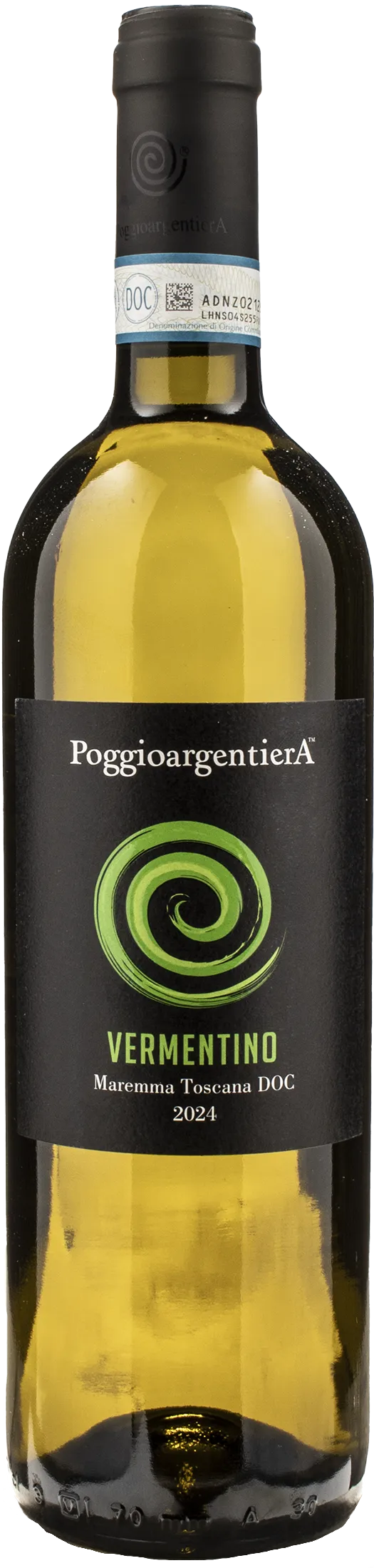
Vermentino 2024
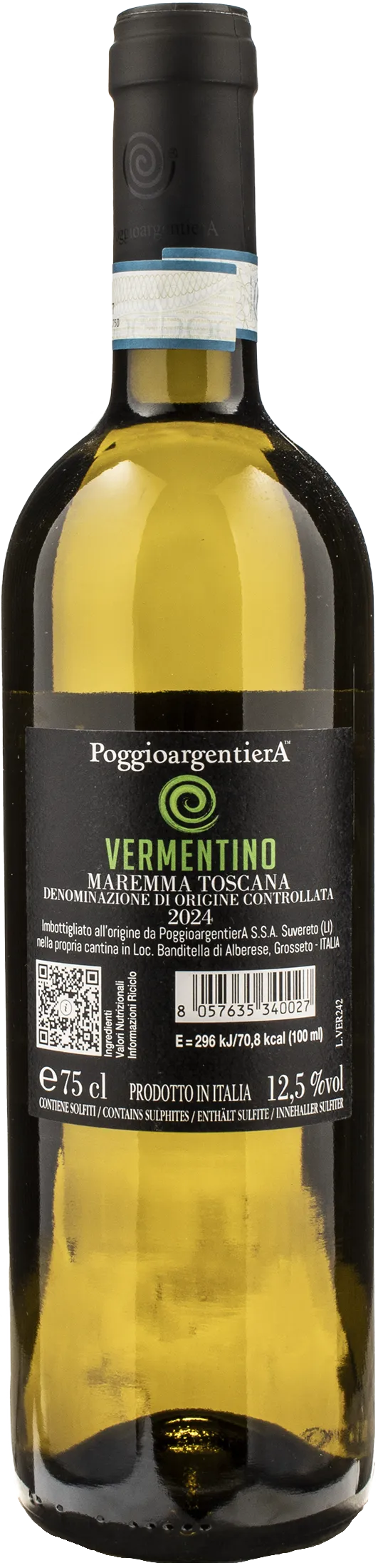
| Denomination | DOC Maremma Toscana Vermentino |
|---|---|
| Size | 0,75 l |
| Alcohol content | 12.5% by volume |
| Area | Tuscany (Italy) |
| Grape varieties | 100% Vermentino |
- Designation: Maremma Toscana DOC, 100% Vermentino, vintage 2024, 12.5% vol
- Terroir: grapes sourced from Baccinello (calcareous clay) and Alberese (sand and silt)
- Vinification: fermentation in stainless steel at controlled temperature, hand-harvested grapes
- Aroma: notes of rose, daisy, yellow flowers; peach, ripe pear, mango, elderflower
- Palate and serving: fresh, savoury and clean taste; serving temperature 8-10 °C; contains sulphites
Description
What kind of wine it is
Vermentino by Poggio Argentiera is a white wine that fully expresses the character of the Tuscan Maremma. Distinguished by a clear straw-yellow colour, it reveals intense floral aromas of rose and wild daisy on the nose, followed by fruity notes of peach, ripe pear and mango, with a delicate balsamic finish of elderflower. On the palate, it stands out for its well-balanced freshness, a savoury finish and a pleasant cleanliness.
Where it comes from
The Vermentino grapes come from the southern area of the province of Grosseto, where the vineyards benefit from two distinct terroirs. The alluvial soils of Baccinello, located at three hundred metres above sea level and composed of calcareous clays rich in pebbles, are combined with the sands of Alberese, characterised by a significant silt component. This combination gives the wine a defined structure. The Poggio Argentiera estate was founded at the end of the 1990s through the restoration of a historic farmstead, a symbol of the agricultural reclamation of the Tuscan Maremma.
How it is produced
The vines are trained using the Guyot system and manual harvesting ensures the perfect integrity of the bunches. Vinification involves fermentation in stainless steel at a controlled temperature, a fundamental process to preserve the primary aromas of Vermentino and avoid oxidation. The result is a wine with an agile and defined sip, with excellent ageing potential estimated between three and five years.
History and Curiosities
Born in the Maremma Toscana DOC, this Vermentino reflects the soul of Poggioargentiera, a winery founded in 1997 with the purchase of the Adua estate, a historic property dating back to the early twentieth century and a witness to the era of land reclamation. The meeting of the hilly soils of Baccinello and the sands of Alberese gives the wine its unmistakable character. The care of the vines trained using the Guyot method is combined with a rigorous manual harvest in small crates: meticulous work in the heart of the Grosseto area that delivers an authentic sip, capable of honouring the true agricultural identity of the region.
Tasting notes

Perfume

Color

Taste
Serve at:
08 - 10 °C
Longevity:
03 - 05 years

- Start up year: 1997
- Oenologist: Marco Lamastra
- Bottles produced: 120.000
- Hectares: 35
The 15 acres (six hectares) of vineyards began to produce grapes for a Morellino di Scansano and the new cellar was built. In 2001 the property was enlarged with the acquisition of another farm, located in Baccinello, a hillside zone in the township of Scansano. New vineyards were added to the older but prestigious existing ones, and today the winery owns over 50 acres (21 hectares) of vineyards all in the Morellino di Scansano appellation. Read more


| Name | Poggio Argentiera Vermentino 2024 |
|---|---|
| Type | White still |
| Denomination | Maremma Toscana DOC |
| Vintage | 2024 |
| Size | 0,75 l |
| Alcohol content | 12.5% by volume |
| Grape varieties | 100% Vermentino |
| Country | Italy |
| Region | Tuscany |
| Vendor | PoggioargentierA |
| Story | History and Curiosities Born in the Maremma Toscana DOC, this Vermentino reflects the soul of Poggioargentiera, a winery founded in 1997 with the purchase of the Adua estate, a historic property dating back to the early twentieth century and a witness to the era of land reclamation. The meeting of the hilly soils of Baccinello and the sands of Alberese gives the wine its unmistakable character. The care of the vines trained using the Guyot method is combined with a rigorous manual harvest in small crates: meticulous work in the heart of the Grosseto area that delivers an authentic sip, capable of honouring the true agricultural identity of the region. |
| Origin | Between the hills of Baccinello and the sands of Alberese, in the southern Maremma (Grosseto area), Tuscany |
| Soil composition | Vineyards in the Baccinello area: soils rich in alluvial pebbles with a predominance of calcareous clays. Vineyards in the Alberese area: mainly sand and silt. |
| Cultivation system | Guyot |
| Plants per hectare | 5000 |
| Production technique | Temperature-controlled fermentation in stainless steel |
| Wine making | In steel with fermentation at controlled temperature. |
| Allergens | Contains sulphites |