


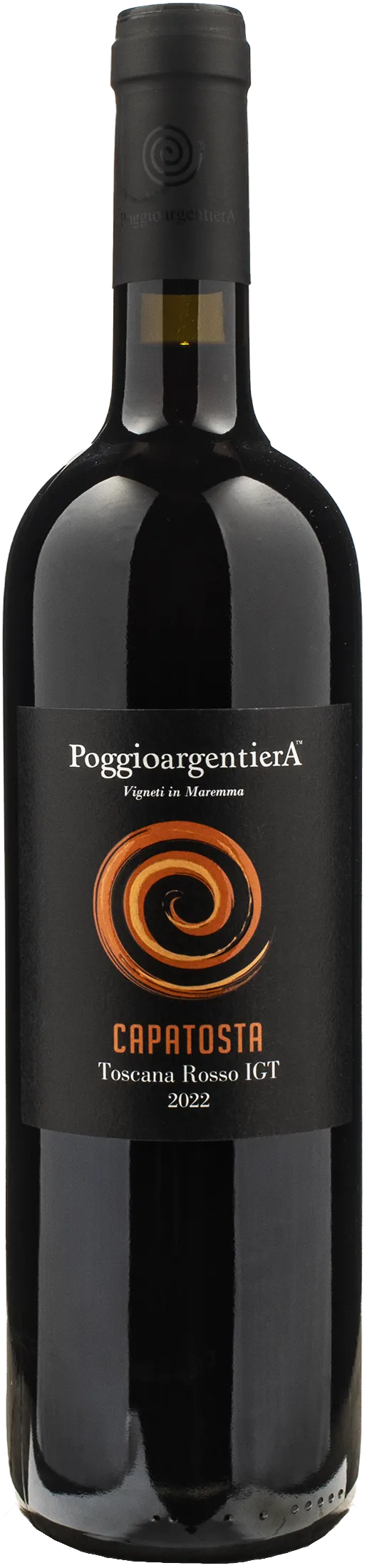
PoggioargentierA
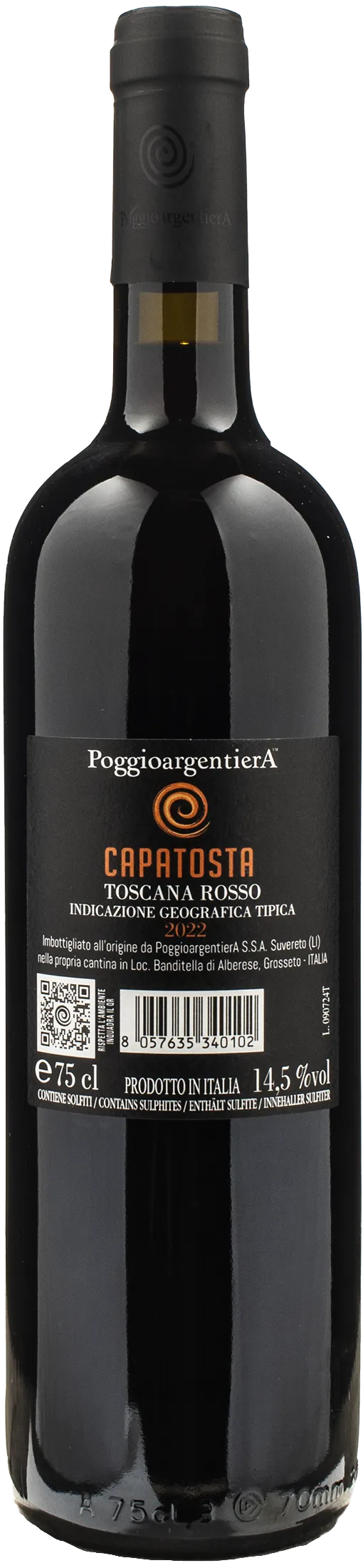
Capatosta Toscana Rosso 2022
| Denomination | IGT Toscana |
|---|---|
| Size | 0,75 l |
| Alcohol content | 14.5% by volume |
| Area | Tuscany (Italy) |
| Grape varieties | 95% Sangiovese, 5% Alicante |
| Aging | In medium-capacity oak barrels for 15 months and in bottle for a further 15 months before being released onto the market. |
- Organic IGT wine: still red Tuscan wine from southern Maremma, Scansano area
- Grape blend: Sangiovese 85%, Ciliegiolo 10% and Alicante 5% from native varieties
- Ageing: 15 months in oak barrels and 15 months in bottle
- Aromatic profile: notes of cherry, Mediterranean scrub and tobacco with a finish of cocoa and spices
- Pairings: ideal with red meats and game, serve at 16-18 °C after one hour of decanting
Description
What kind of wine it is
Poggio Argentiera Capatosta Toscana Rosso is an organic red wine produced in southern Maremma. This blend combines Sangiovese, Alicante and Ciliegiolo grapes, offering an authentic expression of the Tuscan region. In the glass, it displays a ruby colour with violet highlights, while on the nose it releases aromas of cherry, Mediterranean scrub and dark tobacco, enriched by notes of sweet spices. On the palate, it stands out for its enveloping structure, balanced by a vibrant freshness and well-integrated tannins. It finishes with a persistent aftertaste recalling dark chocolate, making it ideal to pair with red meats and mature cheeses.
Where it comes from
The Poggio Argentiera vineyards are located on the breezy hills of the municipality of Scansano, in the province of Grosseto. The plots in Baccinello are rooted in clay and limestone soil, rich in alluvial skeleton. The soils in the Alberese area, on the other hand, have a higher concentration of sand and silt. This geological variety, combined with constant hilltop breezes and excellent sun exposure, promotes balanced ripening of the grapes. The result is a terroir that imparts a pronounced aromatic intensity to the wine, while maintaining a distinct territorial identity.
How it is produced
Production begins with a rigorous manual harvest of the grapes. Vinification involves maceration for over two weeks and fermentation at controlled temperatures in truncated conical oak vats or steel tanks. Ageing takes place in oak barrels for fifteen months, ensuring a measured contribution from the wood that respects the natural expressiveness of the raw material. Before release, the wine completes its cycle with a further fifteen months' bottle ageing, essential for stabilising the phenolic component and achieving perfect balance on the palate.
History and Curiosities
Created in 1998 to celebrate the essence of Poggio Argentiera, this prestigious red wine has followed the principles of organic farming since 2009. An intriguing detail lies in the winery's bold decision to abandon traditional barriques in favour of larger oak casks, ensuring a less invasive impact of the wood that enhances the authenticity of the grapes. Aged for 15 months in cask and a further 15 months in bottle, the wine has received extremely high scores and unanimous praise from international critics.
Tasting notes

Perfume

Color

Taste
Serve at:
16 - 18 °C
Longevity:
05 - 10 years
Decanting time:
1 hour

- Start up year: 1997
- Oenologist: Marco Lamastra
- Bottles produced: 120.000
- Hectares: 35
The 15 acres (six hectares) of vineyards began to produce grapes for a Morellino di Scansano and the new cellar was built. In 2001 the property was enlarged with the acquisition of another farm, located in Baccinello, a hillside zone in the township of Scansano. New vineyards were added to the older but prestigious existing ones, and today the winery owns over 50 acres (21 hectares) of vineyards all in the Morellino di Scansano appellation. Read more


| Name | Poggio Argentiera Capatosta Toscana Rosso 2022 |
|---|---|
| Type | Red still |
| Denomination | Toscana IGT |
| Vintage | 2022 |
| Size | 0,75 l |
| Alcohol content | 14.5% by volume |
| Grape varieties | 95% Sangiovese, 5% Alicante |
| Country | Italy |
| Region | Tuscany |
| Vendor | PoggioargentierA |
| Story | History and Curiosities Created in 1998 to celebrate the essence of Poggio Argentiera, this prestigious red wine has followed the principles of organic farming since 2009. An intriguing detail lies in the winery's bold decision to abandon traditional barriques in favour of larger oak casks, ensuring a less invasive impact of the wood that enhances the authenticity of the grapes. Aged for 15 months in cask and a further 15 months in bottle, the wine has received extremely high scores and unanimous praise from international critics. |
| Origin | Scansano and the area of the province of Grosseto (southern Maremma, Tuscany) |
| Soil composition | Calcareous clay with abundant pebbles of alluvial origin (Baccinello); sand and silt (Alberese) |
| Cultivation system | Spur cordon |
| Plants per hectare | 5600 |
| Production technique | Macerazione di poco più di due settimane e fermentazione a temperatura controllata in tini troncoconici di rovere; affinamento in botti di rovere e in bottiglia |
| Wine making | Grapes hand-picked and placed in 20 kg crates; maceration for just over two weeks; fermentation at controlled temperature in truncated conical oak vats or in steel tanks; ageing in oak barrels for 15 months and a further 15 months in bottle before release. |
| Aging | In medium-capacity oak barrels for 15 months and in bottle for a further 15 months before being released onto the market. |
| Allergens | Contains sulphites |