


Planeta
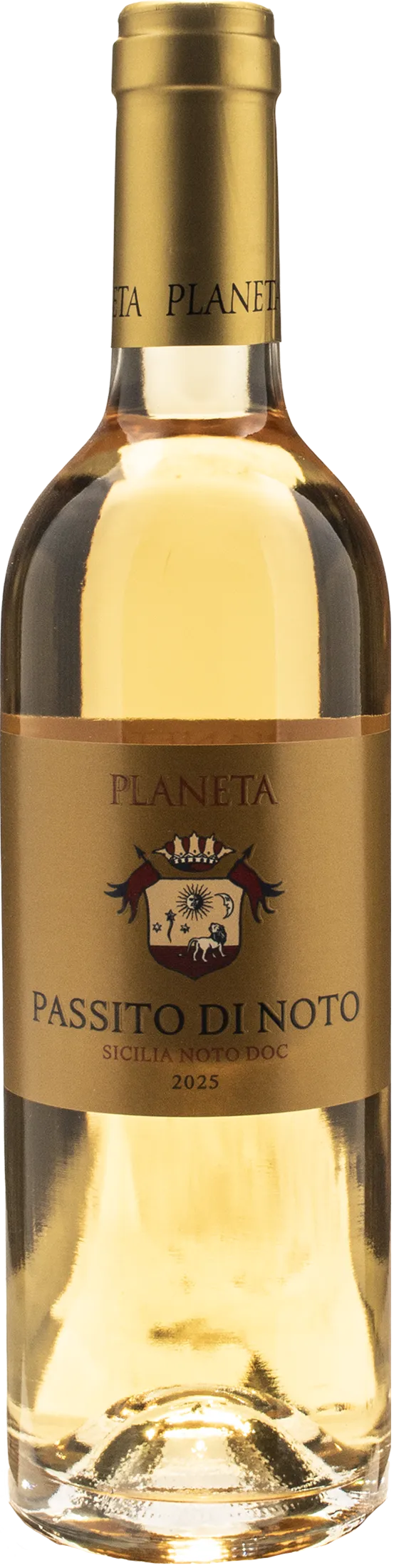
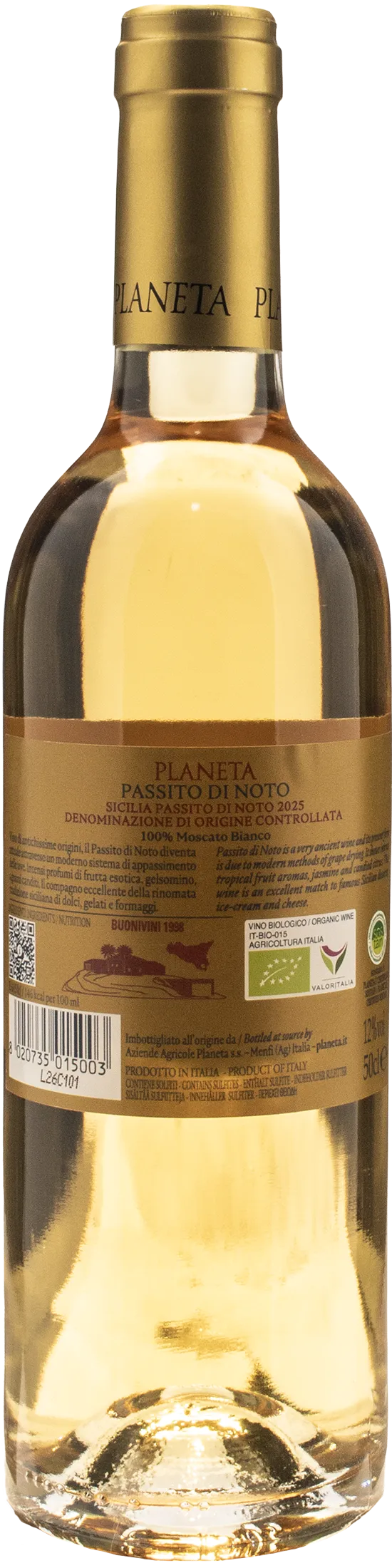
Moscato Bianco Passito di Noto 0.5L 2025
| Denomination | DOC Moscato Passito di Noto |
|---|---|
| Size | 0,50 l |
| Alcohol content | 12.0% by volume |
| Area | Sicily (Italy) |
| Grape varieties | 100% Moscato Bianco/Moscato Reale |
| Aging | In bottle |
- Name: Trebbiano d’Abruzzo DOC 2024, 12% vol, 0.75l
- Organic farming: exclusive use of copper and sulphur, no herbicides or chemical fertilisers
- Vinification: foot treading, fermentation in concrete and indigenous yeasts
- Unfined and unfiltered: presence of living matter and a light residual effervescence on the palate
- Aromas and pairings: hints of broom; ideal with seafood, cheese and white meats
Description
What kind of wine it is
Emidio Pepe Trebbiano d’Abruzzo is a still organic white wine with a profound territorial connection. On the nose, it weaves together notes of broom, chamomile, plum and peach, enriched by hints of marjoram, white pepper, toasted hazelnut and subtle nuances of humus. On the palate, an elegant rusticity emerges, supported by a fresh, lively sip animated by a slight residual effervescence. The remarkable richness of extract and pronounced savouriness ensure an ideal balance to accompany shellfish, seafood dishes and white meats.
Where it comes from
This white originates in the area of Torano Nuovo, the heart of the Trebbiano d’Abruzzo denomination. The vines grow at almost six hundred metres above sea level, in an area between the Apennine range and the Adriatic coast. This location offers diverse microclimates, ideal for cultivating Trebbiano grapes. The plants sink their roots into medium-textured clay soils, a key pedological element in defining the structure of the sip and imparting an intense natural savouriness combined with a strong territorial identity.
How it is produced
Production by Emidio Pepe is based on strict organic viticulture, allowing only copper, sulphur and the use of green manure, excluding chemical fertilisers. The artisanal process involves the traditional foot treading of the grapes in wooden vats. Fermentation takes place spontaneously in glazed cement vats, triggered exclusively by indigenous yeasts. The wine completes its journey without any fining or filtration, preserving its material vitality and aromatic richness intact.
History and Curiosities
Rooted between the sea and the Apennines, Trebbiano d’Abruzzo DOC dates back to the sixteenth century and finds its purest expression in Torano Nuovo. Since 1964, the Emidio Pepe winery has enhanced the clay soils located at 600 metres above sea level through rigorous organic farming. Production follows artisanal traditions: from foot treading in wooden vats to fermentation in concrete with indigenous yeasts, without filtration. It is bottled by hand, preserving an elegant rusticity and a vibrant sip.
Tasting notes

Perlage

Perfume

Color

Taste
Serve at:
10 - 12 °C
Longevity:
10 - 15 years

- Start up year: 1995
- Oenologist: Alessio Planeta
- Bottles produced: 2.500.000
- Hectares: 371
Xtrawine offers a selection of Planeta wines awarded by AIS, representing high‑quality vintages such as 2016 and 2017. These wines showcase the richness of Sicilian terroirs through intense, harmonious aromas with fruity and floral notes, and a defined, balanced and deeply distinctive palate. Read more


| Name | Planeta Moscato Bianco Passito di Noto 0.5L 2025 |
|---|---|
| Type | White organic dessert wine dessert wine aromatic |
| Denomination | Noto DOC |
| Vintage | 2025 |
| Size | 0,50 l |
| Alcohol content | 12.0% by volume |
| Grape varieties | 100% Moscato Bianco/Moscato Reale |
| Country | Italy |
| Region | Sicily |
| Vendor | Planeta |
| Story | History and Curiosities Rooted between the sea and the Apennines, Trebbiano d’Abruzzo DOC dates back to the sixteenth century and finds its purest expression in Torano Nuovo. Since 1964, the Emidio Pepe winery has enhanced the clay soils located at 600 metres above sea level through rigorous organic farming. Production follows artisanal traditions: from foot treading in wooden vats to fermentation in concrete with indigenous yeasts, without filtration. It is bottled by hand, preserving an elegant rusticity and a vibrant sip. |
| Origin | Torano Nuovo (TE) |
| Climate | Altitude: 40 m above sea level |
| Soil composition | Terreni argillosi di medio impasto |
| Cultivation system | Tablemount |
| Plants per hectare | 3,300 plants per hectare |
| Yield per hectare | 80–90 quintals per hectare |
| Harvest | 25–30 August |
| Fermentation temperature | 18 degrees Celsius |
| Fermentation | More than a month |
| Production technique | Foot treading in a wooden vat; fermentation in glass-lined concrete vats with indigenous yeasts; hand-bottled with a siphon and spout; unfined and unfiltered |
| Wine making | Foot treading in a wooden vat; fermentation in vitrified cement tanks of 22 or 30 hl without the addition of selected yeasts (using indigenous yeasts); manual bottling with a siphon and spout, without fining or filtration. |
| Aging | In bottle |
| Total acidity | 9.0 gr/L |
| PH | 3.3 |
| Residual sugar | 218.0 gr/L |
| Allergens | Contains sulphites |