


Passopisciaro (Vini Franchetti)
Passobianco 2024
| Denomination | IGT Terre Siciliane |
|---|---|
| Size | 0,75 l |
| Alcohol content | 13.0% by volume |
| Area | Sicily (Italy) |
| Grape varieties | 100% Chardonnay |
| Aging | 10 months in concrete vats and large wooden barrels, then another 10 months in bottle. |
- Grape variety and designation: 100% Chardonnay, IGT Terre Siciliane, Sicily
- Aroma: notes of tropical fruit and apricot, honey, toasted cereals and white rose
- Taste: soft and elegant on the palate, medium-bodied structure, pronounced volcanic minerality
- Vinification and ageing: 20 days in steel, 10 months in cement and wood, 10 months in bottle
- Serving and pairings: 10-12 °C, ideal with fish and cheese. Alcohol content: 13% vol.
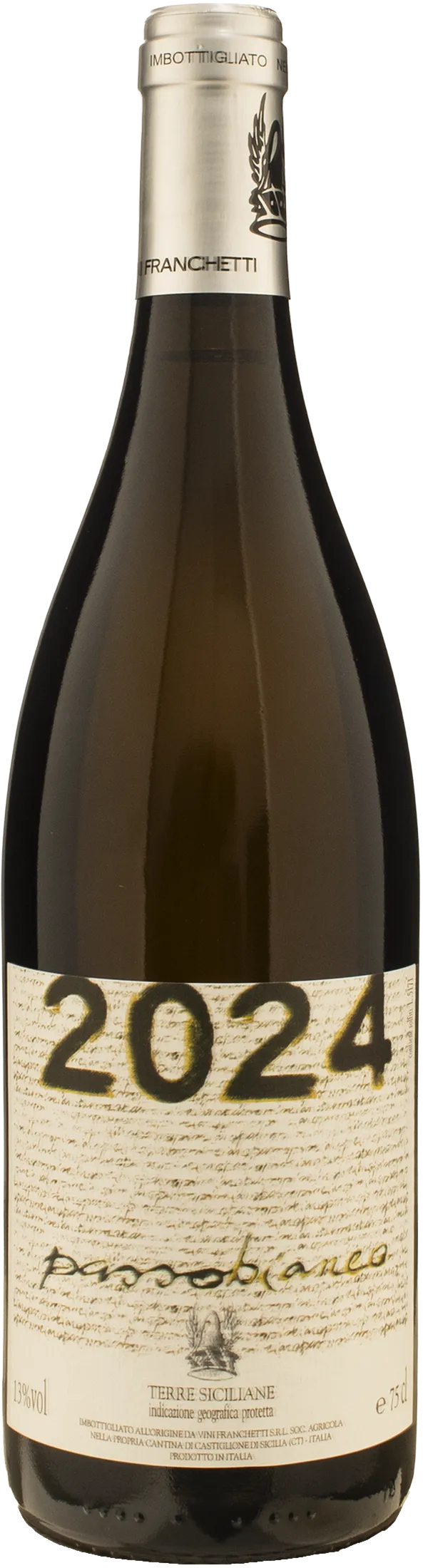
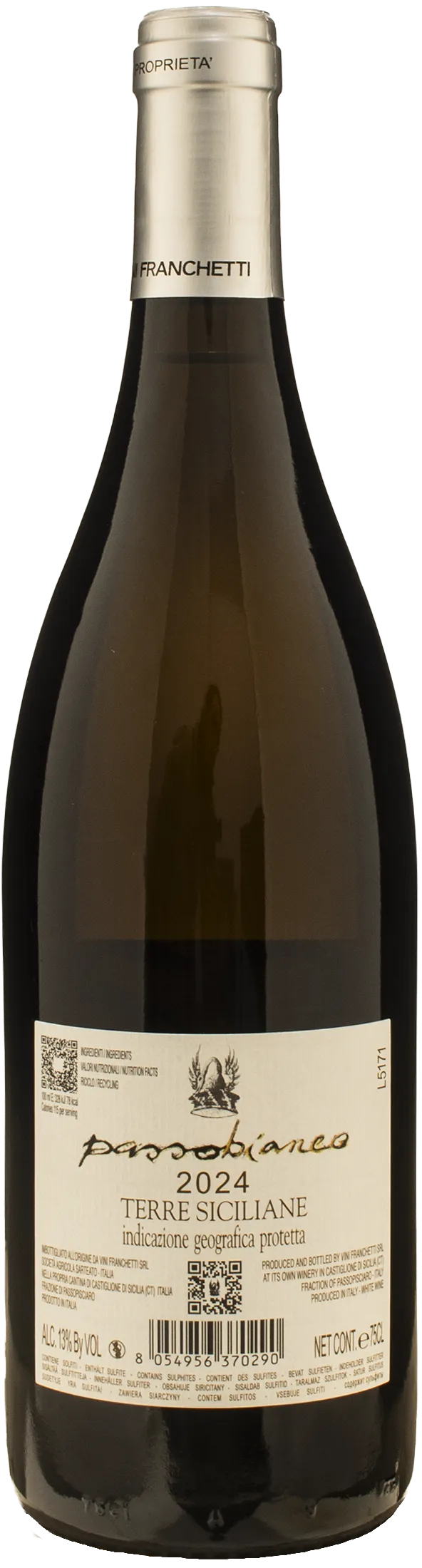
Description
What kind of wine it is
Passobianco from the Passopisciaro winery is a still white wine that elegantly interprets Chardonnay within the Terre Siciliane. In the glass, it displays an intense straw yellow colour, introducing an aromatic profile that combines tropical fruit and apricot with subtle hints of toasted cereals, honey and white rose. On the palate, it reveals a balanced structure, standing out for its smooth sip and pronounced minerality.
Where it comes from
This wine is produced in Sicily, among the high-altitude vineyards situated on the slopes of Mount Etna. The volcanic soils are fundamental in defining a distinctive flavour signature: the deep lava matrix is reflected in a clear saline sensation on tasting. The Etna terroir is distinguished by its ability to impart a refined character and complex citrus and camphor nuances to the sip.
How it is produced
Vinification involves a twenty-day fermentation in steel, aimed at preserving expressive clarity. The structure is defined through prolonged maturation: the wine rests for ten months in cement vats and large wooden barrels, encouraging balanced micro-oxygenation. The process concludes with a further ten months of bottle ageing, ensuring a harmonious sip.
History and Curiosities
Born in 2000 on the slopes of Mount Etna at the hands of Andrea Franchetti, Passobianco transforms high-altitude Chardonnay grapes into pure excellence. Aged for 10 months in cement and wooden vats, and just as long in the bottle, this white wine reflects the essence of Sicilian volcanic soils through a profound mineral elegance. The glass reveals an irresistible bouquet of apricot, honey and toasted cereals. Highly acclaimed by critics, with its 96 points from Vinous, it offers a soft, enveloping and unforgettable tasting experience.
Tasting notes

Perfume

Color

Taste
Serve at:
10 - 12 °C
Longevity:
05 - 10 years

- Start up year: 2000
- Oenologist: Andrea Franchetti
- Bottles produced: 90.000
- Hectares: 27
At the top of the steep Passopisciaro property looms a hump of black gravel. It’s where the lava spill from a big eruption in 1947 had stopped, caking up just before it could submerge whole terraces below it, vines, walls, and buildings: on Etna you can lose it all.
Here, it’s always very cold at night, even in August. During the day in the vineyards the lava powder penetrates in the skin and you get intoxicated, tired. The first wine I made was pale and meager, and I was discouraged. I planted other grapes; whatever is planted there the wine always tastes of citrus and camphor, without that generous body that you like earth to lend right away to a wine.
There’s no mold, no moss; the ground sparkles black like the night; the wine slowly becomes very elegant and strange. During the day a soft light penetrates everything and then there are starry nights; Etna has enormous poetry. Making wine, you have access to it. There isn’t Mother Nature here. You are conducting your viticulture on stuff that comes out of the terrible below." (Andrea Franchetti) Read more


| Name | Passopisciaro Passobianco 2024 |
|---|---|
| Type | White still |
| Denomination | Terre Siciliane IGT |
| Vintage | 2024 |
| Size | 0,75 l |
| Alcohol content | 13.0% by volume |
| Grape varieties | 100% Chardonnay |
| Country | Italy |
| Region | Sicily |
| Vendor | Passopisciaro (Vini Franchetti) |
| Story | History and Curiosities Born in 2000 on the slopes of Mount Etna at the hands of Andrea Franchetti, Passobianco transforms high-altitude Chardonnay grapes into pure excellence. Aged for 10 months in cement and wooden vats, and just as long in the bottle, this white wine reflects the essence of Sicilian volcanic soils through a profound mineral elegance. The glass reveals an irresistible bouquet of apricot, honey and toasted cereals. Highly acclaimed by critics, with its 96 points from Vinous, it offers a soft, enveloping and unforgettable tasting experience. |
| Origin | Slopes of Mount Etna, Sicily |
| Soil composition | Volcanic soils |
| Fermentation | 20 days |
| Production technique | Vinification for 20 days in steel tanks; ageing for 10 months in concrete vats and large wooden barrels, then 10 months in bottle |
| Wine making | 20 days in steel tanks. |
| Aging | 10 months in concrete vats and large wooden barrels, then another 10 months in bottle. |
| Allergens | Contains sulphites |