


Pacher Hof Huber
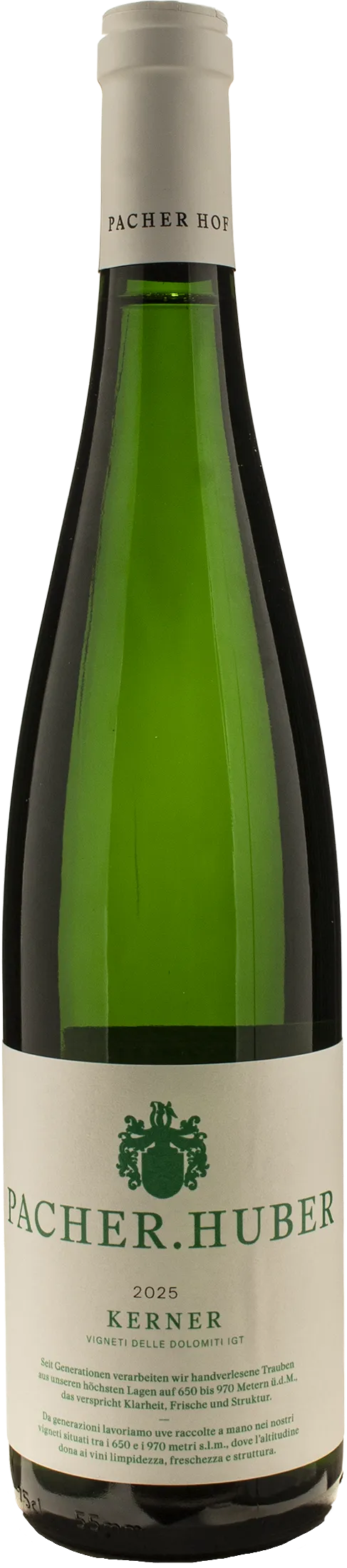
Kerner 2025
| Denomination | IGT Vigneti delle Dolomiti |
|---|---|
| Size | 0,75 l |
| Alcohol content | 13.5% by volume |
| Area | Trentino Alto Adige (Italy) |
| Grape varieties | 100% Kerner |
| Aging | About 6 months on fine lees in stainless steel tanks and large wooden barrels |
- Origin: Valle Isarco, vineyards between 650 and 970 metres above sea level
- Aroma: Notes of white peach, grapefruit, aromatic herbs and a hint of nutmeg
- Taste profile: Dry, full and fruity, with lively freshness and a long, persistent finish
- Vinification: Slow in steel, aged for 6 months on the lees between steel and barrel
- Pairings: 12-14 °C; ideal with fish, speck, white meats and soft cheeses

Description
What kind of wine is it
Pacher Hof Huber Kerner from the producer Pacher Hof is a still white wine made from Kerner grapes from Trentino Alto Adige, with the Typical Geographical Indication Vigneti delle Dolomiti. It presents a fruity aromatic profile and a full, fresh structure, with a dry palate and a persistent finish. The winemaking process involves slow fermentation in steel and ageing on the lees in steel and large wooden barrels.
Where does it come from
This white originates in the heart of Alto Adige, along the steep slopes of the Valle Isarco between the villages of Varna and Novacella. Pacher Hof continues a tradition of heroic mountain viticulture, with vineyards situated between 650 and 970 metres above sea level. The roots of the Kerner vines explore permeable soils of moraine origin, composed of gravel, schist and quartzite. The alpine climate, marked by a significant temperature difference between day and night, ensures perfect aromatic ripening, giving the wine a unique clarity and expressive verticality.
How is it produced
Production begins with meticulous manual harvesting of the Kerner grapes, carefully selected to ensure only the highest quality. In the cellar, fermentation takes place slowly at a controlled temperature in stainless steel tanks, preserving the purity of the varietal bouquet. Subsequently, the wine matures for about six months on its lees, resting in a harmonious balance between steel and large wooden barrels. This evolution helps to refine the flavour profile, giving the wine a balanced structure and an enveloping pleasantness.
History and Curiosities
The roots of the Pacher Hof estate in the Isarco Valley date back to 1142, representing an exceptional historical heritage. Now led by Andreas Huber, the winery practises authentic heroic viticulture between Varna and Novacella. Here, the grapes ripen at altitudes of up to 970 metres on moraine soils characterised by significant temperature variations, conditions that shape the character of this Alpine white.
Tasting notes

Perfume

Color

Taste
Serve at:
12 - 14 °C
Longevity:
03 - 05 years
- Start up year: 1142
- Oenologist: Andreas Huber
- Hectares: 8
Pacherhof’s natural potential lies in its vineyards in the best locations, in its gravelly soil rich in minerals and in its special micro climates. The natural diversity and the uncompromising striving for quality by Andreas Huber, the son, form the basis for exclusive white wines full of character. Read more


| Name | Pacher Hof Huber Kerner 2025 |
|---|---|
| Type | White still |
| Denomination | Vigneti delle Dolomiti IGT |
| Vintage | 2025 |
| Size | 0,75 l |
| Alcohol content | 13.5% by volume |
| Grape varieties | 100% Kerner |
| Country | Italy |
| Region | Trentino Alto Adige |
| Vendor | Pacher Hof Huber |
| Story | History and Curiosities The roots of the Pacher Hof estate in the Isarco Valley date back to 1142, representing an exceptional historical heritage. Now led by Andreas Huber, the winery practises authentic heroic viticulture between Varna and Novacella. Here, the grapes ripen at altitudes of up to 970 metres on moraine soils characterised by significant temperature variations, conditions that shape the character of this Alpine white. |
| Origin | Valle Isarco (Varna/Novacella, Alto Adige) |
| Climate | Warm microclimate with significant temperature variation between day and night |
| Soil composition | Silty-sandy gravel of morainic origin |
| Cultivation system | Guyot |
| Yield per hectare | 60 hl/ha |
| Harvest | Mid - late September |
| Production technique | Manual grape harvesting; slow fermentation at a controlled temperature in stainless steel tanks; ageing for about 6 months on the fine lees in stainless steel and large wooden barrels |
| Wine making | Manual harvesting of the grapes; slow fermentation at controlled temperature in stainless steel tanks; ageing for about 6 months on fine lees between steel and large wooden casks. |
| Aging | About 6 months on fine lees in stainless steel tanks and large wooden barrels |
| Total acidity | 6.8 gr/L |
| Residual sugar | 3.0 gr/L |
| Dry extract | 20.2 gr/L |
| Allergens | Contains sulphites |