


Mottura
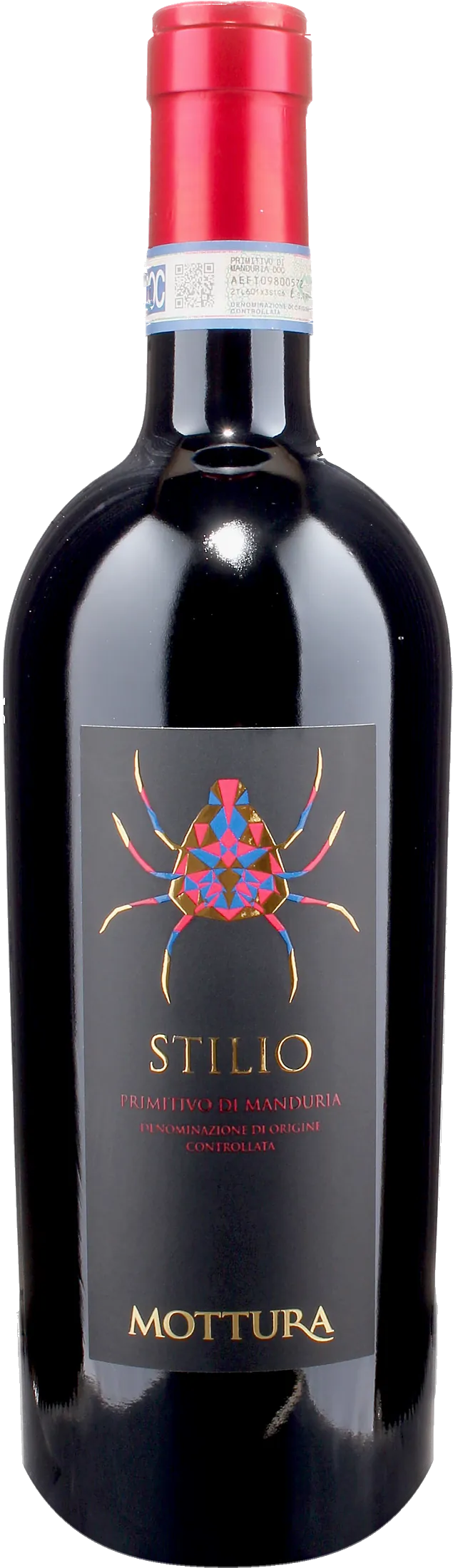
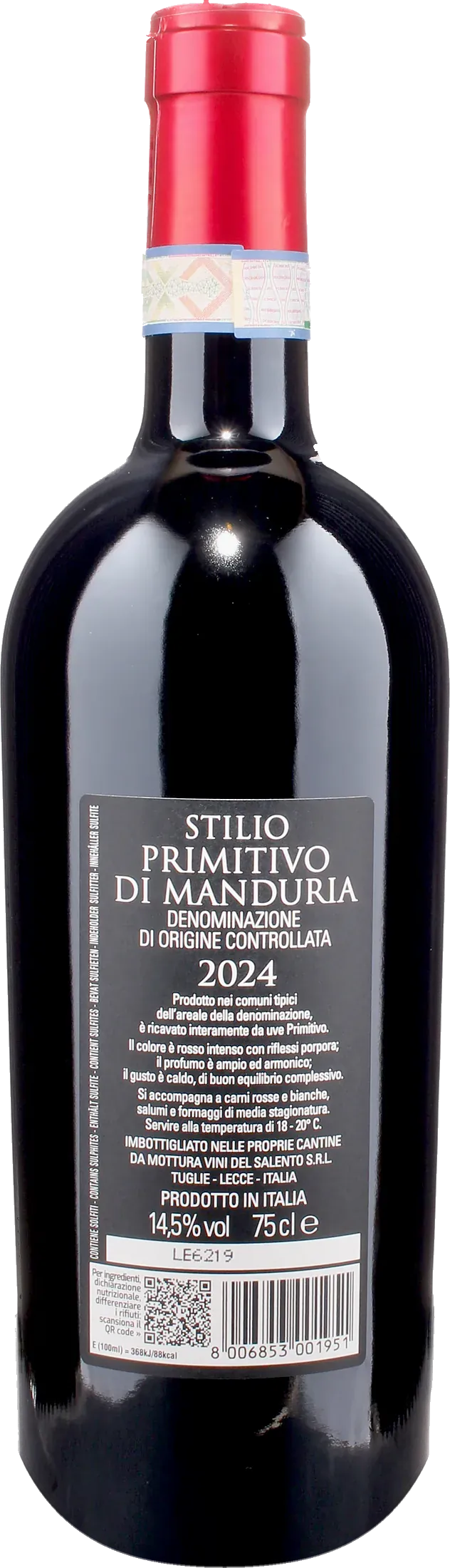
Primitivo di Manduria Stilio 2024
| Denomination | DOC Primitivo di Manduria |
|---|---|
| Size | 0,75 l |
| Alcohol content | 14.5% by volume |
| Area | Apulia (Italy) |
| Grape varieties | 100% Primitivo |
| Aging | A portion of the wine spends 6 months in French oak barriques (first and second fill) and 2-3 months in the bottle. |
- Denomination and grapes: Red wine with controlled designation of origin from Manduria, 100% Primitivo grapes (Apulia)
- Vinification process: 10–12 days of maceration and temperature-controlled fermentation
- Ageing: 6 months in French oak barriques followed by 2–3 months in the bottle
- Tasting notes: Red fruit jam, Morello cherry, plum, vanilla and cloves
- Temperature and food pairings: Serve at 18–20°C, decant for 1 hour; ideal with red meats and cheeses
Description
What type of wine it is
Stilio, produced by Mottura, is a still red wine from the Primitivo di Manduria controlled designation of origin, with an elegant and harmonious profile. Obtained from Primitivo grapes in Puglia and partially aged in French oak barrels, it presents a deep colour enriched by vivid purple highlights. On the nose, an austere bouquet emerges, enlivened by hints of red fruit jam, marasca cherry and dried plum, followed by delicate notes of vanilla and cloves. On the palate, it is full and velvety, with a solid gustatory structure that makes it ideal for pairing with red meats, roasts, mature cheeses and chocolate.
Where it comes from
This red is born in the heart of the famous Primitivo di Manduria area, in the territories of the province of Taranto. The Mediterranean climate, characterised by very dry summers, ensures excellent ripening of the bunches. The vines grow on limestone and clay soils, fundamental elements for imparting intensity and structure to the wine. Viticulture favours the traditional alberello (bush-vine) system, with a low yield per hectare that allows the natural concentration of extractive power and the complexity of the aromatic profile.
How it is produced
Production begins with a manual harvest carried out at a slightly advanced stage of ripeness to select the richest bunches. This is followed by traditional maceration accompanied by temperature-controlled fermentation, during which pumping over and délestage are used to optimise phenolic extraction. Once malolactic fermentation is complete, a portion of the wine rests for six months in French oak barrels. A final further ageing period finally allows the wine to reach its definitive taste balance.
Tasting notes

Perfume

Color

Taste
Serve at:
14 -16 °C
Longevity:
05 - 10 years
Decanting time:
1 hour
- Start up year: 1927
- Oenologist: Teodosio D'Apolito
- Bottles produced: 1.800.000
- Hectares: 120
The Mottura estate is located in Tuglie, a small town in the Southern part of the Salento Peninsula. The building is still the original one, a beautiful late 19th century, Baroque-style farmhouse. Here, the cellars hide the secrets of an ancient family villa and wines age slowly in oak barrels and barriques to develop the aromas, colours and atmosphere of the land.
In almost a century of history Mottura has made great steps forward, changing and growing as wine-making on the Salento peninsula has evolved and changed for the better. As early as the 1940s large iron-ringed barrels of Mottura wines were loaded onto Northbound trains in Tuglie, headed for three plants in Naples, Rome and Milan where the wines of the Salento peninsula were distributed and appreciated. However, the Mottura estate had intentions to go beyond this, and in the ’60s it became one of the first wineries in the area to bottle its own wine. The goal to characterise the Mottura brand was clear from the start: combining big numbers with appreciable, genuine quality.
Perhaps when you’ve been making genuine wines every day for four generations, you’re ready for a new challenge. That of offering even more innovative products of better and better quality while still preserving and revitalising tradition. The result has been new product lines, already known and appreciated the world over. I Classici and Le Pitre are 2 such award-winning lines for Mottura which highlight, in a contemporary way, the potential of local grape varieties, with particular focus on the traditional Salento varieties, such as Negroamaro and Primitivo, cultivating the vines according to the historic technique known as "ad alberello" and preserving traditional wine-making methods.
In 2020 Mottura was awarded for the following wines:
Stilio Primitivo di Manduria Doc 2018: Gold Medal from Mundus Vini. Stilio Primitivo di Manduria Doc 2017: 97 Points from Luca Maroni and Best Red Wine of Italy.
Primitivo di Manduria Doc Le Pitre 2017: Gold Medal from Mundus Vini.
Primitivo di Manduria Doc Villa Mottura 2018: Gold Medal from Mundus Vini.
Primitivo di Manduria Doc Mottura 2018: Silver Medal from Mundus Vini.
Rosato del Salento Villa Mottura 2019: 96 Points from Luca Maroni and 3rd Best Rosé Wine.
Negroamaro del Salento IGT Mottura: 87 Points from Ultimate Wine appraisal 2020.
Primitivo del Salento Igt Mottura: 90 Points from Ultimate Wine appraisal 2020.
Guida Vini D'italia Edizione 2021, edited by Gambero Rosso Editori, who considered the Mottura winery worthy to enter the main section with excellent reviews of : Primitivo di Manduria Doc Le Pitre 2018 and Rosato del Salento Igt Villa Mottura 2019.
The following wines were awarded in 2020:
Primitivo di Manduria DOC Stilio 2019: Silver Medal from Mundus Vini at the 28th Grand International Wine Award.
Nergroamaro Salento IGT Rosone 2019: Gold Medal from Mundus Vini at the 28th Grand International Wine Award. Read more


| Name | Mottura Primitivo di Manduria Stilio 2024 |
|---|---|
| Type | Red still |
| Denomination | Primitivo di Manduria DOC |
| Vintage | 2024 |
| Size | 0,75 l |
| Alcohol content | 14.5% by volume |
| Grape varieties | 100% Primitivo |
| Country | Italy |
| Region | Apulia |
| Vendor | Mottura |
| Origin | Municipalities of the province of Taranto, Apulia, Italy |
| Climate | Mild winters with very dry springs and summers. |
| Soil composition | Calcareous and clayey |
| Cultivation system | Predominantly bush-trained |
| Yield per hectare | 70–80 quintals per hectare |
| Production technique | Traditional maceration for 10–12 days and fermentation at a controlled temperature with pump-overs and délestage; malolactic fermentation; partial ageing for 6 months in French oak barriques and 2–3 months in the bottle. |
| Wine making | Traditional maceration for 10–12 days and fermentation of the must at a controlled temperature with pumping over and délestage; malolactic fermentation carried out; partial ageing for 6 months in French oak barriques and a further 2–3 months in the bottle. |
| Aging | A portion of the wine spends 6 months in French oak barriques (first and second fill) and 2-3 months in the bottle. |
| Allergens | Contains sulphites |