


Monte del Fra
Custoza Superiore Cà del Magro 2023
| Denomination | DOC Custoza Superiore |
|---|---|
| Size | 0,75 l |
| Alcohol content | 13.0% by volume |
| Area | Veneto (Italy) |
| Grape varieties | 40% Garganega, 20% Trebbiano Toscano, 10% Cortese, 5% Friulano/Sauvignon Vert, Chardonnay, Incrocio Manzoni 2.15, Malvasia, Riesling Italico |
| Aging | Maturation on fine lees in small oak barrels for about 4 months (for part of the batch); followed by further ageing in bottle for at least 6 months. |
- Format and alcohol content: 0.75 l bottle with an alcohol content of 13% vol
- Designation and vintage: Custoza Superiore DOC 2023, still semi-aromatic white wine
- Grape blend: Blend of Garganega 40%, Trebbiano Toscano 20%, Cortese, Friulano and other varieties
- Historic vineyard: Vines over 40 years old at Ca’ del Magro, south-east of Lake Garda
- Taste and aromas: Dry and savoury, notes of flowers, Golden apple, vanilla and a mineral finish
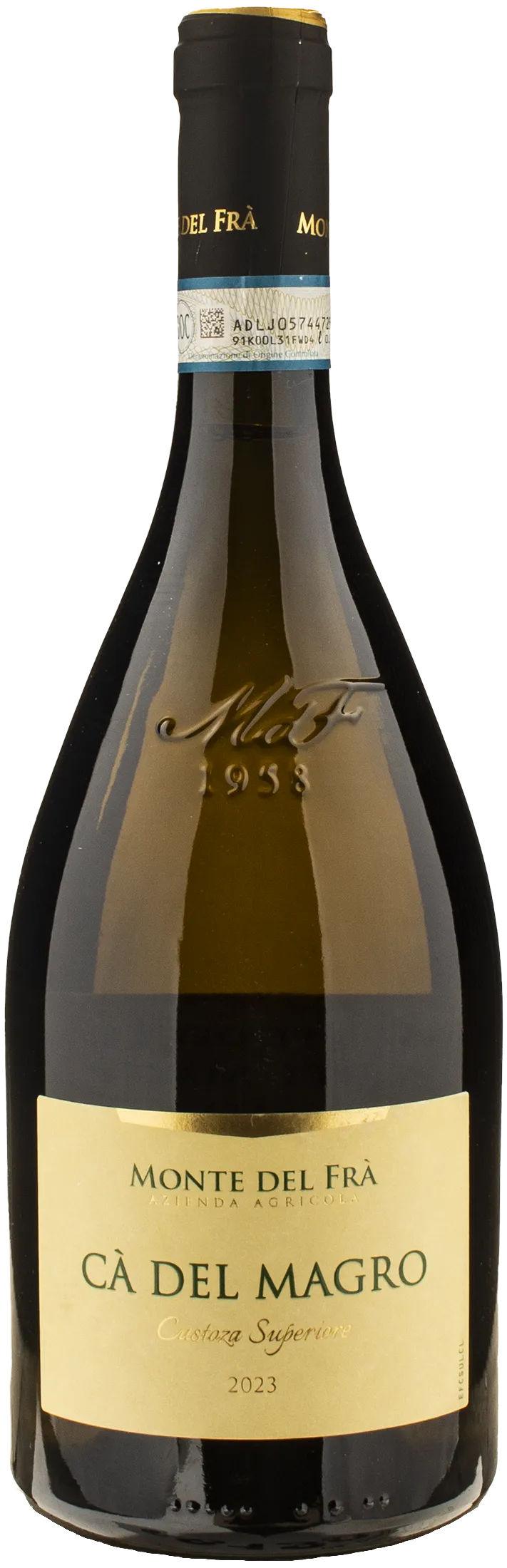
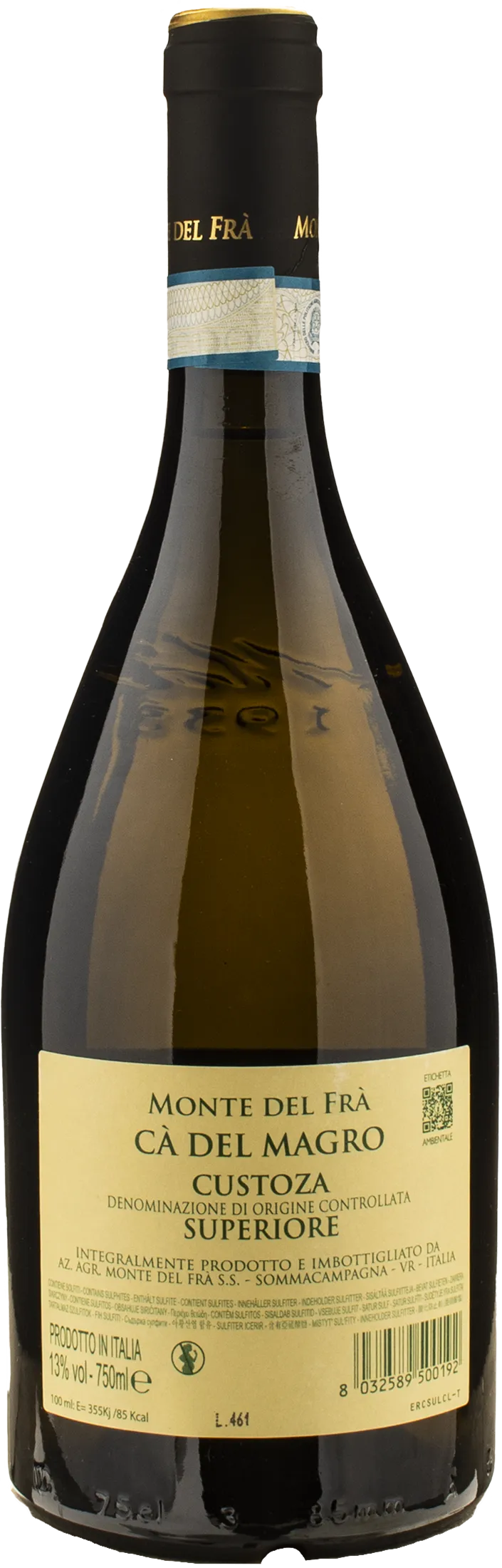
Description
What kind of wine it is
Ca’ del Magro Custoza Superiore, produced by Monte del Frà, is a still white wine with a semi-aromatic profile. It is created from a blend that combines Garganega, Trebbiano Toscano, Cortese and Friulano with varieties such as Chardonnay, Incrocio Manzoni 2.15, Malvasia and Riesling Italico. It displays a straw yellow colour with greenish highlights. The bouquet opens with scents of wildflowers and Golden apple, complemented by delicate hints of vanilla. On the palate, it reveals an enveloping structure: the sip is dry and savoury, supported by a pleasant acidity that balances the full body, finishing with a long mineral aftertaste.
Where it comes from
The grapes come from the Custoza Superiore area, south-east of Lake Garda. They grow in the historic Ca’ del Magro vineyard, a hillside plot where the old vines are over forty years old. The altitude and typical soils, rich in calcareous, clay, gravel and sand components, give the wine a pronounced identity. Monte del Frà cultivates these lands by enhancing the characteristics of the moraine soil, to highlight the natural expression and aromatic nuances of the area.
How it is produced
Vinification begins with a rigorous manual harvest, planned according to the ripening of each variety. The bunches undergo cryomaceration and gentle pressing to extract the free-run must. Fermentation takes place slowly in steel vats at a controlled temperature, using indigenous yeasts. To enrich the blend, part of the wine ferments and matures on fine lees in small barrels for about four months. This is followed by bottle ageing of at least six months, allowing the wine to reach its ideal balance.
History and Curiosities
Born on the morainic hills to the south-east of Lake Garda, Custoza Superiore DOC Ca’ del Magro is an outstanding wine produced by Monte del Frà, a historic winery founded in 1958 by the Bonomo family. This refined white wine comes from a vineyard over forty years old, where the grapes are strictly hand-picked. Slow fermentation with indigenous yeasts and partial ageing in oak give it an enveloping structure and aromas of Golden apple and vanilla. The 2023 vintage was awarded Tre Bicchieri and 91 points by James Suckling.
Awards
-
2023
 3
3This guide is highly respected and offers the most comprehensive review of Italian wines. It has a long tradition and is based on blind tastings carried out by over 100 experts.
-
2023
 91
91/100
James Suckling is an influential American wine critic and journalist who worked at Wine Spectator for 30 years. He left the magazine in 2010 to start his own website and guidebook (JamesSuckling.com). He specialises in Italian and Bordeaux wines.
Tasting notes
Perfume

Color

Taste
Serve at:
10 - 12 °C
Longevity:
03 - 05 years
Decanting time:
1 hour
- Start up year: 1958
- Oenologist: Claudio Bonomo
- Bottles produced: 1.000.000
- Hectares: 247
Almost two centuries later, in 1958, Massimo Bonomo rented two rooms and the adjacent fields. His family opened a Frasca, a typical Venetian bulk wine shop. They made wine and grew peaches, strawberries, and wheat.
Today, after over 60 years, the Bonomo family is still managing Monte del Frà: the second generation, with the brothers Eligio and Claudio, has been joined by the third with Marica, Silvia, and Massimo. The years pass, and the generations change, but something will always stay the same: the utter commitment to the land. Read more


| Name | Monte del Fra Custoza Superiore Ca del Magro 2023 |
|---|---|
| Type | White green still semi-aromatic |
| Denomination | Custoza DOC |
| Vintage | 2023 |
| Size | 0,75 l |
| Alcohol content | 13.0% by volume |
| Grape varieties | 40% Garganega, 20% Trebbiano Toscano, 10% Cortese, 5% Friulano/Sauvignon Vert, Chardonnay, Incrocio Manzoni 2.15, Malvasia, Riesling Italico |
| Country | Italy |
| Region | Veneto |
| Vendor | Monte del Fra |
| Story | History and Curiosities Born on the morainic hills to the south-east of Lake Garda, Custoza Superiore DOC Ca’ del Magro is an outstanding wine produced by Monte del Frà, a historic winery founded in 1958 by the Bonomo family. This refined white wine comes from a vineyard over forty years old, where the grapes are strictly hand-picked. Slow fermentation with indigenous yeasts and partial ageing in oak give it an enveloping structure and aromas of Golden apple and vanilla. The 2023 vintage was awarded Tre Bicchieri and 91 points by James Suckling. |
| Origin | Collina di Custoza (Sommacampagna), south-east of Lake Garda, Veneto |
| Soil composition | Morainic hill with calcareous, clayey, gravelly and sandy soils |
| Harvest | Chardonnay, Friulano, Riesling Italico, Malvasia and Incrocio Manzoni: first ten days of September; Cortese: mid-September; Garganega and Trebbiano Toscano: first ten days of October |
| Fermentation | Until May; approximately 4 months for 4–5% in small oak barrels |
| Production technique | Cryomaceration; fermentation at controlled temperature in stainless steel; ageing on fine lees (sur lie) in small oak barrels for part of the batch; prolonged contact with indigenous yeasts; manual harvest; gentle pressing with extraction of only the free-run must |
| Wine making | Cryomaceration and gentle pressing; for about 4–5% (Garganega must) fermentation and ageing "sur lies" in small oak barrels for about 4 months; the remainder ferments slowly in stainless steel vats at controlled temperature, in contact with its own lees until May; then bottling and ageing in bottle for at least 6 months before release. |
| Aging | Maturation on fine lees in small oak barrels for about 4 months (for part of the batch); followed by further ageing in bottle for at least 6 months. |
| Total acidity | 5.0 gr/L |
| Allergens | Contains sulphites |