


Masseto
2023
| Denomination | IGT Toscana |
|---|---|
| Size | 0,75 l |
| Alcohol content | 15.0% by volume |
| Area | Tuscany (Italy) |
| Grape varieties | 100% Merlot |
| Aging | Ageing in 100% new oak barriques for 24 months, with parcels kept separate for the first 12 months before blending. |
- Designation: Tuscany IGT, 100% Merlot, still red wine 2023
- Origin: Selection from Castagneto Carducci (Livorno), Tuscany; historic seven-hectare vineyard
- Vinification: Manual harvest, fermentation in concrete with indigenous yeasts
- Maturation: 24 months in oak barriques, separate parcels for the first 12 months
- Tasting notes: Hints of blackberry, cherry, pepper and graphite; elegant tannins
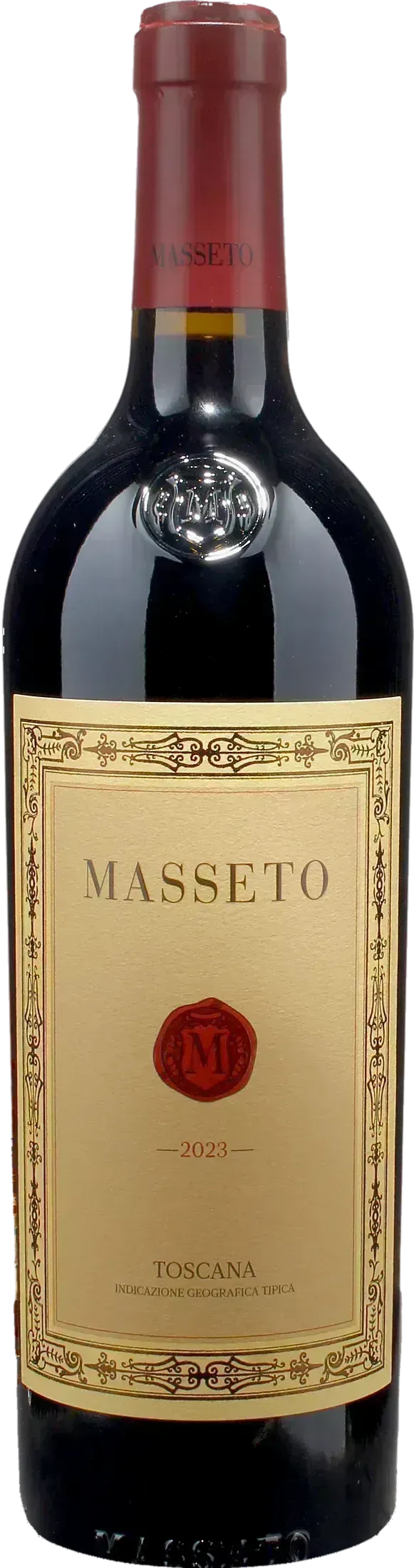
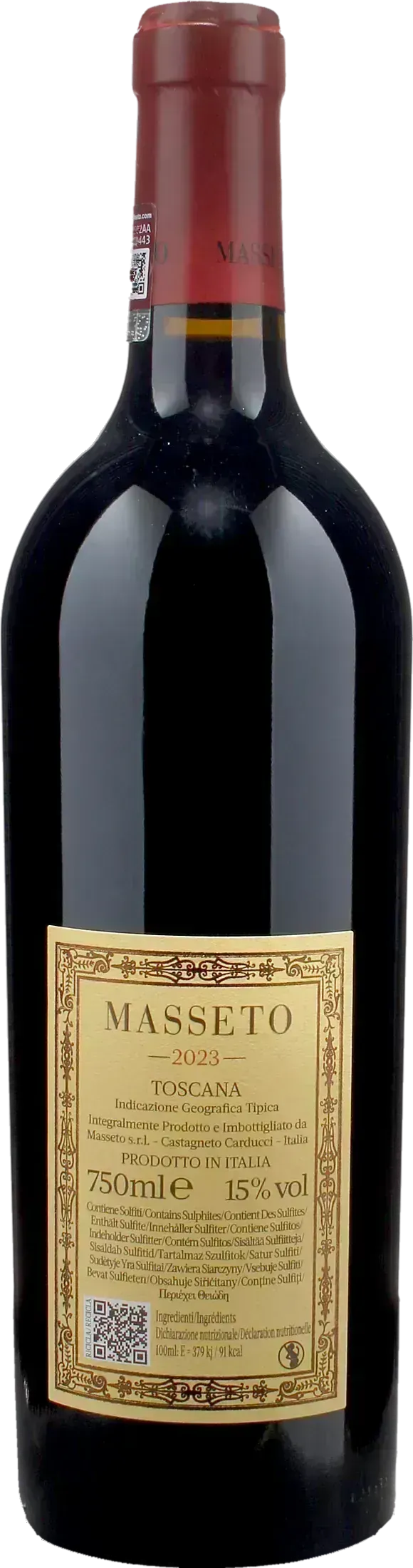
Description
What kind of wine it is
Masseto from the eponymous Masseto estate is a still red wine of exceptional calibre. Produced with Merlot grapes, this Tuscan wine ranks among the most prestigious crus in the world. Its style is structured and complex, combining power and elegance in a balance that ensures a long evolution. On the palate, it is graceful, with refined tannins and a vibrant freshness that enhances aromas of blackberry, cherry, graphite and tobacco. Excellence continues in the cellar with the use of indigenous yeasts and maturation in new oak barrels.
Where it comes from
This prestigious red originates in Castagneto Carducci, in the heart of Tuscany, a territory dedicated to oenological excellence. The famous seven-hectare vineyard rests on an extraordinary terroir, constantly caressed by the Mediterranean climate. Temperature fluctuations ensure perfect ripening of the grapes, fixing the aromatic concentration and preserving a vibrant natural acidity. The peculiarities of the soil in this sub-zone guarantee an optimal balance, giving the glass an unmistakable deep character and a distinctive sensory profile.
How it is produced
The creation of this cru follows a meticulous process that begins with a manual harvest. The de-stemmed grapes are transferred by gravity into concrete tanks, where each plot is vinified separately. Here, spontaneous fermentation with indigenous yeasts takes place, supported by pumping over and délestage during the long maceration. Malolactic fermentation is completed in wood, followed by long ageing in new oak barrels. The individual lots mature in isolation for a full year, before composing the harmonious final blend.
History and interesting facts
Born from the eponymous seven-hectare vineyard known for its exceptional terroirs, Masseto is a cru sought after by collectors internationally. Produced in extremely limited quantities, it is ranked among the most exclusive wines in the world. It is a key player in the most important international auctions and continues to receive unanimous acclaim from the leading international opinion leaders.
Tasting notes

Perfume

Color

Taste
Serve at:
16 - 18 °C
Longevity:
Over 25 years
Decanting time:
1 hour

- Start up year: 1981
- Oenologist: Axel Heinz
- Bottles produced: 880.000
- Hectares: 112
Masseto is controlled by the Frescobaldi Family and their long-term vision and encouragement have been paramount in building on its success. It is just one of the estates owned by the family alongside Attems (Friuli), Ornellaia, Danzante, Luce della Vite and six Frescobaldi Estates, Nipozzano, CastelGiocondo, Pomino, Ammiraglia, Castiglioni and Remole. Read more


| Name | Masseto 2023 |
|---|---|
| Type | Red still |
| Denomination | Toscana IGT |
| Vintage | 2023 |
| Size | 0,75 l |
| Alcohol content | 15.0% by volume |
| Grape varieties | 100% Merlot |
| Country | Italy |
| Region | Tuscany |
| Vendor | Masseto |
| Story | History and interesting facts Born from the eponymous seven-hectare vineyard known for its exceptional terroirs, Masseto is a cru sought after by collectors internationally. Produced in extremely limited quantities, it is ranked among the most exclusive wines in the world. It is a key player in the most important international auctions and continues to receive unanimous acclaim from the leading international opinion leaders. |
| Origin | Castagneto Carducci (Livorno) |
| Fermentation temperature | Around 25–28 °C |
| Production technique | Manual harvest; plot-by-plot vinification with gravity-fed transfer into concrete tanks; spontaneous fermentation with indigenous yeasts; pump-overs and délestage; maceration for 21–28 days; malolactic fermentation and ageing in new oak barriques. |
| Wine making | Each parcel was vinified separately: grapes hand-harvested in 15 kg crates, destemmed and lightly crushed, then gravity-fed into cement tanks. Spontaneous fermentation with indigenous yeasts at approximately 25–28 °C, with pump-overs 2–3 times a day and délestage as required; maceration for 21–28 days. Malolactic fermentation took place in barriques. Ageing in 100% new oak barriques for 24 months, with parcels kept separate for the first 12 months before blending. |
| Aging | Ageing in 100% new oak barriques for 24 months, with parcels kept separate for the first 12 months before blending. |
| Allergens | Contains sulphites |