


Masi Agricola
Amarone della Valpolicella Classico Costasera 2021
| Denomination | DOCG Amarone della Valpolicella Classico |
|---|---|
| Size | 0,75 l |
| Alcohol content | 15.0% by volume |
| Area | Veneto (Italy) |
| Grape varieties | 70% Corvina, 25% Rondinella, 5% Molinara |
| Aging | Matured for about 24 months in Slavonian and Allier oak barrels (80% in 40–80 hl barrels and 20% in small casks; some new), followed by at least 4 months of bottle ageing. |
- Name: Amarone della Valpolicella Classico DOCG 2021, dry red wine
- Alcohol content and format: 15% vol, 750 millilitre bottle
- Native grape varieties: Corvina 70%, Rondinella 25%, Molinara 5%
- Production method: dried on bamboo racks for approximately 120 days
- Ageing and serving: 24 months in oak; decant for 1 hour, serve at 18–20 °C

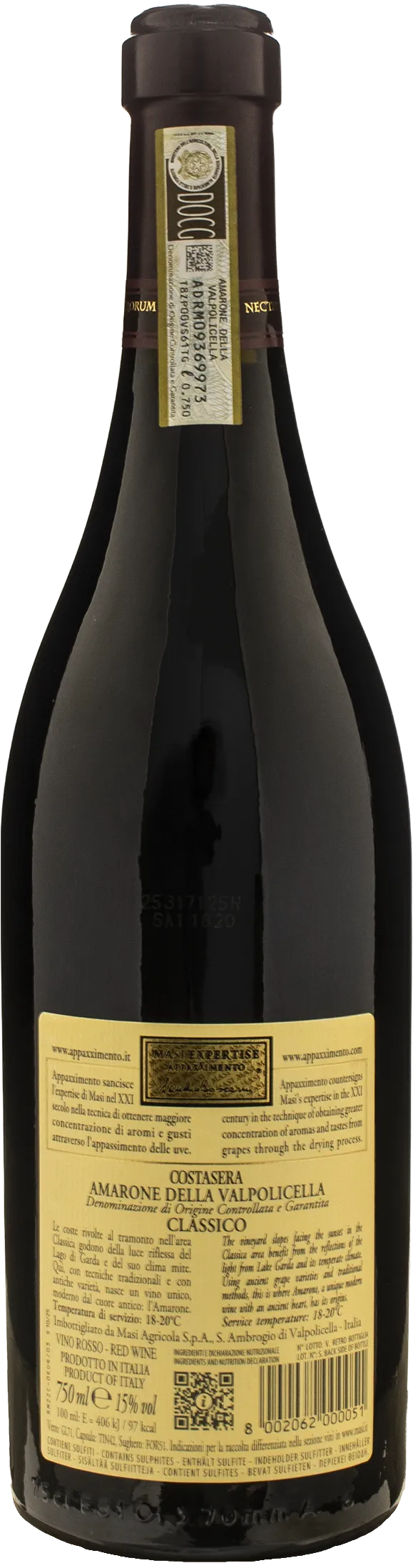
Description
What kind of wine it is
Costasera Amarone della Valpolicella Classico Masi is a Venetian red wine with controlled and guaranteed designation of origin, known for its intense and profound character. It is created from a blend of native varieties, including Corvina, Rondinella and Molinara, obtained through the slow drying of the grape bunches. On the palate, it reveals a structured and complex profile, characterised by aromas of stewed fruit, plum and cherry, enriched with notes of coffee and cocoa. The polished tannins provide a balanced sip and long persistence, making this wine ideal to pair with red meats, game and mature cheeses, or simply as a meditative glass at the end of a meal.
Where it comes from
This wine originates in the Valpolicella Classica, a region encompassing historic villages near the shores of Lake Garda. The vineyards stretch across slopes facing the sunset, benefiting from excellent sun exposure and the moderating influence of the lake's waters. The climate is mild, constantly swept by the cool winds from Lessinia, which favour the optimal development of the grape bunches. The vines sink their roots into Alpine-derived soils, composed of Eocene limestone and red earth on basaltic subsoil. This geological formation ensures the wine has remarkable structure and definition.
How it is produced
Following careful manual selection, the grape bunches are laid out on bamboo racks inside drying lofts. This begins the appassimento technique, essential for reducing the weight of the grapes and concentrating their sugars and aromas. After pressing, the must undergoes a long fermentation, aided by the low winter temperatures. The wine, suitable for vegan diets, completes malolactic fermentation and matures for about two years in oak barrels from Slavonia and Allier. The final harmony of the sip is achieved through a carefully calibrated resting period, which perfectly integrates the aromatic richness and tannic structure.
History and Curiosities
A proud expression of Valpolicella Classica, this wine is the symbol of the historic Masi winery, active since 1772. Its legend was born from a forgotten barrel of Recioto, capable of transforming a sweet nectar into a majestic dry red. The name Costasera pays homage to the vineyards nestled on the shores of Lake Garda and facing the sunset. The soul of this excellence lies in the appassimento method: the grapes rest on bamboo racks for 120 days before the winter fermentation, consecrating this label as a symbol of the region.
Tasting notes

Perfume

Color

Taste
Serve at:
18 - 20 °C
Longevity:
10 - 15 years
Decanting time:
1 hour

- Start up year: 1772
- Oenologist: Gruppo Tecnico Masi
- Bottles produced: 3.950.000
- Hectares: 560
Masi produces first-class wines primarily from native grape varieties, using traditional methods that embody sustainability and continuous technological innovation. With more than two hundred and fifty vintages behind it, Masi has been owned since its inception by the Boscaini family, which today runs the company with the sixth, seventh and eighth generations. Read more


| Name | Masi Amarone della Valpolicella Classico Costasera 2021 |
|---|---|
| Type | Red still |
| Denomination | Amarone della Valpolicella DOCG |
| Vintage | 2021 |
| Size | 0,75 l |
| Alcohol content | 15.0% by volume |
| Grape varieties | 70% Corvina, 25% Rondinella, 5% Molinara |
| Country | Italy |
| Region | Veneto |
| Vendor | Masi Agricola |
| Story | History and Curiosities A proud expression of Valpolicella Classica, this wine is the symbol of the historic Masi winery, active since 1772. Its legend was born from a forgotten barrel of Recioto, capable of transforming a sweet nectar into a majestic dry red. The name Costasera pays homage to the vineyards nestled on the shores of Lake Garda and facing the sunset. The soul of this excellence lies in the appassimento method: the grapes rest on bamboo racks for 120 days before the winter fermentation, consecrating this label as a symbol of the region. |
| Origin | Valpolicella Classica (municipalities of Marano, Negrar, Sant’Ambrogio and San Pietro in Cariano), on the shores of Lake Garda |
| Climate | Temperato e mite, non eccessivamente piovoso, con venti freschi |
| Soil composition | Loose red soils on Eocene limestones and compact red soils on basalts |
| Harvest | Late September-early October |
| Fermentation temperature | Low natural winter temperatures |
| Fermentation | Approximately 45 days |
| Production technique | Appassimento (drying of the grapes) on bamboo racks for about 120 days |
| Wine making | Appassimento method: selected bunches at the end of September-beginning of October are placed on bamboo racks (arele) in drying rooms for about 120 days, with a weight loss of 35–40%; gentle pressing and partial destemming; fermentation for about 45 days in large Slavonian oak barrels or in stainless steel at naturally cool temperatures, completion of fermentation for about 35 days in 30–40 hl barrels with the addition of selected yeasts; malolactic fermentation; maturation for about 24 months in Slavonian and Allier oak barrels; bottle ageing for 4–6 months. |
| Aging | Matured for about 24 months in Slavonian and Allier oak barrels (80% in 40–80 hl barrels and 20% in small casks; some new), followed by at least 4 months of bottle ageing. |
| Total acidity | 5.9 gr/L |
| PH | 3.62 |
| Residual sugar | 9.2 gr/L |
| Dry extract | 32.9 gr/L |
| Allergens | Contains sulphites |