


Marramiero
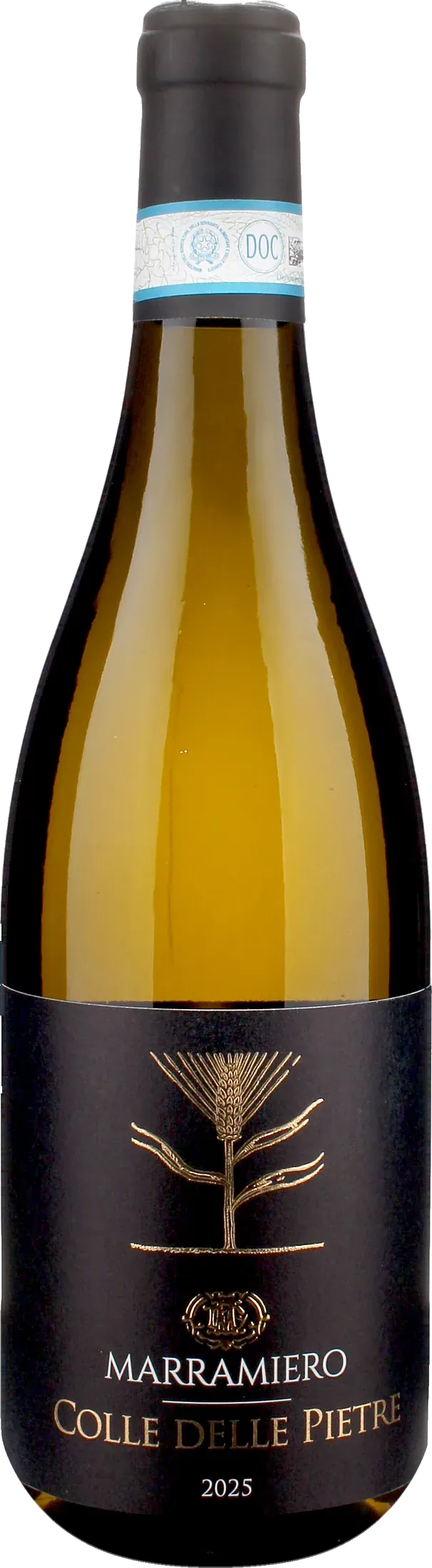
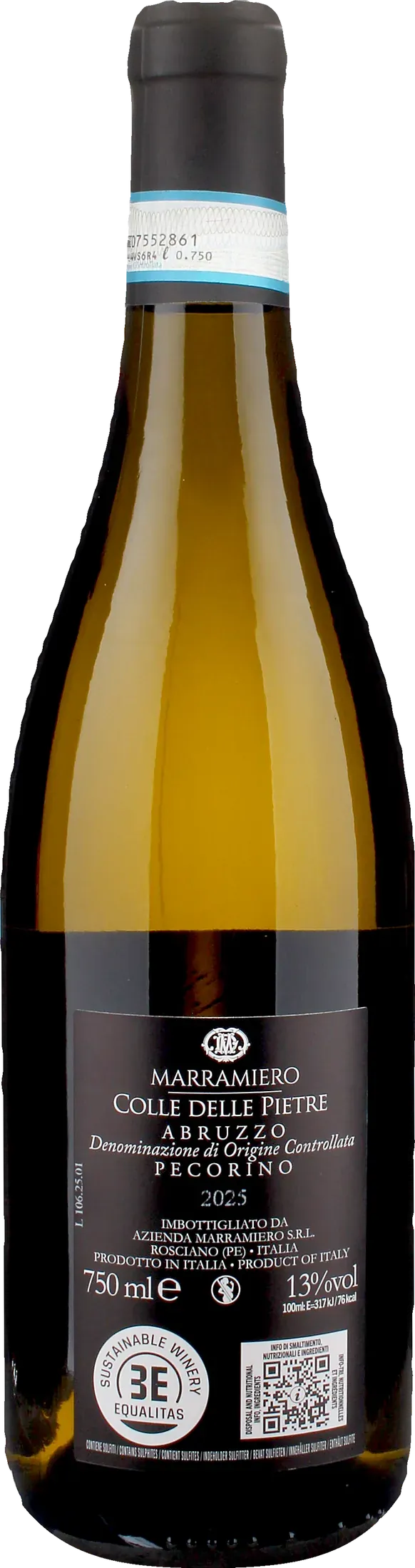
Pecorino Colle Delle Pietre Abruzzo 2025
Other years:
2024| Denomination | DOC Abruzzo Pecorino |
|---|---|
| Size | 0,75 l |
| Alcohol content | 13.0% by volume |
| Area | Abruzzo (Italy) |
| Grape varieties | 100% Pecorino |
| Aging | Matured in stainless steel tanks and finally in the bottle (approx. 4 months). |
| Other years | 2024 |
- Identity: Still white wine Pecorino Abruzzo DOC 2025, 750 ml, 13% vol.
- Aromas: Notes of mango, melon and grapefruit with spicy accents; intense aromatic bouquet
- Palate: Full-bodied, fresh and enveloping flavour, characterised by savoury minerality and a persistent finish
- Winemaking: Cold maceration on the skins, gentle pressing, ageing in stainless steel
- Food Pairings: Best served at 10–12°C with starters, white pasta and risotto dishes, fish and white meat.
Description
What type of wine it is
Marramiero's Pecorino Colle Delle Pietre Abruzzo is a white wine that enhances the authentic qualities of the Pecorino grape variety. In the glass, it presents with a golden yellow hue, anticipating a characteristic bouquet. The nose opens with intense aromas of tropical fruit, such as mango, melon and grapefruit, enriched by delicate spicy nuances. On the palate, it is harmonious, enveloping and fresh, finishing with long persistence and a marked mineral savouriness. It is the ideal accompaniment for light starters, pasta dishes with white sauces, fish-based dishes and white meats.
Where it comes from
This wine originates in the areas of Rosciano and the Tenuta Milano estate, in the heart of the Abruzzo designation. The vineyards sit on deep, clayey soils, characterised by a significant limestone subsoil. This particular formation encourages the roots to grow deep, giving the wine a strong territorial imprint. The name itself celebrates the typical stony hill and recalls the historical agricultural practices of the territory. The area evokes the ancient transhumance, when flocks along the sheep tracks fed on the grapes during their passage.
How it is produced
The vinification of the Pecorino grapes begins with a cold maceration of the must on the skins, aimed at extracting structure and aromas. This is followed by soft pressing and subsequent fermentation in stainless steel, chosen to preserve freshness and clarity of taste intact. Maturation continues in steel and concludes with bottle ageing for approximately four months, which gives the wine its definitive balance. To best enhance its characteristics, a serving temperature of 10-12 degrees is recommended.
History and curiosities
The name Colle delle Pietre elegantly pays homage to the stony terrain of Abruzzo, whose limestone subsoil gives the wine an extraordinary and distinct mineral savouriness. The history of these grapes is intertwined with the ancient tradition of transhumance, during which the flocks travelled along the sheep tracks, feeding on the very bunches of Pecorino. This deep bond with agricultural cycles is enhanced by the evocative ear of wheat depicted on the black and gold label, an authentic symbol of life and rebirth.
Tasting notes

Perfume

Color

Taste
Serve at:
10 - 12 °C
Longevity:
03 - 05 years

- Start up year: 1993
- Oenologist: Giuseppe Falcone, Romeo Taraborrelli
- Bottles produced: 600.000
- Hectares: 60
We know every plant inside out and each day we care for them all as they grow, with methods handed down from generation to generation, integrated with innovative viticulture research, experimentation and continuous training. The identity of our wines, characterised by a strong territorial mark, is formed in a specific process for each vine and each wine, from the plant to the cellar. Read more


| Name | Marramiero Pecorino Colle Delle Pietre Abruzzo 2025 |
|---|---|
| Type | White green still |
| Denomination | Abruzzo DOC |
| Vintage | 2025 |
| Size | 0,75 l |
| Alcohol content | 13.0% by volume |
| Grape varieties | 100% Pecorino |
| Country | Italy |
| Region | Abruzzo |
| Vendor | Marramiero |
| Story | History and curiosities The name Colle delle Pietre elegantly pays homage to the stony terrain of Abruzzo, whose limestone subsoil gives the wine an extraordinary and distinct mineral savouriness. The history of these grapes is intertwined with the ancient tradition of transhumance, during which the flocks travelled along the sheep tracks, feeding on the very bunches of Pecorino. This deep bond with agricultural cycles is enhanced by the evocative ear of wheat depicted on the black and gold label, an authentic symbol of life and rebirth. |
| Origin | Rosciano, Tenuta Milano and other suited areas of the Abruzzo region |
| Soil composition | Predominantly deep, rich, tending towards clayey |
| Cultivation system | Espalier and other traditional systems |
| Production technique | Cold maceration of the must on the skins, soft pressing and fermentation in stainless-steel vats. |
| Wine making | Cold maceration of the must on the skins followed by gentle pressing; fermentation in stainless steel tanks. |
| Aging | Matured in stainless steel tanks and finally in the bottle (approx. 4 months). |
| Allergens | Contains sulphites |