


Marchesi di Barolo
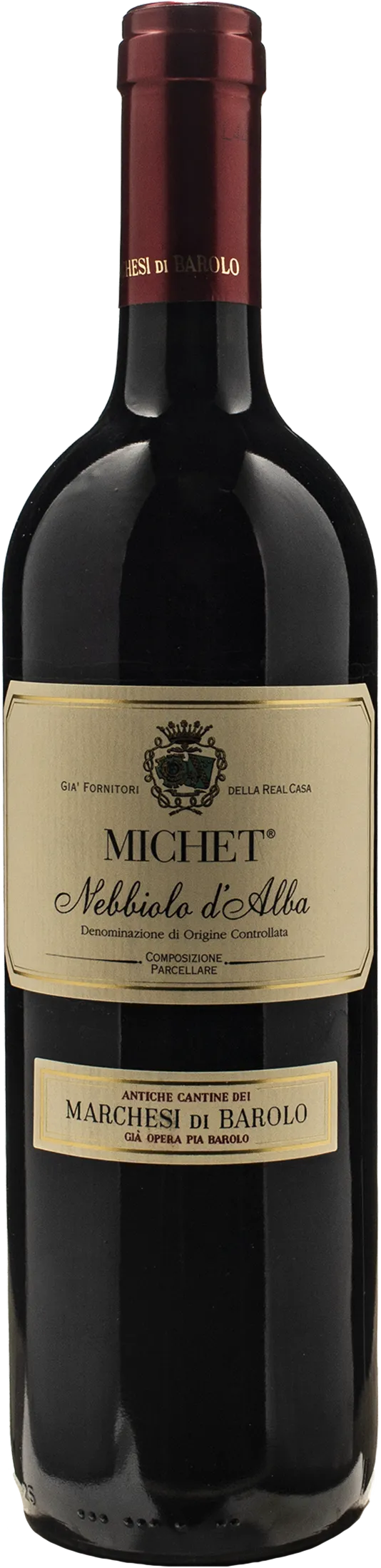
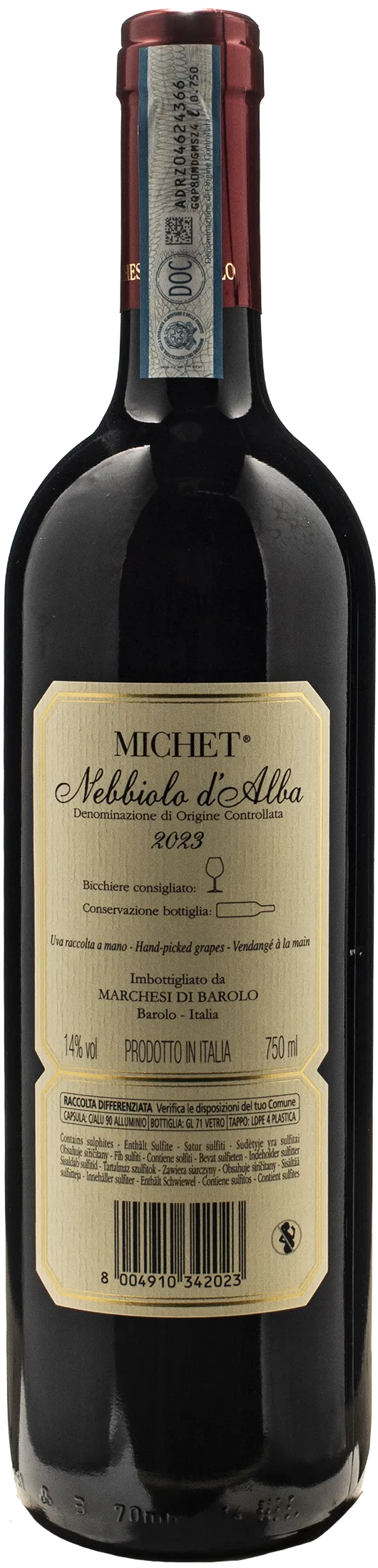
Nebbiolo d'Alba Michet 2023
| Denomination | DOC Nebbiolo d'Alba |
|---|---|
| Size | 0,75 l |
| Alcohol content | 14.0% by volume |
| Area | Piedmont (Italy) |
| Grape varieties | 100% Nebbiolo |
| Aging | Aged for 12 months: 60% in large 60 hl Slavonian oak barrels and 40% in stainless steel. |
- Name and grape variety: Nebbiolo d’Alba DOC from Nebbiolo grapes, Michet clone
- Aromatic profile: notes of raspberry, wild berries, violet, wild rose and vanilla
- Taste and structure: harmonious and balanced, soft tannins and a finish with a toasted note
- Vinification: temperature-controlled fermentation in concrete and maceration with pump-overs
- Ageing and pairings: 12 months in oak and steel; ideal with roasts and cheeses
Description
What kind of wine it is
Nebbiolo d’Alba Michet by Marchesi di Barolo is a red wine with Denomination of Controlled Origin from Piedmont, made from Nebbiolo grapes. This label highlights the Michet clone, renowned for its loose bunches that provide an intense depth of colour. On the nose, it reveals a broad aromatic profile, with notes of raspberry, violet and wild rose, accompanied by subtle hints of vanilla. The palate is harmonious and balanced, supported by sweet tannins and a finish enhanced by elegant toasted notes from ageing in oak barrels.
Where it comes from
The grapes are grown in Piedmont, on the hills surrounding Alba, within the Nebbiolo d’Alba area. Cultivation on various slopes enhances the versatility of the grape variety thanks to the varied soil. The calcareous-clay soils ensure mineral richness and structural depth, while the areas rich in quartz sands intensify the aromatic expression. The local temperate climate is essential for maintaining a vivid natural freshness and a precise definition of aromas.
How it is produced
After manual harvesting, the grapes are destemmed and gently crushed. Fermentation in cement takes place at a controlled temperature, with targeted pump-overs for gradual extraction of colour and substance. This is followed by spontaneous malolactic fermentation in vitrified tanks. The twelve-month maturation takes place between stainless steel and large Slavonian oak barrels, promoting a well-integrated structure.
History and Curiosities
The Marchesi di Barolo winery is a historic estate with over 150 years of tradition, owning 200 hectares across Langhe, Roero and Monferrato. An interesting fact is the use of the particular Michet clone, which is distinguished by its small, loose bunches, naturally enriching the wine with colour and extracts.
Tasting notes

Perfume

Color

Taste
Serve at:
14 -16 °C
Longevity:
05 - 10 years
Decanting time:
1 hour
- Start up year: 1800
- Oenologist: Marco Marsili
- Bottles produced: 1.500.000
- Hectares: 105


| Name | Marchesi di Barolo Nebbiolo d'Alba Michet 2023 |
|---|---|
| Type | Red still |
| Denomination | Nebbiolo d'Alba DOC |
| Vintage | 2023 |
| Size | 0,75 l |
| Alcohol content | 14.0% by volume |
| Grape varieties | 100% Nebbiolo |
| Country | Italy |
| Region | Piedmont |
| Vendor | Marchesi di Barolo |
| Story | History and Curiosities The Marchesi di Barolo winery is a historic estate with over 150 years of tradition, owning 200 hectares across Langhe, Roero and Monferrato. An interesting fact is the use of the particular Michet clone, which is distinguished by its small, loose bunches, naturally enriching the wine with colour and extracts. |
| Origin | Piedmont, hills around Alba |
| Climate | Temperate |
| Soil composition | Suoli calcareo-argillosi; terreni ricchi di sabbie quarzose e limo |
| Harvest | The grapes, harvested exclusively by hand, are gently crushed and destemmed as soon as they arrive at the winery to extract only the finest and most aromatic fractions from the skin and the outermost part of the berry. |
| Fermentation temperature | Circa 22°C |
| Production technique | Alcoholic fermentation at controlled temperature in thermally conditioned cement tanks, with maceration through gentle pumping over; spontaneous malolactic fermentation; ageing for 12 months (60% in large Slavonian oak barrels, 40% in stainless steel). |
| Wine making | Grapes are destemmed and gently crushed upon arrival; alcoholic fermentation takes place at a controlled temperature in temperature-controlled tanks (cement), with maceration encouraged by repeated gentle pump-overs for a gradual and selective extraction of tannins and colour; separation from the skins occurs only at maximum extraction. Post-fermentation temperature is maintained at around 22°C in vitrified cement vats to promote a spontaneous and rapid malolactic fermentation. Ageing for 12 months: 60% in large 60 hl Slavonian oak casks and 40% in stainless steel. |
| Aging | Aged for 12 months: 60% in large 60 hl Slavonian oak barrels and 40% in stainless steel. |
| Allergens | Contains sulphites |