


Tignanello (Antinori)
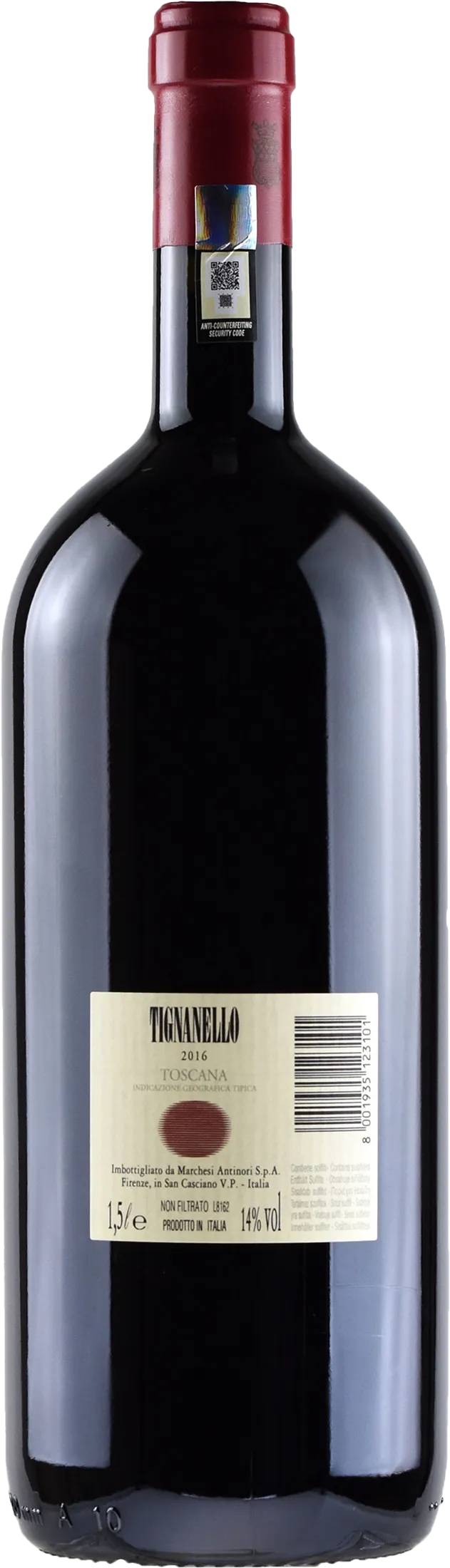
Magnum 2016
Other years:
2023| Denomination | IGT Toscana |
|---|---|
| Size | 1,50 l |
| Alcohol content | 14.0% by volume |
| Area | Tuscany (Italy) |
| Grape varieties | 85% Sangiovese, 10% Cabernet Sauvignon, 5% Cabernet Franc |
| Aging | After devatting, once alcoholic fermentation is complete, the wines are transferred to new oak barriques to undergo malolactic fermentation by the end of the year; they are then blended and aged for approximately 12 months in barriques, before being racked and bottled (with further ageing in the bottle). |
| Other years | 2023 |
- 1.5-litre magnum format: suitable for convivial moments and extended ageing, 2016 vintage
- Varietal composition: 85% Sangiovese grapes, 10% Cabernet Sauvignon grapes, 5% Cabernet Franc grapes
- Vinification: fermentation at 27°C (max 31°C) and malolactic fermentation in oak barriques
- Tasting notes: Asian spices, flint, coffee; creamy palate with plum jam
- Food pairings: savoury white meats and spicy dishes such as sweet and sour chicken
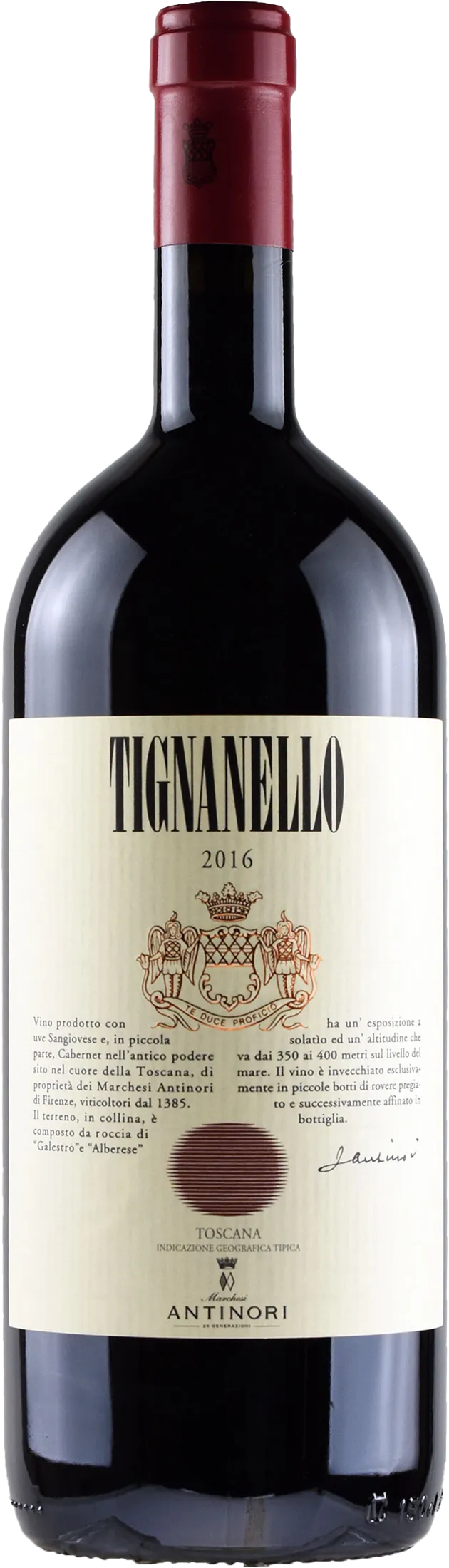
Description
What type of wine it is
Antinori's Tignanello is a Tuscan red with a bold character, born from a blend of Sangiovese, Cabernet Sauvignon and Cabernet Franc. In the glass, it presents a deep purple hue, introducing an olfactory profile defined by notes of Asian spices, flint and light hints of coffee. On the palate, it expresses a creamy and dense texture, supported by a pleasant acidity and enriched by hints of plum jam. The long and persistent finish closes with echoes of chocolate and citrus, making this wine the ideal companion for flavourful white meats and spicy dishes, such as sweet and sour chicken.
Where it comes from
This red comes to life in the eponymous vineyard located within the Tignanello Estate, in a hilly area of Tuscany. The vines grow at an altitude of between 350 and 400 metres, benefiting from a unique microclimate, which is fundamental for the correct ripening of the cultivated varieties. The soil, characterised by a calcareous matrix rich in tuffaceous elements, encourages low yields and imparts a complex structure to the wine, while ensuring a marked ageing potential over time.
How it is produced
The production of Tignanello begins with a meticulous harvest, followed by alcoholic fermentation conducted at controlled temperatures, an essential technique for preserving the typicality of the fruit. After racking, the wine is transferred into new oak barrels, where it undergoes the malolactic fermentation necessary to soften its features. Ageing continues in wood for about twelve months, encouraging the integration of aromas, and concludes with a prolonged rest in the bottle before release, ensuring an impeccable balance of flavour.
History and interesting facts
Produced by the renowned Tenuta Tignanello by Antinori, this IGT Toscana is a true milestone of oenology. Historically famous as an unconventional wine, it was the first blend to completely exclude white grapes. The vineyards, located at an altitude of 400 metres on calcareous and tufaceous soils, guarantee this red an extraordinary longevity, whose absolute excellence is today consecrated by the highest international scores, from the Tre Bicchieri to 98 points from Vinous.
Awards
-
2016
 5
5Italian Sommelier Foundation (FIS) guide This has been one of the most prestigious wine guides in Italy for over 10 years.
-
2016
 97
97/100
James Suckling is an influential American wine critic and journalist who worked at Wine Spectator for 30 years. He left the magazine in 2010 to start his own website and guidebook (JamesSuckling.com). He specialises in Italian and Bordeaux wines.
-
2016
 97
97/100
The prestigious international wine guide from the renowned Robert Parker, the world's most experienced and trusted wine taster.
-
2016
 98
98/100
Vinous is the online guide from Antonio Galloni, one of the world's leading wine connoisseurs.
-
2016
 4
4Italian Sommelier Association (AIS) guide
-
2016
 97
97/100
Wine spectator is the most influential wine guide on the internet.
Tasting notes

Perfume

Color
Taste
Serve at:
18 - 20 °C
Longevity:
Over 25 years
Decanting time:
1 hour
- Hectares: 127
The company's vineyards include two treasures: the Tignanello vineyard and the Solaia vineyard, which extend over the same hillside on soils derived from Pliocene marine marl with limestone and schist and enjoy warm days and cool nights during the growing season. These two vineyards produce Solaia and Tignanello wines, two wines capable of initiating what is known as the renaissance of Italian wine. Read more


| Name | Marchesi Antinori Tignanello Magnum 2016 |
|---|---|
| Type | Red still |
| Denomination | Toscana IGT |
| Vintage | 2016 |
| Size | 1,50 l |
| Alcohol content | 14.0% by volume |
| Grape varieties | 85% Sangiovese, 10% Cabernet Sauvignon, 5% Cabernet Franc |
| Country | Italy |
| Region | Tuscany |
| Vendor | Tignanello (Antinori) |
| Story | History and interesting facts Produced by the renowned Tenuta Tignanello by Antinori, this IGT Toscana is a true milestone of oenology. Historically famous as an unconventional wine, it was the first blend to completely exclude white grapes. The vineyards, located at an altitude of 400 metres on calcareous and tufaceous soils, guarantee this red an extraordinary longevity, whose absolute excellence is today consecrated by the highest international scores, from the Tre Bicchieri to 98 points from Vinous. |
| Origin | Tignanello Estate, Tuscany, Italy |
| Soil composition | Of calcareous origin with tufaceous elements |
| Yield per hectare | Less than 8,000 kg/ha |
| Fermentation temperature | Around 27 °C (maximum 31 °C) |
| Production technique | Alcoholic fermentation at a controlled temperature (approximately 27°C, maximum 31°C) followed by malolactic fermentation in new oak barriques; ageing for approximately 12 months in barriques and further bottle ageing. |
| Wine making | For all three varieties, the fermentations were carried out at average temperatures of 27°C, never exceeding 31°C, in order to preserve the aromas and the typicality of the fruit as much as possible. |
| Aging | After devatting, once alcoholic fermentation is complete, the wines are transferred to new oak barriques to undergo malolactic fermentation by the end of the year; they are then blended and aged for approximately 12 months in barriques, before being racked and bottled (with further ageing in the bottle). |
| Allergens | Contains sulphites |