


Tignanello (Antinori)
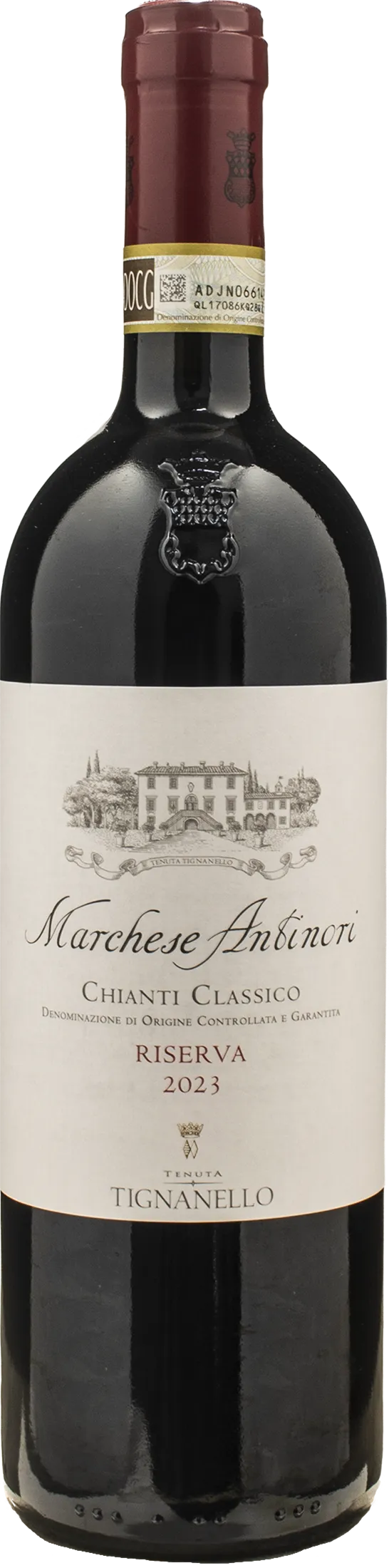
Chianti Classico Riserva 2023
| Denomination | DOCG Chianti Classico Riserva |
|---|---|
| Size | 0,75 l |
| Alcohol content | 14.5% by volume |
| Area | Tuscany (Italy) |
| Grape varieties | 90% Sangiovese, 10% Cabernet Franc |
| Aging | Aged in French and Hungarian oak barriques for approximately 12 months, followed by a further 12 months of maturation in bottle. |
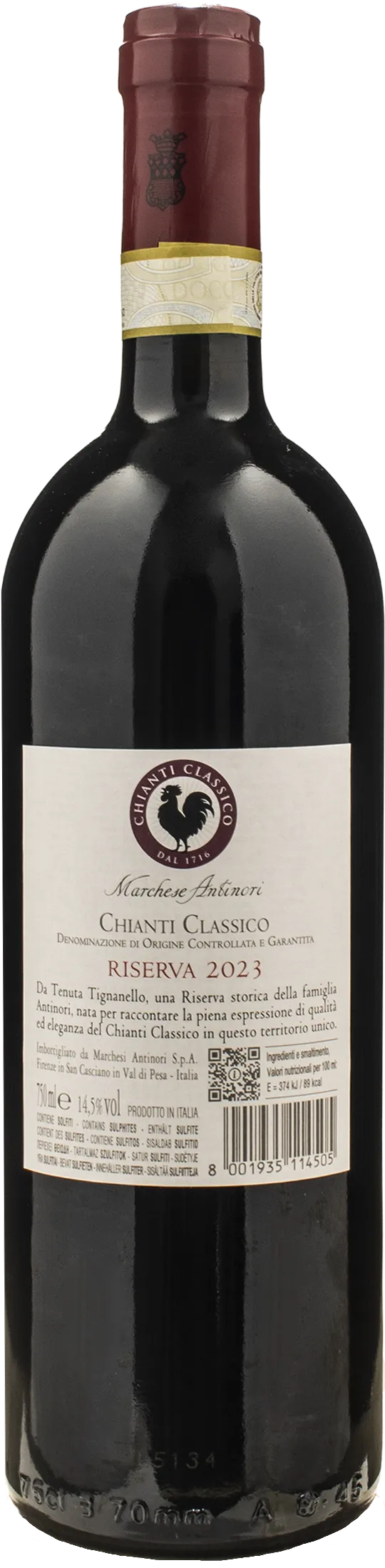
- Identity: Chianti Classico Riserva DOCG 2023, still red wine 14.5% vol, 750 ml bottle
- Selected grape blend: 90% Sangiovese and 10% Cabernet Franc or Cabernet Sauvignon
- Ageing: 12 months in French and Hungarian oak barriques, followed by 12 months in bottle
- Aromatic profile: notes of red fruits, violet and spices; silky tannins, savoury finish
- Serving and pairings: 16–18°C, decant for 1 hour; ideal with meats, game and pecorino cheese
Description
What kind of wine is it
Marchese Antinori Chianti Classico Riserva is a red wine that embodies the essence of Chianti Classico. Produced by Antinori, it is made from a blend of Sangiovese, Cabernet Franc and Cabernet Sauvignon, with grapes that are carefully selected. On the palate, it offers a medium-full structure and balance, supported by soft, silky tannins. The aromatic bouquet opens with clear notes of ripe red fruit, enhanced by floral and spicy nuances, culminating in a long and savoury finish.
Where does it come from
The grapes come exclusively from the Tenuta Tignanello, located in the heart of Chianti Classico, between the valleys of the Greve and Pesa rivers. The vineyards grow at an altitude between 350 and 400 metres, on marine-origin soils rich in alberese and galestro. The area's microclimate ensures a marked temperature range between day and night, an ideal condition for slow ripening that preserves the freshness and elegance of the fruit.
How is it produced
The manual harvest begins in autumn. After destemming and gentle pressing, the must ferments in stainless steel tanks at a controlled temperature. Maceration takes place through pumping over and délestage aimed at preserving the sweetness of the tannins. After spontaneous malolactic fermentation, the wine matures in French and Hungarian oak barrels for about twelve months. The process concludes with a further ageing period before release, necessary to define its complex gustatory harmony.
History and Curiosities
Produced exclusively in the finest vintages, Marchese Antinori Chianti Classico Riserva is a historic wine deeply connected to the prestigious Tenuta Tignanello. Since 2011, the grapes for this exceptional wine have come solely from its 130 hectares of vineyards, nestled between the Tuscan valleys of Greve and Pesa. Thanks to a meticulous selection of every single bunch and berry, this refined Riserva DOCG expresses unmistakable elegance, confirming itself as an oenological masterpiece widely celebrated both in Italy and abroad.
Tasting notes

Perfume

Color

Taste
Serve at:
16 - 18 °C
Longevity:
10 - 15 years
Decanting time:
1 hour
- Hectares: 127
The company's vineyards include two treasures: the Tignanello vineyard and the Solaia vineyard, which extend over the same hillside on soils derived from Pliocene marine marl with limestone and schist and enjoy warm days and cool nights during the growing season. These two vineyards produce Solaia and Tignanello wines, two wines capable of initiating what is known as the renaissance of Italian wine. Read more


| Name | Marchese Antinori Tignanello Chianti Classico Riserva 2023 |
|---|---|
| Type | Red still |
| Denomination | Chianti Classico DOCG |
| Vintage | 2023 |
| Size | 0,75 l |
| Alcohol content | 14.5% by volume |
| Grape varieties | 90% Sangiovese, 10% Cabernet Franc |
| Country | Italy |
| Region | Tuscany |
| Vendor | Tignanello (Antinori) |
| Story | History and Curiosities Produced exclusively in the finest vintages, Marchese Antinori Chianti Classico Riserva is a historic wine deeply connected to the prestigious Tenuta Tignanello. Since 2011, the grapes for this exceptional wine have come solely from its 130 hectares of vineyards, nestled between the Tuscan valleys of Greve and Pesa. Thanks to a meticulous selection of every single bunch and berry, this refined Riserva DOCG expresses unmistakable elegance, confirming itself as an oenological masterpiece widely celebrated both in Italy and abroad. |
| Origin | San Casciano Val di Pesa (Florence), between the Greve and Pesa valleys (Tenuta Tignanello) |
| Climate | Hot days and cool nights, significant diurnal temperature variation |
| Soil composition | Marly-arenaceous, calcareous soils, not very clayey and sandy; rocky calcareous soils with alberese and galestro (Pliocene marine origin) |
| Cultivation system | Guyot; spurred cordon; Tuscan arch |
| Harvest | Early autumn (mid-September - early October) |
| Fermentation temperature | 28–30°C |
| Fermentation | About a week |
| Production technique | Vinification in stainless steel tanks with maceration through pumping over and délestage; ageing in French and Hungarian oak barriques |
| Wine making | Upon arrival at the winery, the grapes were destemmed and gently crushed; the must fermented in stainless steel tanks for about a week with maceration managed through gentle pump-overs and délestage. This was followed by spontaneous malolactic fermentation and separate ageing in French and Hungarian oak barriques for around 12 months, then bottling and further maturation in bottle for 12 months. |
| Aging | Aged in French and Hungarian oak barriques for approximately 12 months, followed by a further 12 months of maturation in bottle. |
| Allergens | Contains sulphites |