


L'Oratoire des Papes
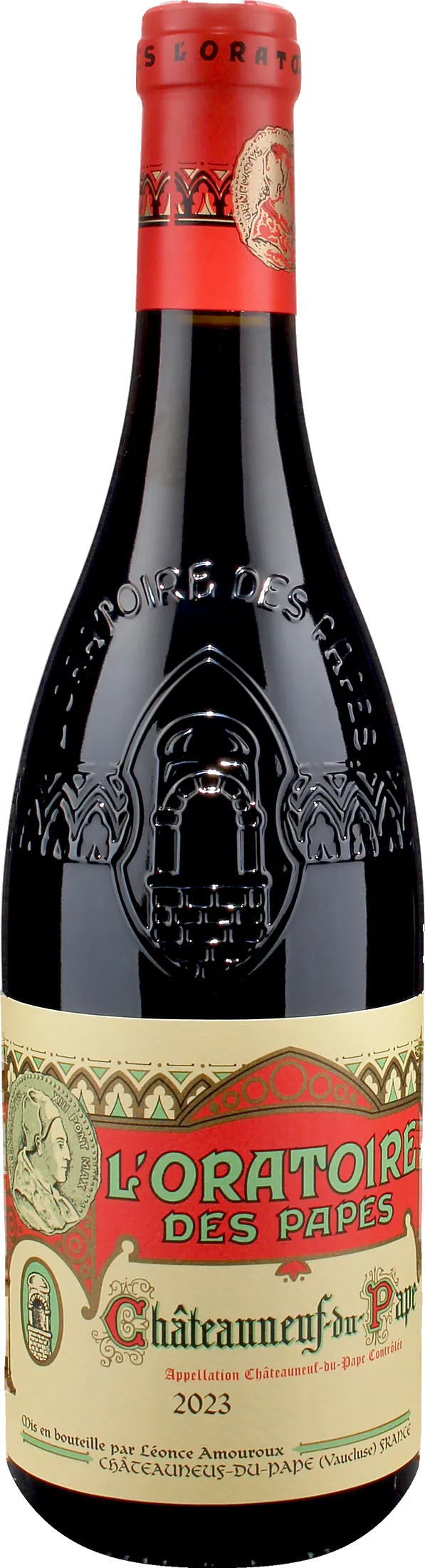
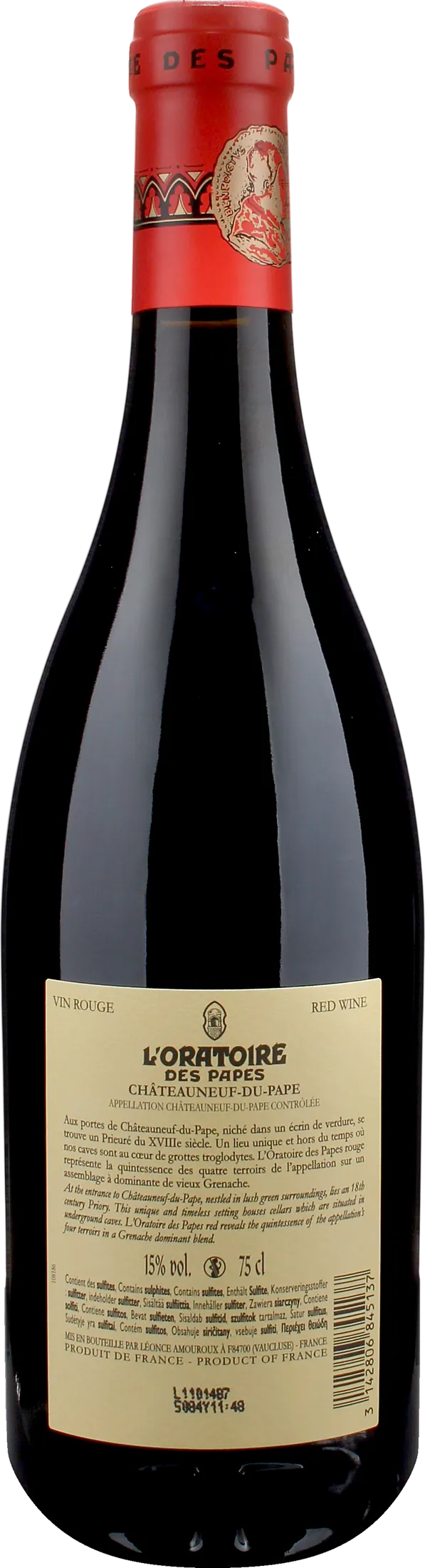
Chateauneuf du Pape Rouge 2023
Other years:
2022| Denomination | AOC Châteauneuf du Pape Rouge |
|---|---|
| Size | 0,75 l |
| Alcohol content | 15.0% by volume |
| Area | Rhone Valley (France) |
| Grape varieties | 80% Grenache, 8% Syrah, 7% Mourvedre, 5% Cinsault |
| Aging | Aged for 12 months in truncated conical French oak vats, followed by 8 months in concrete tanks. |
| Other years | 2022 |
- Type and vintage: Still red wine 2023, dry, 15% vol
- Grape composition: Blend of Grenache, Syrah, Mourvèdre and Cinsault
- Aromatic profile: Notes of blackberry, raspberry, black cherry, flowers, chocolate and aromatic herbs
- Vinification and ageing: 20 days maceration, 12 months in oak, then concrete
- Origin and pairings: Châteauneuf-du-Pape; ideal with beef, lamb and game
Description
Type of wine
Maison Ogier’s Oratoire des Papes Châteauneuf-du-Pape Rouge is a refined still red wine with a protected designation of origin, representing a structured expression of the Rhône Valley. Composed of a blend of Grenache, Syrah, Mourvèdre and Cinsault and aged in oak barrels, it presents a deep ruby colour in the glass, while the nose is clear, characterised by aromas of blackberry, raspberry and black cherry, intertwined with floral notes and hints of chocolate. On the palate, it offers a vigorous and enveloping body, driven by a marked minerality and silky tannins that lead the palate towards a long, spicy finish. Its powerful structure makes it ideal for red meats and game, such as stewed hare or braised veal cheeks.
Origin
Châteauneuf-du-Pape is the birthplace of this red, originating from the hillside vineyards of the southern Rhône. The estate's historical roots date back to the end of the 19th century, while today the vineyards are tended with dedication by Ogier. The soils have a varied composition, where the classic terraces of siliceous pebbles mingle with red clay, sandstone and limestone areas, imparting its characteristic structural finesse to the wine. To preserve the identity of the terroir, the vineyard management follows the principles of organic viticulture, operating with full respect for the local ecosystem.
Production method
Vinification begins with the careful harvesting of the grapes, followed by destemming and crushing, while maintaining a portion of whole bunches during processing. Fermentation takes place at a controlled temperature to encourage maximum aromatic expression. The maceration of about twenty days involves pump-overs and punch-downs, which are essential for extracting colour and defining an elegant tannic texture. Subsequently, the wine ages in oak barrels, before completing its rest in concrete vats prior to bottling. This process allows the fruit to remain the protagonist, giving the sip a harmonious concentration.
History and interesting facts
Founded in 1880, L’Oratoire des Papes takes its name from an 18th-century oratory dedicated to Saint Mark. Since 1926, Clos de l’Oratoire des Papes has highlighted the vocation of Châteauneuf-du-Pape, awarded 95 James Suckling points and 90 Vinous points thanks to oenologist Didier Couturier. Part of Maison Ogier since 2006, the estate boasts some of the oldest cellars in the southern Rhône. To protect the authenticity of the terroir, the entire production has followed strict organic methods since 2008.
Awards
-
2023
 95
95/100
James Suckling is an influential American wine critic and journalist who worked at Wine Spectator for 30 years. He left the magazine in 2010 to start his own website and guidebook (JamesSuckling.com). He specialises in Italian and Bordeaux wines.
Tasting notes

Perfume

Color

Taste
Serve at:
16 - 18 °C
Longevity:
10 - 15 years
Decanting time:
1 hour
- Start up year: 1880
- Oenologist: Didier Couterier
Since 2008 the vines at Clos de l’Oratoire des Papes have been cultivated using organic methods. 80 to 90% of the quality of the finished wine is determined by the vineyards. In order for the vine to remain in well nourished, in good health and well exposed, this precious terroir is cultivated using the most respectful cultivation practices possible. Although man cannot influence the deeper structure of the soil, what he can do is intervene in almost all other parameters in order to ensure the highest quality possible in the finished wines. Read more


| Name | L'Oratoire des Papes Chateauneuf du Pape Rouge 2023 |
|---|---|
| Type | Red still |
| Denomination | Châteauneuf du Pape AOC |
| Vintage | 2023 |
| Size | 0,75 l |
| Alcohol content | 15.0% by volume |
| Grape varieties | 80% Grenache, 8% Syrah, 7% Mourvedre, 5% Cinsault |
| Country | France |
| Region | Rhone Valley |
| Vendor | L'Oratoire des Papes |
| Story | History and interesting facts Founded in 1880, L’Oratoire des Papes takes its name from an 18th-century oratory dedicated to Saint Mark. Since 1926, Clos de l’Oratoire des Papes has highlighted the vocation of Châteauneuf-du-Pape, awarded 95 James Suckling points and 90 Vinous points thanks to oenologist Didier Couturier. Part of Maison Ogier since 2006, the estate boasts some of the oldest cellars in the southern Rhône. To protect the authenticity of the terroir, the entire production has followed strict organic methods since 2008. |
| Origin | Hills above Châteauneuf-du-Pape, Rhône Valley, France |
| Soil composition | Terraces of siliceous pebbles mixed with red clay, limestone valley areas. |
| Fermentation temperature | Between 28 °C and 32 °C |
| Fermentation | About 20 days |
| Production technique | Destemming; maceration for approximately 20 days; extraction through pump-overs and punch-downs; ageing for approximately 12 months in oak barrels and vats |
| Wine making | The grapes are destemmed and crushed; followed by maceration for approximately 20 days with extraction through pumping over and punching down. Fermentation (partly with 60% whole bunches) takes place between 28°C and 32°C depending on the plot. The wine matures for 8–12 months in 30-year-old oak barrels and/or oak vats, then undergoes further ageing (up to 12 months in truncated conical French oak vats followed by 8 months in concrete tanks) before bottling. |
| Aging | Aged for 12 months in truncated conical French oak vats, followed by 8 months in concrete tanks. |
| Allergens | Contains sulphites |