


Livio Felluga
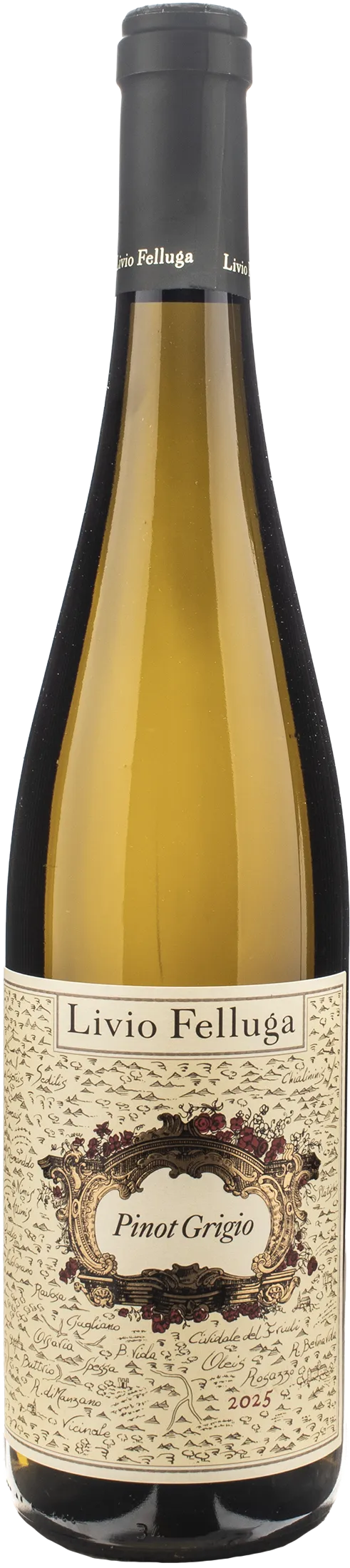
Colli Orientali del Friuli Pinot Grigio 2025
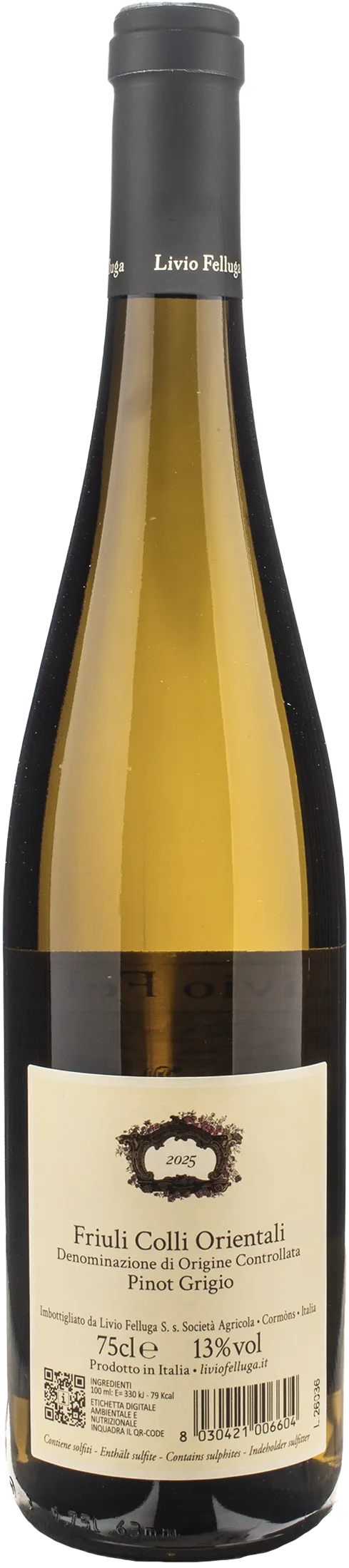
| Denomination | DOC Colli Orientali del Friuli Pinot Grigio |
|---|---|
| Size | 0,75 l |
| Alcohol content | 13.0% by volume |
| Area | Friuli-Venezia Giulia (Italy) |
| Grape varieties | 100% Pinot Grigio |
| Aging | At the end of fermentation, the wine is kept on the lees in stainless steel tanks for six months; after bottling, it is normally stored in temperature-controlled rooms for approximately two months. |
- Designation and vintage: Colline Orientali del Friuli DOC, Pinot Grigio 2025
- Primary aromas: notes of broom, yellow peach, apricot and ginger, with herbaceous accents
- Palate and finish: full-bodied structure, freshness and sapidity, with a persistent citrusy finish
- Vinification in steel: manual harvesting, short maceration and controlled-temperature fermentation
- Size and alcohol: 0.75-litre bottle, 13% ABV; ageing on the lees for six months
Description
What type of wine it is
Livio Felluga's Pinot Grigio is a still white wine with a refined profile and a remarkable potential for ageing. Originating from the Friuli Colli Orientali area in Friuli-Venezia Giulia, this Denominazione di Origine Controllata wine ferments in stainless steel and presents a straw-yellow appearance enriched by classic coppery highlights. The olfactory profile is enveloping, led by notes of broom, yellow peach, and delicate nuances of ginger. On the palate, it reveals a voluminous structure, maintaining an ideal balance between the richness of the fruit and a vibrant savouriness that accompanies the sip towards a citrusy, fresh, and persistent finish.
Where it comes from
This expression of Pinot Grigio originates from the hills of Friuli Colli Orientali, a prime territory for the enhancement of the grape variety. The vineyards, managed with the Guyot system, enjoy a cool microclimate that protects the aromatic integrity of the grapes. The vines grow on soils composed of marl and sandstone of Eocene origin, a matrix that gives the wine a solid and deep base. This territorial imprint is reflected in a vertical and precise sip, where the characteristics of the terrain enhance the gustatory tension and complete the aromatic range.
How it is produced
The winemaking process involves a careful hand harvest, essential for selecting only perfectly ripe bunches. In the cellar, after destemming, the skins remain in contact with the must for a brief maceration, followed by soft pressing. The resulting must is clarified by decantation and fermented at a controlled temperature in stainless steel tanks. To enrich its structure, the wine undergoes ageing on the lees for about six months. This phase imparts a particular creaminess to the palate, further refined by a period of resting in temperature-controlled rooms after bottling.
History and trivia
Livio Felluga Pinot Grigio, an icon of the Friuli Colli Orientali DOC, is made from hand-harvested grapes grown on soils composed of Eocene marl and sandstone. This noble grape variety, an elegant mutation of Pinot Nero, thrives in the cool microclimate of the Friulian hills. The 2025 vintage confirms the prestige of the world's most famous regional wine, enchanting the eye with its unmistakable coppery and pinkish reflections. A white wine of extreme finesse and an enveloping mouthfeel, capable of standing out for its marked ageing potential.
Tasting notes

Perfume

Color

Taste
Serve at:
10 - 12 °C
Longevity:
05 - 10 years
- Start up year: 1956
- Oenologist: Viorel Flocea
- Bottles produced: 800.000
- Hectares: 187


| Name | Livio Felluga Colli Orientali del Friuli Pinot Grigio 2025 |
|---|---|
| Type | White still dry |
| Denomination | Colli Orientali del Friuli DOC |
| Vintage | 2025 |
| Size | 0,75 l |
| Alcohol content | 13.0% by volume |
| Grape varieties | 100% Pinot Grigio |
| Country | Italy |
| Region | Friuli-Venezia Giulia |
| Vendor | Livio Felluga |
| Story | History and trivia Livio Felluga Pinot Grigio, an icon of the Friuli Colli Orientali DOC, is made from hand-harvested grapes grown on soils composed of Eocene marl and sandstone. This noble grape variety, an elegant mutation of Pinot Nero, thrives in the cool microclimate of the Friulian hills. The 2025 vintage confirms the prestige of the world's most famous regional wine, enchanting the eye with its unmistakable coppery and pinkish reflections. A white wine of extreme finesse and an enveloping mouthfeel, capable of standing out for its marked ageing potential. |
| Origin | Colli Orientali del Friuli (Friuli-Venezia Giulia, Italy) |
| Climate | Cool climates, ideally hilly |
| Soil composition | Flysch of marls and sandstones of Eocene origin |
| Cultivation system | Guyot |
| Harvest | First ten days of September |
| Fermentation temperature | At a controlled temperature |
| Production technique | Temperature-controlled fermentation in stainless steel tanks; short maceration after gentle destemming; soft pressing; clarification of the must by decanting; ageing on the lees (sur lie) for approximately six months |
| Wine making | The grapes are gently destemmed and left to macerate for a short period, followed by soft pressing. The must is clarified by decantation and then ferments at a controlled temperature in stainless steel tanks. |
| Aging | At the end of fermentation, the wine is kept on the lees in stainless steel tanks for six months; after bottling, it is normally stored in temperature-controlled rooms for approximately two months. |
| Allergens | Contains sulphites |